



In a modern office, silence isn’t just golden—it’s productive. With the rise of open-plan layouts, the “hum” of the workplace has often turned into a roar. Between clicking keyboards, coffee machine whistles, and that one coworker who takes every call on speakerphone, concentration can feel impossible.
If your team is struggling to focus, you don’t need a total architectural renovation. You need smart, tactical changes. Here are 10 proven ways to improve workplace acoustics fast.
1. Install High-Performance Acoustic Wall Panels
The most effective way to kill an echo is to stop sound from bouncing off hard surfaces. Standard drywall reflects sound waves like a mirror reflects light. By installing acoustic wall panels, you absorb those waves before they can travel across the room. These panels are designed to “trap” mid-to-high frequency sounds, which are typically where human speech resides.

2. Utilize Top-Rated Panels for High-Traffic Areas
Not all soundproofing is created equal. For conference rooms or busy lobbies, you want to invest in top-rated panels for improving workplace acoustics. Look for products with a high NRC (Noise Reduction Coefficient). An NRC of 0.85 or higher means the panel absorbs 85% of the sound that hits it. This significantly reduces the “cocktail party effect,” where everyone has to speak louder just to be heard over the background din.

3. Prioritize Fire-Rated Safety Standards
In commercial settings, safety is just as important as sound quality. When selecting materials, ensure you are sourcing fire rated acoustic wall tiles for commercial buildings. These tiles are treated to meet strict building codes (such as Class A fire ratings), ensuring that your aesthetic and acoustic upgrades don’t compromise the safety of your staff.
4. Implement Affordable Solutions for Small Spaces
You don’t need a Fortune 500 budget to fix a noisy office. There are many affordable office acoustic solutions for small offices that provide immediate relief.
- Acoustic foam: Great for dampening sharp echoes in small pods.
- Hanging baffles: These utilize unused ceiling space to soak up sound.
- Thick curtains: Heavy fabric over windows can prevent sound from bouncing off glass.

5. Add “Soft” Furniture and Decor
Minimalism looks great in photos but sounds terrible in reality. Hardwood floors, glass walls, and metal desks create an “echo chamber.” To counter this, introduce soft textures:
- Area Rugs: A thick rug can reduce the sound of footsteps and rolling chairs.
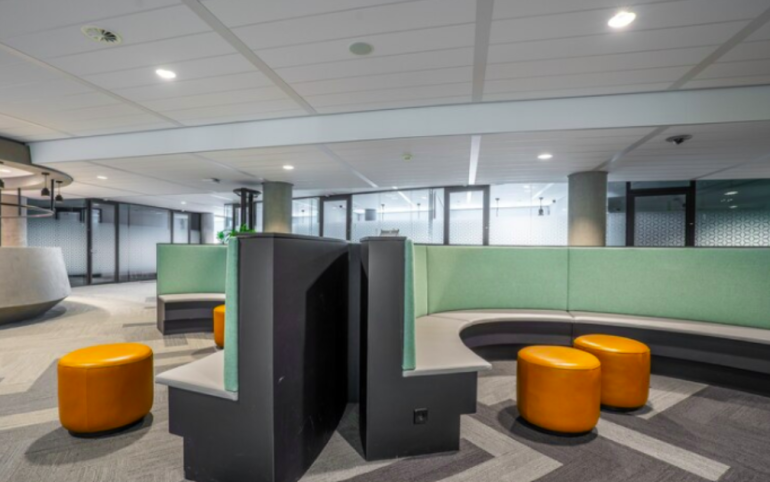
- Upholstered Seating: Fabric sofas and chairs absorb more sound than plastic or wood.
- Bookshelves: A full bookshelf acts as a natural diffuser, breaking up sound waves.
6. Create Dedicated Quiet Zones
Sometimes the problem isn’t the volume but the lack of options. Designate specific areas of the office as “Deep Work Zones” where talking and phone calls are strictly prohibited. Separating the “social” noise of a breakroom from the “focus” noise of a workspace prevents sound bleed from ruining someone’s flow state.
7. Use Sound Masking Technology
It sounds counterintuitive, but sometimes adding more noise helps. Sound masking systems emit a soft, unobtrusive background sound (similar to airflow) that is specifically tuned to the frequency of human speech. This makes nearby conversations less intelligible and, therefore, less distracting.
8. Introduce Nature with “Plant-oustics”
Plants aren’t just for aesthetics; they are natural sound diffusers. Large-leafed plants like fiddle leaf figs or peace lilies can help scatter sound waves. While they aren’t as powerful as dedicated panels, a “green wall” or a series of tall planters can provide a subtle, organic reduction in ambient noise.
9. Optimize Desk Layouts
If your sales team sits right next to your accounting team, you’re going to have a noise problem. Grouping employees by their noise output is a free and fast way to improve acoustics. Move loud, collaborative teams to one end of the office and “quiet” departments to the other.
10. Seal the Gaps in Doors and Windows
Sound is like water; it will find the path of least resistance. If you have a private office but can still hear every word from the hallway, check the door. Installing simple weather stripping or a door sweep can block the air gaps where sound leaks through.
Conclusion
Improving your workplace acoustics doesn’t have to be an overnight overhaul. By starting with high-impact moves—like installing acoustic wall panels or organizing your layout—you can see an immediate spike in employee satisfaction and focus. A quiet office isn’t just a luxury; it’s a vital tool for business success.
Frequently Asked Questions
Q: What is the difference between soundproofing and sound absorption?
A: Soundproofing is meant to block sound from entering or leaving a room (like building a thicker wall). Sound absorption, using tools like acoustic wall panels, is meant to improve the sound quality inside the room by reducing echo and reverberation.
Q: How many panels do I actually need?
A: A general rule of thumb is to cover 15% to 25% of the wall surface area in a standard office. Rooms with lots of glass or concrete may require up to 30% coverage.
Q: Are fire-rated tiles necessary for a home office?
A: While not always legally required for residential use, fire rated acoustic wall tiles for commercial buildings provide an extra layer of safety and are highly recommended for any professional environment.
Q: Does carpet really help with noise?
A: Yes, specifically with “impact noise” like footsteps or dropping a pen. However, carpet does very little to stop the sound of people talking; for that, you need vertical absorption on the walls.