



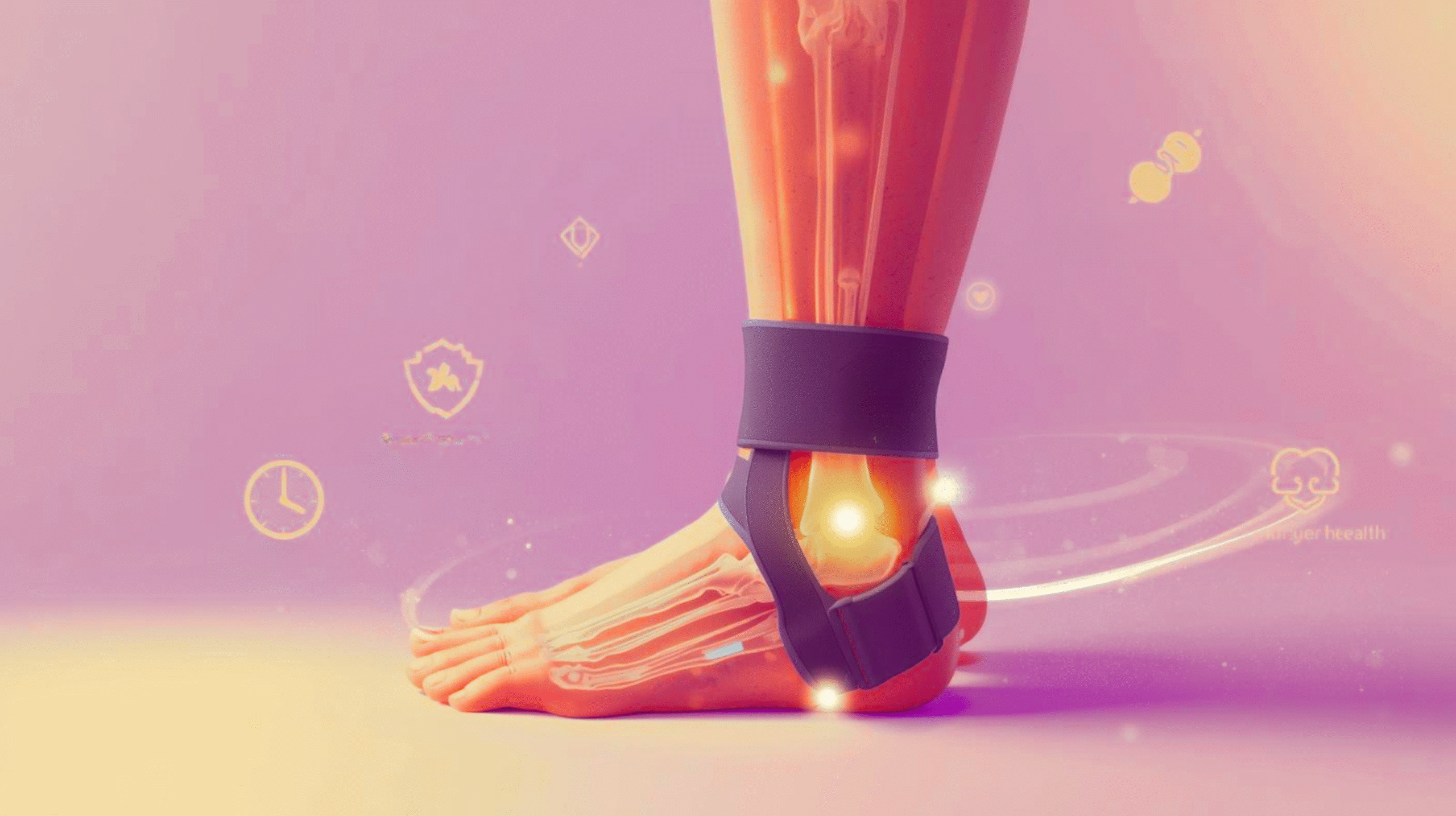
It is a sound no athlete ever wants to hear. That sudden pop, followed by a rush of heat and the immediate realisation that your season might be on hold. Ankle sprains remain the single most common injury in sports, affecting everyone from weekend warriors to NBA superstars.
In the aftermath of a sprain, the immediate reaction is often to lock the joint down. We reach for compression sleeves, athletic tape, and rigid supports to stabilise the area. But within the fitness and rehabilitation communities, there is a persistent whisper that refuses to die down. You might have heard it from a coach or a gym buddy: “Don’t wear ankle braces too often, or your ankles will get weak.”
This idea suggests that by providing external support, we are effectively telling our body’s natural stabilisers to take a vacation. It posits that dependency is inevitable, leading to a cycle of weakness and re-injury. But is this actually true? Or are we discouraging the use of a tool that could keep us in the game?
The science of ankle support is far more nuanced than simply “use it or lose it.” Understanding the physiological and psychological impact of wearing ankle braces reveals a different story—one where support and strength can actually coexist.
The “Lazy Ankle” Hypothesis
The argument against long-term bracing usually centres on muscle atrophy. The logic seems sound on the surface: if a plastic or fabric shell is doing the work of the peroneal muscles (the muscles on the outside of the lower leg responsible for stabilising the ankle), those muscles will eventually weaken from disuse.
However, research into ankle braces paints a more optimistic picture. Several studies comparing athletes who tape or brace their ankles versus those who do not have found no significant difference in muscle strength over the course of a season.
The reason lies in how we move. A brace does not immobilise the joint completely like a cast would. It restricts the excessive range of motion—specifically inversion (rolling in) and eversion (rolling out)—which are the movements that cause sprains. It does not stop plantarflexion (pointing the toe) or dorsiflexion (pulling the toe up), which are the primary movements used in running and jumping. Your muscles are still firing; they are still managing the load of your body weight. The brace simply acts as a guardrail at the extreme edges of movement.
The Hidden Power of Proprioception
If ankle braces don’t create weakness, how do they actually help? Most people assume it is purely mechanical—a physical wall stopping the bone from shifting. While mechanical support is real, the more fascinating benefit is neurological.
This concept is called proprioception. It is your body’s ability to sense its position in space. There are sensors in your skin, muscles, and joints that constantly send feedback to your brain about where your foot is landing. When you sprain an ankle, these neural pathways get damaged. This is why once you sprain an ankle, you are significantly more likely to do it again; your brain literally loses track of where your foot is.
Ankle braces boost proprioception through cutaneous feedback. The pressure of the brace against the skin stimulates the sensors, sending a louder signal to the brain. It makes you more aware of your ankle’s position. If you start to roll your ankle, the increased pressure from the brace alerts your body faster than it would react otherwise, potentially allowing your muscles to correct the movement before a tear occurs.
Tape vs. Braces: The Durability Debate
For decades, athletic tape was the gold standard. There is a ritualistic aspect to getting taped up before a game that many athletes love. But when analysed for effectiveness, tape has a major flaw: it stretches.
Sweat, movement, and the natural elasticity of the skin cause athletic tape to lose a significant percentage of its structural support within 20 to 40 minutes of exercise. By the second half of a match, the tape is often serving little more than a sensory purpose.
Modern ankle braces, specifically lace-up or semi-rigid varieties, do not suffer from this fatigue. They maintain their structural integrity from the warm-up to the final whistle. From a cost perspective, a reusable brace is also a one-time investment, whereas a daily taping habit can cost hundreds of dollars over a season. While tape offers a custom fit that is hard to replicate, the durability of a brace makes it a superior choice for reliable, consistent protection.
The Psychological Safety Blanket
Recovery is rarely just physical. The mental trauma of a bad injury can linger long after the ligaments have healed. This phenomenon, known as kinesiophobia (fear of movement), can alter an athlete’s mechanics. They might hesitate to jump, cut, or pivot, and ironically, this hesitation can lead to other injuries.
Ankle braces provide a tangible sense of security. Knowing that there is a layer of protection allows an athlete to move with confidence rather than caution. When an athlete trusts their body, they move more fluidly and naturally. If wearing a brace allows a runner to tackle a trail without staring at the ground in fear, or a basketball player to go for a rebound aggressively, the psychological benefit is just as valuable as the mechanical one.
The Verdict: A Tool, Not a Crutch
The fear that ankle braces will ruin your joint stability is largely unfounded, provided they are used correctly. They are excellent tools for preventing re-injury and allowing athletes to return to activity sooner.
However, they should not be viewed as a permanent substitute for rehabilitation. A brace can protect a healing ligament, but it cannot repair it. The ultimate goal for any active individual should be a functioning, strong joint that can handle load without assistance.
The best approach is a hybrid one. Use ankle braces during high-risk activities—like soccer, basketball, or trail running—where unpredictable terrain or contact with other players increases the risk of a roll. Simultaneously, dedicate time to strengthening the lower leg and improving balance when you are in a controlled environment, like the gym.
Finding Your Footing
Ankle braces provide essential support for those with a history of sprains or who engage in high-impact sports. They protect the joint, enhance proprioception, and give you the confidence to perform at your peak while reducing the risk of re-injury.
Don’t let the myths about muscle weakness scare you away from protecting yourself. Think of a brace like a seatbelt: you don’t wear it because you are a bad driver; you wear it because the road is unpredictable. By combining protective gear with smart training and rehabilitation, you can ensure that your ankles remain strong, stable, and ready for whatever the next game throws at them.