



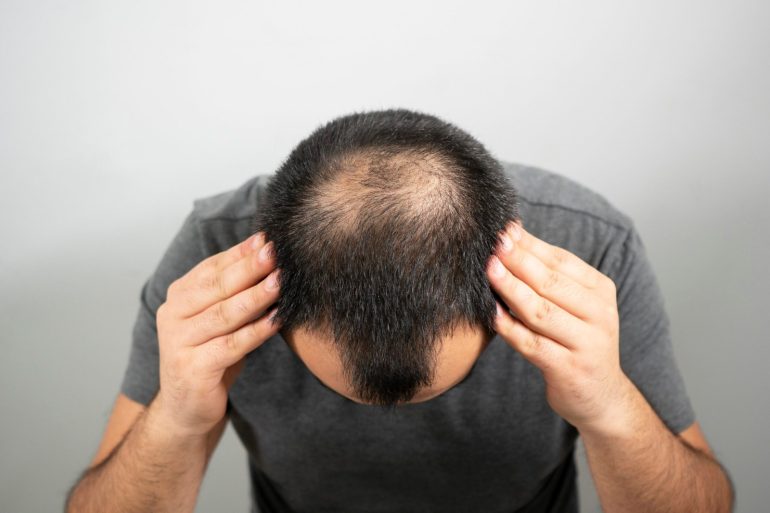
Ponytails are a very popular hairstyle. Women and some men use it to keep their hair off their faces. And while it is a sensible hairstyle often connected to jobs, school, and sports, it has also been connected to hair loss. Hair loss and hairstyles are mainly related, especially the traditional ponytail. Therefore, there is debate about whether ponytail is a cause of hair loss. We aim to dispel the misconceptions and clarify the facts surrounding the idea that pulling your hair back in a ponytail causes hair loss. Read this blog to understand an in-depth investigation.
Pony Tail and Hair Loss
Making tight ponytails may cause traction alopecia, a disorder that affects certain women. Many girls experience traction alopecia for various causes; thus, may ponytails contribute to hair loss? If so, how can you wear this sensible look without causing damage to your hair?
Tight ponytails or buns that pull the hair tightly towards the scalp’s vertex might result in traction alopecia. Traction alopecia may result from any hairstyle that pushes the hair upward too tightly. Wearing a tight ponytail may result in irritation, generalized scarring, and hair loss.
Who Is More Affected by Alopecia?
Traction alopecia is, however, more common in individuals who have a habit of tying up their hair in ponytails or other styles. It also applies to people who also braid their hair. Thus, both men and women can experience similar manifestations due to these styles, and the hair might mostly lose its hair around the temples and along the edges of the head.
Furthermore, some people have contracted the disease by wearing headgear like snowboarding, skiing, and motorcycling headgear/helmets.
This is because ballet dancers are prone to traction alopecia since they tend to cut their locks into tight buns and ponytails. Moreover, it also influences those who adhere to certain cultural practices, e.g., not cutting hair, instead wrapping it up in a tight way. Traction alopecia could be caused in this case by the weight itself, as well as the tightness of the hair.
In-Depth Details About Ponytails
Location of Ponytail: The location and tightness of the ponytail are vital. Likewise, hairstyles that are tightened to the point of excessive tension can be observed, and mainly when the same hairstyle is used regularly, the hair follicles can strain and lead to traction alopecia.
Elasticity of Hair: The flexibility of your hair is one of the significant considerations. Nonetheless, in particular cases when the hair is dry or damaged, regularly putting on tight ponytails can make the hair weaker and break.
Period and Time: It is unlikely that using a ponytail occasionally would lead to visible hair loss. Conversely, tight hairstyles worn regularly and over a long period of time can ultimately lead to the stress of the hair follicles.
Avoidance and Reduction: To spread strain more evenly, wear looser hairstyles or an alternative ponytail. So only occasionally, tuck your hair in a similar tight.
Avoid Rubber Bands: Select hair-friendly accessories over tight rubber bands, which may cause breakage, such as soft scrunchies or fabric-covered hair ties.
Take Regular Hair Breaks: Take frequent breaks from tight styles to allow your hair to heal the follicles and scalp. Further, take advantage of looser haircuts while you are relaxing.
How to Prevent Hair Loss?
- Eat a diet high in nutrients to nourish your hair from the inside out for thicker, healthier hair.
- Take good care of your hair; careful combing, drying, and styling may help avoid breakage.
- Include scalp massages in your regimen daily to promote hair development.
- Drink enough water to support general health, which will help your hair and scalp.
- Use relaxation strategies to control your stress and reduce your hair loss.
- Select high-quality hair care products based on your requirements and hair type.
- Loose hairstyles will help to reduce stress on your hair follicles.
- Exercise improves circulation, and this is beneficial to your scalp and hair.
- You can cover your head with hats and other UV protective hair products.
- Arrange frequent checkups to cure the problem of hair loss as it happens.
- Look into hair growth products and hair growth therapies that are scientifically supported.
- Enlist the help of professionals, such as trichologists or dermatologists, who can give you specific advice on how to have healthy hair.
Conclusion
Finally, tightness, frequency, and length of a ponytail are the key determinants of hair loss as opposed to style. There is a need to balance healthy hair and style. You can indulge in the fun of ponytails without damaging the well-being of your most valuable locks by adopting loose hairstyles, eliminating unnecessary strain, and thus giving greater emphasis to hair care in general. As we have said, it takes temperance and care to keep your hair looking and feeling good, as well as being fashionable at the same time.
For expert consultation, you can trust JJ Aesthetics in Islamabad.