



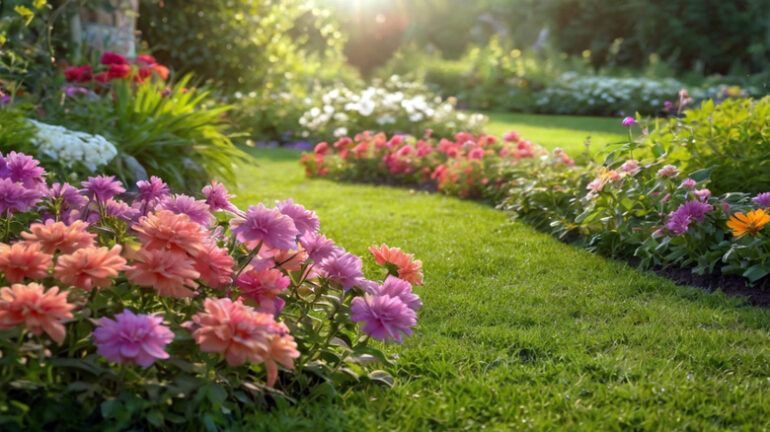
Every gardener knows the struggle of maintaining the perfect landscape. You spend hours weeding, watering, and mulching, only to find bare patches of earth drying out or invasive weeds returning with a vengeance a week later. It’s an exhausting cycle that can take the joy out of gardening. However, there is a botanical solution that functions as a living mulch, solving these maintenance headaches while adding a layer of lush, vibrant texture to your yard: ground covers.
Ground covers are low-growing plants that spread across the soil, creating a dense mat of foliage. Unlike traditional lawns that require constant mowing and fertilizing, well-chosen ground covers are often low-maintenance, drought-tolerant, and exceptionally long-lasting. By filling in the gaps between larger shrubs and trees, they act as a protective blanket for your earth, regulating temperature and preventing soil erosion. Whether you are dealing with deep shade under an oak tree or baking sun on a rocky slope, there is a ground cover species that can transform that challenging spot into a stunning feature.
Here are the top long-lasting ground cover options to elevate your garden’s aesthetic and health.
Creeping Thyme for Aromatic Resilience
If you are looking for a plant that stimulates the senses while standing up to foot traffic, Creeping Thyme (Thymus serpyllum) is a top contender. This woody, perennial herb forms a dense, mat-like cushion of tiny leaves that release a pleasant, savory fragrance when stepped on. It is an excellent choice for filling the spaces between stepping stones or paving pavers, softening the hard edges of your landscape design.
Beyond its sensory appeal, Creeping Thyme is incredibly resilient. Once established, it is drought-tolerant and craves full sun, making it perfect for hot, dry areas where other plants might scorch. In early summer, it erupts in a carpet of tiny pink, purple, or white flowers that are a magnet for pollinators like bees and butterflies. Because it creates such a tight weave of stems and leaves, it is highly effective at choking out weeds, saving you hours of back-breaking labor.
Stonecrop Sedum for the Water-Wise Gardener
For areas with poor soil or intense heat, Stonecrop (Sedum) is practically indestructible. As a succulent, Sedum stores water in its fleshy leaves, allowing it to thrive in arid conditions that would wither more delicate species. There are hundreds of varieties to choose from, ranging from the bright, lime-green foliage of ‘Angelina’ to the variegated pink and white leaves of ‘Tricolor’.
Sedum is particularly useful for rock gardens, slopes, and borders. It has a shallow root system, which means it can grow in thin layers of earth where deep-rooted plants would fail. However, even hardy succulents need a nutritious start. If you are planting in a particularly rocky or clay-heavy area, amending the site with quality earth is crucial. For gardeners in the Mountain West, for example, mixing in high-quality topsoil in Salt Lake City can provide the essential drainage and nutrient balance these succulents need to establish their roots for the long haul.
Vinca Minor for Deep Shade Challenges
One of the most difficult areas in any garden to cultivate is the dry, dense shade found under mature trees. The tree roots compete for water, and the canopy blocks the light. Enter Vinca Minor, also known as Periwinkle. This tough, evergreen vine is a shade-loving powerhouse that spreads via trailing stems, which root wherever they touch the ground.
Its glossy, dark green leaves provide year-round interest, ensuring your garden doesn’t look bare and brown during the winter months. In the spring, Vinca Minor is dotted with charming, pinwheel-shaped flowers in shades of blue, violet, or white. It is aggressive enough to outcompete weeds but generally manageable enough that it won’t take over your entire yard if you keep an eye on its borders. It’s the perfect solution for creating a unified, green carpet in the darkest corners of your landscape.
Japanese Pachysandra for a Clean, Uniform Look
If you prefer a more structured, uniform aesthetic, Japanese Pachysandra (Pachysandra terminalis) is the industry standard for shade gardens. Unlike the vining habit of Vinca, Pachysandra grows on upright stems, creating a tidy appearance that looks almost manicured without any effort on your part. It prefers acidic, rich soil and partial to full shade.
This plant is particularly valued for its deer resistance. In many suburban and rural areas where deer browse is a constant threat to landscaping, Pachysandra remains virtually untouched. Its leathery, toothed leaves form a canopy about 6 to 10 inches high, effectively shading the soil beneath it to retain moisture. Because it spreads through underground rhizomes, it can fill in a large area relatively quickly, stabilizing the soil and preventing erosion on shady banks.
Creeping Phlox for a Spring Color Explosion
While many ground covers are chosen for their foliage, Creeping Phlox (Phlox subulata) is chosen for its spectacular floral display. For a few weeks every spring, this plant transforms into a literal blanket of color, completely obscuring its foliage with thousands of tiny star-shaped blooms in shades of pink, lavender, red, and white. It is a showstopper that signals the arrival of spring.
For the rest of the year, Creeping Phlox remains a handsome, moss-like green mat. It loves full sun and well-draining soil. It is particularly effective when allowed to drape over a retaining wall or cascade down a slope, softening hardscaping features with its organic form. Because it is native to North America, it is well-adapted to many local climates and supports native pollinators.
Creating the Right Foundation
Regardless of which species you choose, the secret to “long-lasting” ground cover is preparation. These plants are often touted as maintenance-free, but they require a strong start. Before planting, clear the area of all weeds and grass. Loosen the soil to encourage root spread. Remember that while ground covers eventually suppress weeds, they need help in the first year or two until they achieve full coverage. Mulching between your new plugs will keep moisture in and weeds out until the plants touch. By investing in the soil and the right plant selection now, you are building a self-sustaining landscape that will reward you with beauty and ease for decades.