



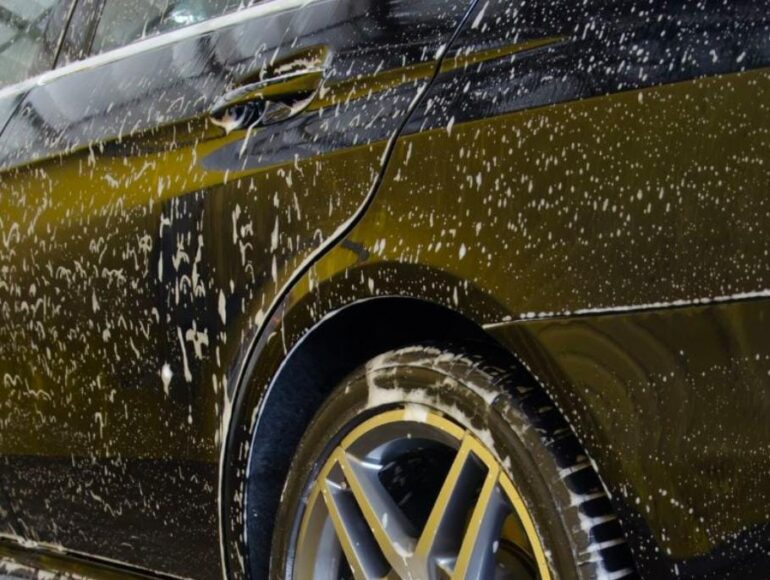
An automatic car wash near you is a facility where the vehicle remains stationary (or moves slowly along a track or conveyor belt), and machines—such as brushes, sprayers, nozzles, and dryers—perform the bulk of the cleaning. The customer generally stays in the vehicle, with minimal effort. The “automatic” aspect means that mechanical systems handle water pressure, soap application, scrubbing, rinsing, and drying, often controlled by sensors, timers, and programmable logic controllers (PLCs).
This approach provides consistency and efficiency, offering a quicker, more standardized clean compared to manual washing.
Core Components & Their Function
Conveyor or Track System
In many setups, a belt or chain moves the car through the wash tunnel at a regulated speed. The pace is optimized so each cleaning stage has enough dwell time to work effectively.
Pre-Soak or Prespray System
Before scrubbing, a chemical or detergent spray loosens grime, road salt, bugs, and other contaminants. This pre-soak softens deposits so brushes or high-pressure sprays can remove them more gently.
Brushes, Cloth Strips, or Foam Applicators
These components mechanically agitate the car’s surface to dislodge dirt and particles. Brushes may rotate or oscillate, and are usually made from soft cloth or foam material designed to minimize scratching.
High-Pressure Rinse Nozzles
Once soap and loosened debris are in suspension, high-pressure water jets rinse away contaminants. These nozzles are adjustable and strategically located to reach hard-to-access areas such as wheel wells and undercarriage sections.
Spot-Free Rinse & Water Softening
To minimize mineral spots, many systems use a “spot-free” rinse with deionized or purified water. This prevents streaks and ensures a polished finish.
Drying Systems
Powerful blowers or air knives help push water off the surface. Some systems use multiple drying stages for maximum efficiency, reducing the risk of water spots.
Chemical Dosing & Control
Automated pumps deliver precise amounts of detergent, wax, protectants, and other agents. The PLC system monitors and times these doses to match the vehicle’s size and position.
Sensors & Safety Features
Infrared, ultrasonic, or optical sensors detect vehicle position and size to trigger each stage. Safety cutoffs are included to prevent damage if an anomaly is detected.
Efficiency & Throughput
One of the main advantages of automatic car wash systems is throughput—the number of vehicles cleaned per hour. Because many steps are fully automated and operate in sequence, a single lane can process dozens of vehicles efficiently.
Efficiency comes from:
- Optimizing dwell time for each cleaning stage
- Synchronization between spraying, scrubbing, rinsing, and drying
- High-speed pumps and air blowers that reduce process duration
- Water recycling systems that conserve resources and reduce costs
For busy urban areas or highway service centers, this efficiency is critical to keeping wait times short while maintaining consistent quality.
Pros & Cons of Automatic Car Washes
Advantages
- Time savings – Customers stay in their cars with minimal effort.
- Consistency – Automated timing and dosing reduce human error.
- Scalability – Can handle a high volume of vehicles daily.
- Controlled resource use – Efficient dosing reduces chemical and water waste.
Drawbacks / Challenges
- Potential surface scratches – If dirt particles stick to brushes, they can mark paint.
- High setup costs – Equipment and technology are expensive to install.
- Maintenance needs – Pumps, sensors, and brushes require regular upkeep.
- Difficulty with heavy soil – Extremely muddy or dirty vehicles may require pre-washing.
- Water demand – Without recycling systems, water consumption can be substantial.
Best Practices for Design & Operation
To maximize performance and minimize issues, operators follow these best practices:
- Use high-quality foam or cloth brushes to reduce abrasion
- Clean brushes regularly to avoid grit buildup
- Calibrate sensors for precise detection and timing
- Maintain pumps, valves, and filters consistently
- Recycle and filter rinse water where possible
- Adjust chemical dosing based on water quality and soil level
These practices keep equipment functioning smoothly and improve customer satisfaction.
Choosing a Reliable Automatic Car Wash
From a customer perspective, selecting a good automatic wash requires observation and awareness.
- Look for well-maintained equipment and a clean facility
- Evaluate drying quality—excess water left behind signals inefficiency
- Track paint condition after repeated visits
- Ensure clear signage and simple instructions
- Check for available add-ons like waxing or wheel cleaning
- Consider word-of-mouth recommendations or reviews
A quality car wash is easy to spot—it looks professional, runs smoothly, and delivers consistent results.
How Automatic Systems Compare to Other Methods
Hand Washing
Offers precision but is time-intensive and depends on proper tools to avoid scratches.
Touchless Car Washes
Gentler on paint but may rely more heavily on chemicals to remove grime.
Driveway Washing
Convenient but less efficient with water, and inconsistent compared to professional systems.
Automatic car washes closest to you strike a balance between speed, thoroughness, and accessibility, making them a popular choice for busy drivers.
Future Trends & Innovations
Automatic car wash technology continues to evolve. Exciting developments include:
- Robotic vision and AI – Real-time adjustment of nozzles and brushes
- Electrostatic drying – Using charged air currents to remove droplets more effectively
- Eco-friendly detergents – Biodegradable solutions that reduce environmental impact
- Modular bay designs – Expandable setups that scale with demand
- IoT monitoring – Remote systems that track performance and maintenance needs
These innovations promise even greater efficiency, safety, and sustainability.
Summary & Takeaway
Automatic car wash systems integrate mechanical, hydraulic, and chemical engineering to deliver fast, reliable cleaning with reduced labour requirements. Their ability to strike a balance between speed and consistency makes them a preferred choice for many drivers. While they require investment and upkeep, proper design and operation ensure long-term efficiency. For car owners, selecting a well-run facility is key to protecting a vehicle’s finish and maintaining its value over time.