



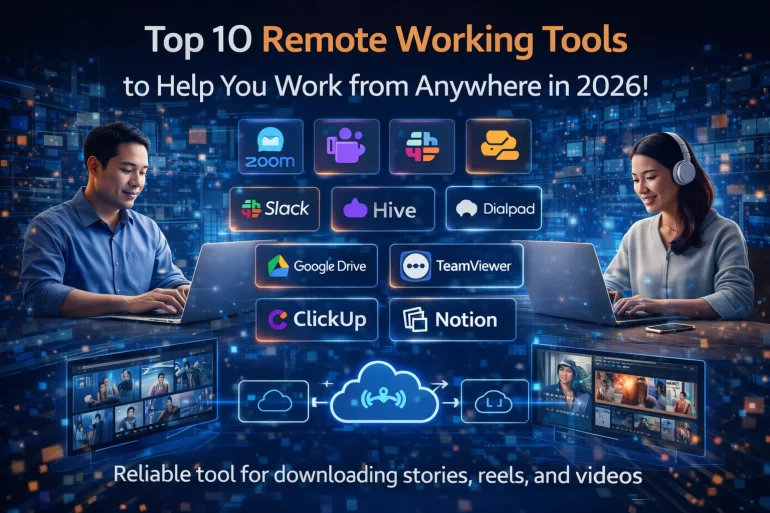
Remote work is no longer a trend — it’s the new standard for teams and freelancers around the world. To succeed outside of a traditional office environment, professionals need the right set of tools to communicate, organize projects, track time, and stay productive from anywhere. In this guide, we break down the most essential remote work tools of 2026 across all key categories.
- Communication & Collaboration Platforms
Keeping teams connected is critical in remote environments. These tools help teams chat, meet, and collaborate in real time:
- Video Conferencing – Platforms that let teams host virtual meetings, share screens, and record sessions for later review.
- Team Chat Tools – Instant messaging solutions with group channels, threaded discussions, and file sharing keep conversations organized and accessible.
- Integrated Collaboration Suites – Some applications combine messaging, calendar scheduling, document commenting, and file sharing to streamline workflows.
Why they matter: Without face-to-face interaction, clear and efficient communication keeps remote teams aligned and helps avoid misunderstandings.
- Project Management & Workflow Systems
Remote teams need a centralized space to plan, assign, and track work — especially when team members are in different time zones.
- Task Boards and Kanban Tools – Visual interfaces that let teams manage work items through stages like “To Do”, “In Progress”, and “Done”.
- Workflow Automation – Tools that reduce manual work by automating repeated processes.
- Team Dashboards & Reporting – Provide visibility into project progress and help managers keep deadlines on track.
Benefits: Improved clarity on who is responsible for what and when, plus better coordination across distributed teams.
- Time & Productivity Tools
Managing time effectively is crucial when traditional supervision isn’t possible.
- Time Tracking Software – Logs hours spent on tasks and projects to help with productivity analysis, billing, or workload planning.
- Focus & Concentration Apps – Tools that help block distractions, set focus intervals, or schedule breaks.
- Task Organizers & To-Do Lists – Simplify prioritizing and structuring daily work.
Why it matters: Tracking and optimizing time use increases output and helps employees manage their workday with greater autonomy.
- File Sharing & Cloud Storage
Remote workers rely on shared documents and collaborative editing more than ever.
- Cloud Storage Platforms – Centralized repositories where files are stored, synced, and backed up.
- Live Editing Tools – Multiple people can edit the same file simultaneously, with automatic version control.
Advantages: Reduces email clutter, improves accessibility, and ensures that everyone always has the latest version of shared assets.
- Security & Access Management
Remote work poses unique security challenges because employees access systems from diverse networks and devices.
- Secure Communication Encryption – Ensures sensitive data transmitted over chats and meetings stays protected.
- Remote Desktop & Access Control Tools – Allow secure access to workplace systems from afar.
- Multi-Factor Authentication (MFA) – Adds an extra layer of login security to corporate accounts.
Importance: Strong security practices protect businesses from data breaches and unauthorized access in a distributed work setting.
- Emerging AI & Automation Tools
AI-powered tools are increasingly helping remote workers save time and reduce manual effort:
- AI Task Planners – Tools that can organize and prioritize daily tasks intelligently.
- Smart Meeting Summaries – Automatically generate concise notes and action items after virtual meetings.
- Automated Routine Assistants – Reduce repetitive admin tasks using machine learning.
Future-Ready Workflows: As teams grow and workloads increase, these tools help ensure that remote workflows stay efficient and competitive.
Final Thoughts
The right combination of tools can transform how teams operate remotely — making communication seamless, projects transparent, time well-managed, and data secure. Whether you’re a startup founder, freelancer, or enterprise manager, investing in a well-rounded remote work toolkit is essential in 2026 and beyond.