



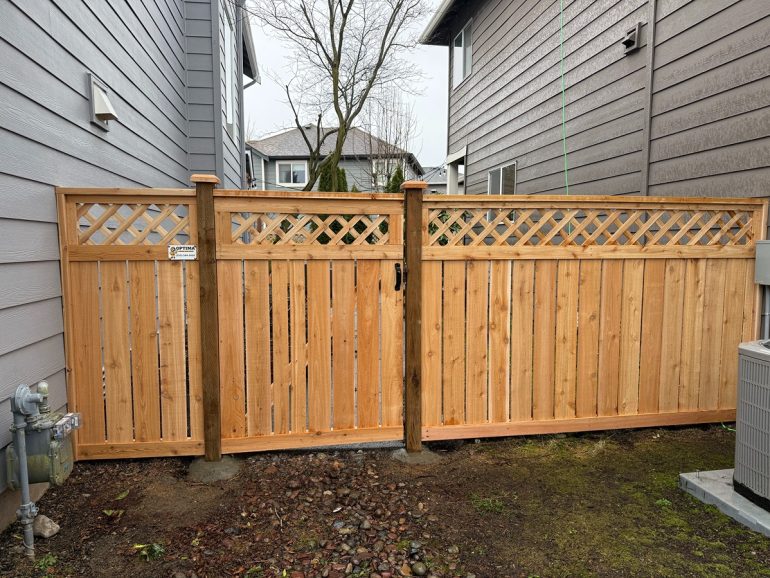
Washington State averages 37 inches of rain annually in Seattle — and west of the Cascades, some areas see closer to 55–70 inches per year. That sustained moisture is the single greatest threat to wood fence durability in the Pacific Northwest. Wood fences exposed to Washington’s wet climate without proper species selection or treatment typically last just 7–12 years before significant rot, splitting, or structural failure. Choose the right species and treat it correctly, and the same fence can last 25–40 years.
This guide breaks down how Washington’s climate specifically damages wood fences, which species perform best under Pacific Northwest conditions, and what treatment options give homeowners the best return on investment.
Why Washington’s Climate Is Unusually Hard on Wood Fences
Most wood fence durability guides are written for dry or mixed climates. Washington’s west side doesn’t fit that mold. Here’s what makes the Pacific Northwest environment uniquely harsh on fencing materials:
Persistent moisture cycles. Seattle and the Puget Sound region experience extended wet seasons — from October through May — with minimal dry-out periods in between. Wood that stays wet for weeks at a time is constantly vulnerable to fungal decay, mold growth, and insect infiltration.
Temperature fluctuations near freezing. The region rarely drops to extreme cold, but it oscillates regularly between 28°F and 45°F during winter months. This freeze-thaw cycling causes wood fibers to expand and contract repeatedly, accelerating cracking and checking (surface splits that allow moisture to penetrate deeper into the grain).
High humidity even in summer. Even during Seattle’s dry July and August, relative humidity rarely drops below 50–60%. Fence boards don’t fully dry out the way they would in Arizona or Colorado. This keeps moisture content elevated year-round.
Proximity to Puget Sound salt air. For homeowners in coastal areas — West Seattle, Bainbridge Island, Edmonds, Gig Harbor — salt-laden air adds a secondary corrosion vector that degrades both wood fasteners and surface finishes faster than inland locations.
Ground contact and drainage issues. Many Seattle and Tacoma lots have clay-heavy soil with poor drainage. Fence posts set in saturated clay-based ground absorb water from below, even when the above-grade boards remain sealed.
Wood Fence Durability: Species Comparison for Pacific Northwest Homeowners
Not all wood species respond to Washington’s climate the same way. The following comparison covers the species most commonly used in Seattle, Tacoma, Bellevue, and surrounding areas.
Species Comparison Table
| Species | Natural Rot Resistance | Typical Lifespan (PNW) | Cost Range (per linear ft, installed) | Notes |
| Western Red Cedar | High | 20–30 years | $28–$45 | Best all-around PNW choice |
| Incense Cedar | Moderate-High | 15–25 years | $22–$38 | Good value alternative |
| Douglas Fir | Low-Moderate | 8–15 years | $18–$28 | Must be pressure-treated |
| Spruce/Pine | Low | 5–10 years | $14–$22 | Not recommended untreated |
| Redwood | Very High | 25–40 years | $38–$65 | Premium option, limited local supply |
| Pressure-Treated Pine | Moderate (treated) | 15–20 years | $20–$32 | Budget-friendly; chemical treatment required |
Cost ranges are estimates for the greater Seattle metro area as of 2024. Homeowners should request current quotes from local contractors, as lumber prices fluctuate significantly.
Western Red Cedar: The Pacific Northwest Standard
Western Red Cedar is the dominant choice for wood fences across Washington State, and for good reason — it’s not just marketing. Cedar contains natural oils called thujaplicins that inhibit fungal growth and insect activity without any chemical treatment. These compounds are what give cedar its characteristic aroma and its edge over other species in wet climates.
For homeowners in Seattle, Bellevue, Redmond, or Kirkland, cedar is typically the baseline recommendation. It handles the region’s rain cycles better than virtually any other domestically available species at its price point.
That said, cedar isn’t immune to Washington’s climate. Untreated cedar will gray and check within 2–4 years. Annual or biennial application of a penetrating oil-based sealant dramatically extends both appearance and structural life. Avoid film-forming finishes (many latex stains) on cedar — they trap moisture beneath the surface, which is the opposite of what you want in a wet climate.
For homeowners evaluating contractors or planning their first installation, researching wood fence installation Bellevue WA options early in the process gives you time to compare species recommendations and treatment protocols before signing a contract.
Douglas Fir and Pressure-Treated Options: When Budget Is the Priority
Douglas Fir is abundant in Washington and is one of the most structurally strong softwoods available. Its weakness in fencing applications is low natural rot resistance — untreated fir in ground contact in western Washington will begin rotting within 3–5 years.
Pressure-treated Douglas Fir or Southern Yellow Pine addresses this with preservative chemicals (most commonly micronized copper azole, or MCA, since the phase-out of chromated copper arsenate). Modern pressure-treated lumber is safer than older formulations and performs well when:
- Posts are set with concrete and positioned above grade where possible
- Above-ground boards use ground-contact-rated (UC4B) treatment at minimum
- The treated wood is sealed after installation, once dried (typically 60–90 days post-installation)
The tradeoff with pressure-treated lumber is aesthetics. The greenish cast of fresh treatment takes 1–2 seasons to weather out, and the wood doesn’t accept stain as cleanly as cedar. For homeowners in HOA communities or neighborhoods with strict fence appearance standards, this matters.
Redwood: Premium Performance, Limited Availability
Redwood outperforms cedar in natural rot resistance due to its tannin content and tight grain structure. In Pacific Northwest conditions, a well-maintained redwood fence can realistically last 35–40 years.
The challenge in Washington State is supply. Redwood is sourced primarily from Northern California, and regional availability affects pricing significantly. Expect to pay 30–50% more than cedar for comparable fence boards, with lead times that vary by season and supplier.
For high-end residential projects in neighborhoods like Medina, Mercer Island, or Queen Anne — where property values justify premium materials — redwood is worth serious consideration. Working with experienced cedar fence contractors in the Pacific Northwest who also source redwood can streamline the material procurement process.
Post Installation: The Most Overlooked Factor in Fence Longevity
Homeowners often focus entirely on above-grade board selection while underestimating the importance of post installation. In Washington State, post failure — not board failure — is the most common reason fences require full replacement before their expected lifespan.
Best practices for post longevity in Washington’s climate:
- Use concrete footings, not compacted gravel alone. In clay-heavy Pacific Northwest soils, gravel drainage footings perform poorly because the surrounding clay doesn’t drain. Concrete with a slight crown at grade sheds water away from the post base.
- Set posts to a minimum depth of 1/3 the total post length. For a 6-foot fence with 8-foot posts, the post should be buried at least 2.5–3 feet. Washington’s frost depth west of the Cascades is typically 12–18 inches, so deeper footings also protect against frost heave.
- Specify UC4B pressure treatment for all posts. Even cedar posts benefit from pressure treatment at the below-grade section. Many contractors offer “cedar above grade, pressure-treated post” configurations that balance appearance and durability.
- Cap post tops. Standing water on flat post tops is a primary entry point for decay. Metal or wood post caps cost $3–$8 each and meaningfully extend post life.
- Check Washington State building codes for your municipality. Most Washington jurisdictions require fence permits for structures over 6 feet. Seattle, Tacoma, and Bellevue each have specific setback requirements from property lines. Confirm local requirements before installation begins.
Maintenance Schedule for Wood Fences in Washington State
Even the best species and installation practices won’t substitute for regular maintenance. Here’s a practical schedule for Pacific Northwest conditions:
Year 1:
- Inspect fence 6 months after installation for any settling or cracking
- Apply initial sealant coat to cedar or untreated wood if not done at installation
- Check post bases for any soil settlement
Every 1–2 Years:
- Reapply penetrating oil-based sealant or water repellent
- Replace any loose or missing fasteners with hot-dipped galvanized or stainless steel (standard zinc screws corrode within 2–3 years in wet climates)
Every 3–5 Years:
- Sand or lightly power-wash boards before resealing
- Inspect and retighten post-to-rail connections
- Treat any exposed end grain with concentrated wood preservative
As Needed:
- Replace individual boards showing advanced checking or soft spots
- Address any ground contact points where soil has heaped against boards
Conclusion: Wood Fence Seattle Weather Durability Starts With the Right Choices Upfront
Washington’s wet climate doesn’t make wood fencing impractical — it makes species selection and proper installation critical. Western Red Cedar remains the optimal choice for most Pacific Northwest homeowners based on the combination of natural rot resistance, regional availability, and cost. Redwood offers premium longevity where budget allows. Pressure-treated options serve well when properly installed and sealed.
The fence that holds up best against wood fence Seattle weather durability challenges isn’t necessarily the most expensive — it’s the one built with the right species, correct post installation depth, appropriate hardware, and consistent maintenance. Making those decisions correctly at the outset is far more cost-effective than replacing a fence that failed prematurely.
FAQ Section
Q1: How long does a wood fence last in Seattle’s rainy climate? A properly installed and maintained cedar fence in Seattle typically lasts 20–30 years. Untreated or poorly installed fences may fail in 7–12 years due to rot, post failure, or splitting caused by the region’s persistent moisture and freeze-thaw cycles.
Q2: What is the best wood for a fence in the Pacific Northwest? Western Red Cedar is the top choice for Pacific Northwest fencing due to its natural rot-resistant oils, regional availability, and cost-to-performance ratio. Redwood offers superior durability but costs 30–50% more and has limited local supply in Washington State.
Q3: Does a wood fence need to be sealed in Washington State? Yes. Even naturally rot-resistant cedar should be sealed with a penetrating oil-based wood sealant every 1–2 years in Washington’s wet climate. Sealing prevents moisture intrusion, reduces checking, and significantly extends the functional life of fence boards.
Q4: Do I need a permit to install a fence in Seattle or Tacoma? Most Washington municipalities require a permit for fences over 6 feet tall. Seattle, Tacoma, and Bellevue each have specific setback and height requirements. Homeowners should verify current local ordinances with their city’s permitting department before beginning installation.
Q5: Why do fence posts fail faster than the boards in wet climates? Fence posts fail first because they’re in direct ground contact in saturated soil. Even treated wood degrades faster below grade in clay-heavy Pacific Northwest soils. Proper concrete footings, UC4B-rated pressure treatment, and keeping post bases clear of soil contact significantly extend post life.