



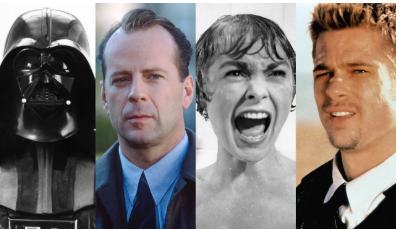
When settling down for a night of premium entertainment, the universal question always arises: what movie should I watch? With thousands of titles flooding every streaming platform, audiences are constantly hunting for stories that cut through the clutter and deliver something truly unforgettable. While action-packed blockbusters and laugh-out-loud comedies have their place, nothing quite compares to the sheer electric thrill of a perfectly executed plot twist the kind that leaves you speechless and rewinds everything you just watched.
For decades, the holy grail of cinema has been the plot twist. But what is the actual plot twist meaning? In film journalism, it refers to a radical shift in the expected direction or outcome of a narrative. It is an intentional act of narrative misdirection where the screenwriter drops subtle clues in plain sight, only to reveal a completely different reality in the final act. A masterful twist of plot doesn’t just shock the viewer; it entirely alters the context of every single scene that came before it, forcing you to look at the entire story through a brand-new lens.
If you are tired of predictable Hollywood formulas, we have curated a masterlist of legendary plot twist movies that will leave your jaw on the floor. To help you plan your next viewing session, these masterpieces are arranged in exact descending order, starting from the highest-rated and most globally popular cinematic triumphs down to the lighter cult favorites.
1. Fight Club (1999) — Global Rating: 8.8/10
The Setup and Clues
David Fincher’s cult masterpiece introduces us to an unnamed, insomniac narrator (played by Edward Norton) who feels entirely trapped in a mind-numbing corporate existence. Everything changes when he crosses paths with Tyler Durden (Brad Pitt), a charismatic, eccentric soap salesman who believes that material possessions enslave the human spirit. Together, they establish an underground fighting ring that rapidly evolves into a massive, anti-capitalist terrorist organization known as Project Mayhem.
The Mind-Bending Reveal
The iconic fight club plot twist completely deconstructs the film’s reality: Tyler Durden does not exist. He is a secondary, shattered projection of an idealized split personality created by the narrator’s sleep-deprived, fractured psyche. Whenever the narrator believed he was sleeping, his alter ego was out traveling the country, organizing underground cells, and laying down explosives.
Why It Remains a Masterpiece
- The Narrative Symmetry: This definitive twist of plot completely rewards repeated viewings. Once you know the secret, you notice that other characters never look at Tyler and the narrator at the same time.
- Visual Subversion: Tyler only drives cars when the narrator is in the passenger seat, and certain single-frame background flashes give away the psychological fracture long before the final hotel room confrontation.
- Cultural Legacy: It remains one of the highest-rated movies with good plot twists in history because it uses its finale to deliver a profound critique of consumer culture.
2. The Usual Suspects (1995) — Global Rating: 8.5/10
The Setup and Clues
Directed by Bryan Singer, this brilliant neo-noir mystery centers around a bloody, catastrophic explosion on a ship docked at the Port of Los Angeles. The police are left with a massive pile of bodies and only two surviving witnesses. One of them is Roger “Verbal” Kint (Kevin Spacey), a low-level, timid con artist with cerebral palsy. Sitting in a crowded customs office, Verbal spins an incredibly intricate, terrifying web of a tale about a mythical, all-powerful international criminal mastermind named Keyser Söze, who supposedly orchestrated the entire heist.
The Mind-Bending Reveal
The final moments of the film deliver a historic twist of plot. The interrogating detective spends the entire movie convinced that he is smarter than his witness, eventually concluding that another corrupt officer was Söze. He lets Verbal walk out of the precinct with full immunity. As Verbal exits the building and walks down the sidewalk, his severe limp slowly disappears, his stiff hand relaxes, and his posture shifts into that of a cold, calculating mastermind. Back in the office, the detective drops his coffee cup in slow motion as he glances at the bulletin board, realizing every single detail, name, and location in Verbal’s story was completely fabricated on the spot using random papers and coffee mug labels scattered across the room.
Why It Remains a Masterpiece
- The Ultimate Con: The film turns the viewer into the one being interrogated and fooled, perfectly executing a masterclass in script misdirection.
- Impeccable Pacing: It builds momentum through dialogue alone, proving that you do not need massive action sequences to create tension.
- The Final Mic-Drop: It holds an incredibly high global rating because the closing image of Verbal stepping into a car and vanishing into thin air is one of the most satisfying resolutions in classic cinema history.
3. The Prestige (2006) — Global Rating: 8.5/10
The Setup and Clues
Christopher Nolan’s atmospheric thriller explores the obsessive, bitter rivalry between two stage magicians in Edwardian London: Robert Angier (Hugh Jackman) and Alfred Borden (Christian Bale). Driven by professional jealousy and a desire to create the ultimate illusion—The Transported Man—the two men engage in a dangerous game of competitive sabotage that destroys the lives of everyone around them.
The Mind-Bending Reveal
The brilliant climax unveils a dual puzzle of obsession. Angier relies on a machine built by Nikola Tesla that literally clones him every night, forcing him to drown his original self beneath the stage during every performance. Meanwhile, Borden’s secret to the illusion is much more grounded but psychologically devastating: he was actually a set of identical twins who shared a single identity. They lived half a life each, alternating days as “Borden” and his assistant “Fallon,” sacrificing their own individual lives and romantic relationships to maintain the absolute secrecy of their art.
Why It Remains a Masterpiece
- Hidden in Plain Sight: The film outright tells you how magic tricks work in the opening narration, yet audiences are still entirely blindsided by the resolution.
- The Core Theme: It uses the dual reveals to perfectly mirror the destructive nature of obsession and dedication to craft.
- Infinite Rewatchability: Knowing the ending radically transforms how you view the early interactions, particularly the tragic dialogue between Borden and the women in his life.
4. Oldboy (2003) — Global Rating: 8.3/10
The Setup and Clues
Park Chan-wook’s legendary South Korean neo-noir mystery follows Oh Dae-su, an ordinary family man who is abruptly kidnapped and locked in a solitary hotel room for fifteen long years without any explanation. When he is suddenly released just as unexpectedly as he was taken, he is given a cell phone, a wallet full of cash, and five days to uncover the identity and motivation of his captor. Along his violent quest for vengeance, he falls deeply in love with a young, compassionate sushi chef named Mi-do.
The Mind-Bending Reveal
The devastating oldboy plot twist remains one of the most shocking and controversial moments in international cinema history. Dae-su discovers that his imprisonment was orchestrated by a wealthy former schoolmate seeking revenge for a past childhood tragedy. Through meticulous psychological conditioning and hypnosis, the captor intentionally guided Dae-su and Mi-do together upon his release. The horrific truth is revealed: Mi-do is actually Dae-su’s long-lost daughter, whom he hasn’t seen since she was an infant.
Why It Remains a Masterpiece
- Mythological Resonance: Unlike many western thrillers that use a sudden shift for simple shock value, this narrative choice serves as a pitch-black, classical Greek tragedy.
- Emotional Catharsis: It leaves the audience completely breathless, pondering the terrifying lengths an antagonist will go to completely break an individual’s soul.
- Uncompromising Execution: It firmly holds its high global rating because the director refuses to compromise the dark, poetic nature of the story’s resolution.
5. Shutter Island (2010) — Global Rating: 8.2/10
The Setup and Clues
Directed by Martin Scorsese, this atmospheric psychological thriller follows U.S. Marshal Teddy Daniels (played by Leonardo DiCaprio) as he arrives at a secluded, fortress-like psychiatric facility located on a remote island. Alongside his new partner, Teddy is tasked with investigating the impossible disappearance of a patient. As a massive storm cuts the island off from the mainland, Teddy uncovers dark signs of a massive conspiracy involving unethical medical experiments conducted by the hospital’s administration.
The Mind-Bending Reveal
The legendary shutter island plot twist hits like a physical blow. Teddy is not a visiting law enforcement officer; he is actually Andrew Laeddis, the hospital’s most dangerous and deeply traumatized patient. He was institutionalized after murdering his manic-depressive wife, who had tragically drowned their three children. The entire complex investigation was a real-time, highly elaborate role-playing exercise designed by his primary doctors as a radical, final attempt to help him break through his psychological delusions.
Why It Remains a Masterpiece
- The Ultimate Choice: What makes it one of the absolute best plot twist movies is the haunting final sequence. Andrew briefly regains his sanity, but willingly pretends to relapse so his doctors will proceed with a lobotomy.
- Ethical Dilemma: By choosing to undergo the procedure, he willingly opts for a psychological death sentence to finally achieve peace rather than live with the agonizing guilt of his past.
- Rewatch Value: Every interaction with the guards, the doctors, and the patients takes on a brilliant secondary meaning once you understand the protagonist’s true identity.
6. The Sixth Sense (1999) — Global Rating: 8.2/10
The Setup and Clues
- Night Shyamalan’s psychological horror pairs a dedicated child psychologist, Malcolm Crowe (played by Bruce Willis), with a deeply troubled young boy named Cole Sear (Haley Joel Osment). Cole is isolated, terrified, and harboring a dark, supernatural secret: he possesses the ability to see and communicate with deceased individuals who roam the earth unaware of their own passing.
The Mind-Bending Reveal
For nearly two hours, the audience watches Malcolm attempt to rehabilitate Cole, believing he is witnessing a classic story of professional redemption. But the closing minutes completely shatter this assumption. As Malcolm returns home to find his wife asleep, a dropped wedding ring reveals the ultimate truth: Malcolm was shot and killed in the film’s opening sequence. He wasn’t a surviving doctor trying to fix his past mistakes; he was one of the very ghosts Cole was talking about all along.
Why It Remains a Masterpiece
- Hidden Mechanics: Upon a second viewing, you realize the director hid the truth completely in plain sight. Malcolm never interacts with physical objects in front of other living people, and his wife never actually looks him in the eye.
- Emotional Weight: The ending rewards the viewer’s intelligence, turning a supernatural horror story into a devastatingly beautiful tale about grief and moving on.
- Genre Blueprint: It remains the definitive framework for modern supernatural twists across global cinema history.
7. Memento (2000) — Global Rating: 8.4/10
The Setup and Clues
Before hitting global mainstream success, Christopher Nolan directed this groundbreaking neo-noir mystery about Leonard Shelby (Guy Pearce), a man suffering from anterograde amnesia. He cannot form any new short-term memories. Armed only with a series of Polaroid photographs, complex tattoos on his body, and handwritten notes, Leonard is on a relentless quest to track down and kill the mysterious man who murdered his wife.
The Mind-Bending Reveal
Because the entire movie is uniquely structured in reverse chronological order, the climax actually occurs at the chronological beginning of the story. The twist reveals that Leonard already tracked down and killed the real murderer years ago. However, because his memory resets every few minutes, he trapped himself in an endless, tragic loop. He intentionally leaves himself false clues and erases information so he can continue to hunt new targets, creating a permanent, fabricated purpose for his life.
Why It Remains a Masterpiece
- Structural Innovation: The reverse-order editing forces the audience to experience the exact confusion, disorientation, and paranoia felt by the short-term amnesiac protagonist.
- Dark Psychology: It shifts the story from a righteous vengeance quest into a dark, psychological study about how humans manipulate their own memories to find comfort.
- Impeccable Scripting: It remains a high-ranking masterclass in screenwriting where the beginning is the ending and the ending is the beginning.
8. The Game (1997) — Global Rating: 7.7/10
The Setup and Clues
David Fincher’s sleek mystery thriller follows Nicholas Van Orton (Michael Douglas), an incredibly wealthy, cold, and lonely investment banker who controls everything in his life. For his 48th birthday, his chaotic younger brother Conrad (Sean Penn) gives him a bizarre gift: a voucher for an ambiguous “entertainment system” called Consumer Recreation Services (CRS). Nicholas signs up, and his entire life immediately begins to completely unravel.
The Mind-Bending Reveal
Nicholas is pushed into a terrifying, real-world nightmare where his bank accounts are drained, his mansion is vandalized, and he is hunted by armed mercenaries. After being pushed to his absolute psychological limit, he finds himself on a roof, cornered, and accidentally shoots his own brother. In sheer despair, Nicholas leaps off the building to commit suicide—only to crash through a breakaway glass ceiling and land safely on a massive air mattress. The entire nightmare was a multi-million dollar, incredibly synchronized live-action birthday prank orchestrated by his brother and CRS to break his cold exterior and save him from becoming a bitter, lonely man.
Why It Remains a Masterpiece
- High-Stakes Paranoia: The movie masterfully maintains an atmosphere of absolute dread, making the audience question what is real and what is staged along with the protagonist.
- Elite Direction: Fincher uses high-contrast shadows and sharp camera angles to make the urban landscape feel like a massive, inescapable maze.
- A Unique Payoff: It is a rare, thrilling narrative turn that successfully resolves an incredibly dark plot with a bizarrely life-affirming conclusion.
9. The Others (2001) — Global Rating: 7.6/10
The Setup and Clues
Set in a remote, fog-covered mansion on the Channel Islands shortly after World War II, this gothic horror film follows Grace Stewart (Nicole Kidman), a devout mother living with her two young children. The children suffer from a rare disease characterized by extreme photosensitivity, meaning they must live in near-total darkness. Soon, strange occurrences plague the house: doors open on their own, piano music plays in locked rooms, and the children claim to see a mysterious group of uninvited intruders moving through the hallways.
The Mind-Bending Reveal
Grace spends the movie desperately trying to protect her home from what she believes are malicious, supernatural invaders. The massive revelation lands during a seance sequence: Grace and her children are not the living inhabitants trying to clear out a haunted house. They are the ghosts. In a fit of grief and madness before the events of the movie, Grace had smothered her children and taken her own life. The “intruders” they were seeing are actually the new, living family who purchased the mansion and are trying to clear out the spirits haunting it.
Why It Remains a Masterpiece
- The Inverted Perspective: It completely flips the traditional haunted house trope on its head by forcing the audience to sympathize entirely with the spirits rather than the living.
- Atmospheric Terror: The movie avoids cheap jump scares, relying instead on heavy silence, shadows, and psychological isolation to build dread.
- Emotional Climax: The twist functions as a heartbreaking metaphor for a mother’s refusal to accept her own tragic reality and loss.
10. Crazy, Stupid, Love (2011) — Global Rating: 7.4/10
The Setup and Clues
While incredible narrative turns are usually reserved for dark mysteries and intense psychological horror, the crazy stupid love plot twist proved that romantic comedies can deliver a jaw-dropping narrative shock. The film follows Cal (Steve Carell), a middle-aged dad whose wife Emily (Julianne Moore) suddenly asks for a divorce. To regain his confidence, he is mentored by a smooth-talking, elite playboy named Jacob (Ryan Gosling). Meanwhile, a completely separate storyline follows a sharp young law student named Hannah (Emma Stone) who resists, but eventually succumbs to, Jacob’s charms.
The Mind-Bending Reveal
For most of the runtime, audiences assume these are just parallel stories running along the same timeline. The absolute chaos unfolds when Hannah decides it is time for Jacob to finally meet her parents. She opens the back door into the garden, and it is revealed that her parents are none other than Cal and Emily. The playboy has spent weeks bragging to his older friend about his sexual conquests, completely unaware that he was dating his friend’s eldest daughter.
Why It Remains a Masterpiece
- Comedic Convergence: The entire backyard scene instantly explodes into an incredible, hilarious scuffle involving multiple characters.
- Structural Brilliance: It is a rare example of an evergreen twist of plot that doesn’t rely on dark horror, but rather brilliant, interconnected screenwriting.
- Genre Integration: It successfully elevates a lighthearted rom-com into a highly memorable cinematic event that audiences still discuss decades later.
Where to Enjoy Premier Cinema Libraries
Now that your cinematic curiosity is piqued, a secondary, highly common question arises for modern entertainment lovers: What movie should I watch to guarantee a premium experience, and how can I find them without wasting hours scrolling? The digital era has fragmented streaming platforms heavily, causing many viewers to spend more time searching through disorganized, cluttered apps than actually enjoying high-quality media content.
While navigating the infinite sea of global entertainment catalogs, it is easy to run into a barrier of choice paralysis or hidden subscription paywalls. To easily circumvent these digital hurdles, audiences require smart, highly intuitive search tools. Utilizing an advanced, premium film discovery platform like Cineby completely changes how you explore media content. Instead of wandering through generic, uninspiring streaming algorithms, a dedicated hub allows you to seamlessly track down visually stunning masterpieces, discover hidden independent gems with incredible third-act twists, and map out your ultimate watchlist without any friction.
Conclusion
Whether you prefer the anarchic identity shifts of Fight Club, the profound tragedy of Oldboy, the devastating reality of Shutter Island, or the brilliant comedic chaos of Crazy, Stupid, Love, a great cinematic finale stays with you for a lifetime. These timeless masterpieces prove that true filmmaking art is found when storytellers respect their audience’s intelligence and dare to break the traditional rules of writing. The next time you sit down to browse through global catalogs or watch TV shows online, look past the predictable blockbusters. Seek out the stories that are brave enough to pull the rug out from under you—because those are the cinematic experiences you will never forget.