



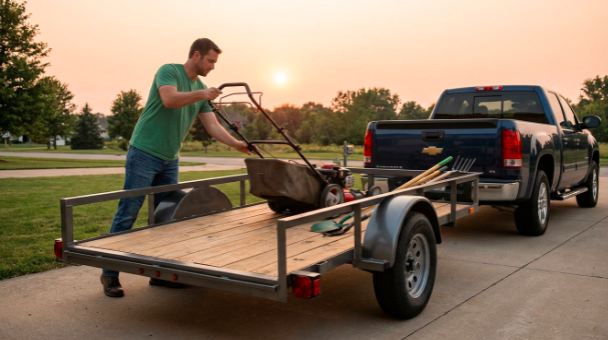
A utility trailer is one of the most practical transportation tools used for moving heavy, bulky, or irregularly shaped loads that cannot easily fit inside standard vehicles, and it plays an essential role in personal, commercial, and industrial work because it improves efficiency, reduces vehicle strain, and allows safer transportation of materials, equipment, and goods over short and long distances. A well-designed trailer provides flexibility for different types of hauling tasks, making it a valuable asset for construction work, farming operations, landscaping activities, and general transport needs where carrying capacity and convenience are required. A properly used utility trailer ensures safer movement of goods while also protecting the towing vehicle from unnecessary wear and tear, which makes it an important investment for anyone who regularly handles heavy loads.
Understanding the Importance of Trailer Functionality
The functionality of a trailer is based on its ability to carry and distribute weight efficiently while maintaining stability during movement, and this depends on several factors such as frame strength, axle design, tire quality, and load distribution. A properly functioning trailer ensures that weight is evenly spread across its structure, reducing stress on individual components and improving road safety during transportation. A utility trailer is especially valued because it can be used for a wide range of tasks, from carrying construction materials and tools to transporting furniture or landscaping equipment, and this versatility makes it one of the most commonly used hauling solutions. Understanding how a trailer functions helps users operate it safely and avoid common mistakes such as overloading, poor balancing, or improper securing of cargo, all of which can lead to accidents or damage.
Key Components That Ensure Safe Performance
Every trailer is built with essential components that work together to ensure safe and stable performance, including the frame, axle system, tires, hitch connection, and braking system. The frame provides structural support and must be strong enough to handle heavy loads without bending or cracking under pressure, while the axle system distributes weight evenly and ensures smooth movement across different road conditions. Tires must be properly inflated and rated for the correct load capacity to prevent blowouts or uneven wear during transportation. The hitch connection is another critical part because it securely attaches the trailer to the towing vehicle, and any failure in this connection can lead to serious safety risks. A utility trailer often includes additional safety features such as lights, reflectors, and braking systems that improve visibility and control, especially during nighttime or heavy-load transport.
Safe Loading and Weight Distribution Practices
Proper loading techniques are essential for maintaining balance and preventing accidents while using a trailer, and incorrect loading is one of the most common causes of instability during transportation. Heavy items should always be placed in the center of the trailer and positioned low to maintain a lower center of gravity, while lighter items can be placed around or above them to fill gaps and prevent shifting during movement. Securing the load with straps, ropes, or chains is necessary to ensure that items do not move or fall during transport, especially when driving on uneven roads or making sudden stops. Overloading a trailer beyond its rated capacity can lead to tire failure, braking issues, and structural damage, which is why understanding weight limits is critical for safe operation. A utility trailer should always be loaded according to manufacturer guidelines to ensure stability and long-term durability.
Maintenance Practices for Long-Term Durability
Regular maintenance is essential to keep a trailer in good working condition and extend its lifespan, and this includes checking tires, brakes, lights, bearings, and structural components on a routine basis. Tires should be inspected for proper inflation, tread wear, and cracks because damaged or underinflated tires can lead to blowouts or loss of control while driving. Bearings and axles should be lubricated regularly to reduce friction and ensure smooth movement, while the braking system must be tested to confirm that it responds properly under load conditions. Electrical systems, including brake lights and indicators, should also be checked frequently to ensure visibility and road safety. A utility trailer that is properly maintained not only performs better but also reduces the risk of unexpected breakdowns and costly repairs over time.
Preventing Rust, Corrosion, and Structural Damage
Exposure to moisture, dirt, and changing weather conditions can lead to rust and corrosion on metal surfaces, which can weaken the structural integrity of a trailer if not addressed in time. Regular cleaning helps remove dirt and debris that can trap moisture, while applying protective coatings or paint can help prevent rust formation on exposed metal parts. It is also important to store the trailer in a dry and covered area whenever possible to reduce environmental exposure. Checking for early signs of rust or cracks allows for timely repairs before the damage spreads further. A utility trailer that is well protected from corrosion remains stronger and more reliable for long-term use, especially in demanding working conditions.
Safe Towing Techniques and Driving Practices
Towing a trailer requires careful driving techniques because the added weight and length affect vehicle handling, braking distance, and turning ability, making it important to drive with caution and awareness at all times. Smooth acceleration and gradual braking help maintain stability, while sudden movements should be avoided to prevent swaying or loss of control. Wider turns are necessary to accommodate the trailer’s length, and maintaining a safe distance from other vehicles provides enough reaction time in case of sudden stops. Driving at moderate speeds is also important because high speeds increase the risk of instability, especially when carrying heavy loads. A utility trailer should always be towed with attention to road conditions, weather changes, and load weight to ensure safe and controlled transportation.
Common Issues and How to Avoid Them
Trailers can develop several common issues over time, including tire wear, electrical faults, loose bolts, and axle misalignment, and these problems often result from poor maintenance or overuse without proper care. Tire wear can be reduced by maintaining correct pressure and avoiding overloads, while electrical issues can be prevented through regular inspection of wiring and connections. Loose bolts and fittings should be tightened periodically to maintain structural stability, and axle alignment should be checked to ensure smooth and balanced movement. Addressing these issues early helps prevent more serious mechanical failures and ensures safer operation. A utility trailer that is properly inspected and maintained experiences fewer breakdowns and provides more reliable performance over time.
Choosing the Right Trailer for Specific Needs
Selecting the right trailer depends on the type of work, load requirements, and towing capacity of the vehicle, and choosing incorrectly can lead to inefficiency or safety risks during transportation. Smaller trailers are suitable for light-duty tasks such as moving household items or garden supplies, while larger trailers are designed for heavy-duty construction or commercial use. It is also important to consider factors such as weight capacity, durability, and design features before making a decision. Matching the trailer with the appropriate towing vehicle ensures better control and safer operation. A utility trailer is often preferred because it offers a balance of strength, flexibility, and ease of use for a wide range of applications.
Benefits of Using Trailers for Transportation
Trailers provide numerous advantages, including increased carrying capacity, improved efficiency, and reduced transportation costs, making them a valuable tool for both personal and professional use. They allow users to transport large quantities of materials in a single trip, saving time and fuel while improving productivity. Trailers also reduce strain on primary vehicles by distributing weight more effectively, which helps extend vehicle lifespan and reduce maintenance costs. Their versatility makes them suitable for multiple applications, from construction and farming to recreational use. A utility trailer offers a practical and cost-effective solution for handling diverse transportation needs efficiently.
Final Thoughts on Reliable Trailer Use and Care
A trailer is an essential transportation tool that supports a wide range of tasks across different industries and personal applications, and proper understanding of its function, maintenance, and safe usage is necessary for long-term reliability and performance. Regular inspections, correct loading techniques, and safe driving practices all contribute to improved safety and efficiency during transport operations. Preventive maintenance and proper care help extend the lifespan of the trailer while reducing the risk of mechanical failure or accidents. A utility trailer remains one of the most versatile and valuable tools for transporting goods, and when used correctly, it provides consistent performance, safety, and convenience for many years of reliable service.