



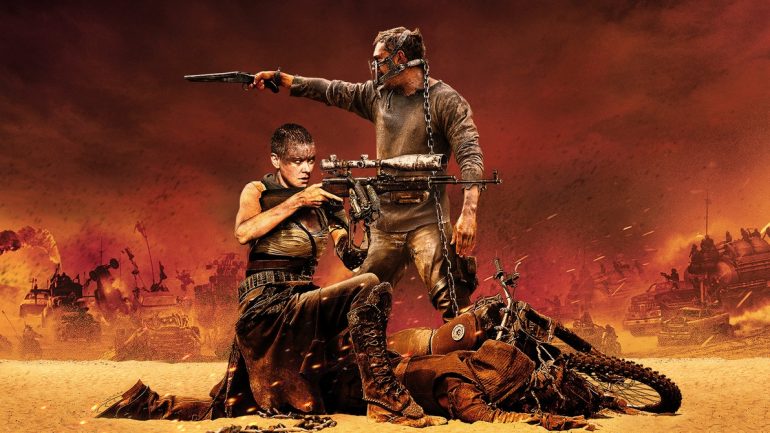
Action cinema got louder and shinier for two decades. Then, almost on cue, it snapped back to something more tactile. The resurgence of practical effects is not nostalgia or gimmickry but a recalibration.
Filmmakers rediscovered that weight and friction make stories feel honest. Fire behaves like fire, and metal scrapes. Vehicles fight gravity and lose sometimes. In fact, audiences read those textures like truth. For instance, when a car actually flips, the lens catches imperfections and timing that no simulation fully nails.
Why Audiences Crave Authenticity in Stunts and Explosions?
There is also a trust issue as viewers carry their own internal lie detectors, trained by a decade of glossy invulnerability. The eyes notice when physics is softened or when smoke looks smeared. People do not need a PhD in VFX to feel detachment. Authenticity in stunts becomes emotional glue.
Moreover, cultural spillover plays its part. For instance, real-world viral clips of parkour, precision driving, and improbable engineering hacks set new baselines for plausibility. The audience has seen what bodies can do and what machines can survive. They calibrate expectations differently.
Oddly, brand worlds outside film feed this hunger for authenticity. Even entertainment niches, from sports to gaming to live event marketing, chase tactile thrills. Sometimes, Crown Play Casino pops up in feeds through kinetic campaigns, and that vibe bleeds into what viewers expect from their movies.
Essentially, the screen is competing with live texture (not just other screens), and practical effects speak that language.
The Evolution of Action Effects
The following are how action effects evolved in cinema:
1. From Wire Work to CGI Dominance
Technology shifted the industry toward digital landscapes because it could. Earlier, wire rigs, plate photography, miniatures, and pyro were a complex dance of logistics and patience. Also, CGI promised speed and control.
In those days, the creative power was intoxicating. Entire sequences could be sculpted after photography. Lighting and atmospherics were adjustable until the last render. The palette widened, and the canvas stretched into places beyond the reach of human bodies and real vehicles.
Meanwhile, gains came with tradeoffs. When gravity becomes optional, weight becomes negotiable. That choice can be beautiful for fantasy and metaphor, but action still hinges on consequence. Wire work roots choreography to leverage and timing, and practical pyro roots chaos to chemistry.
Just remove those anchors, and the dynamic can float. Even the camera becomes loose, freed from physical rigging limitations. The spectator senses that freedom and sometimes disconnects, as practical effects limit choices.
2. The Backlash Against Overuse of CGI
Audience fatigue did not arrive overnight. It accumulated in tiny disappointments:
- Smoke that should occlude instead decorates.
- Impacts that should deform instead of bouncing.
- Edits that should sell danger instead of cushioning it.
Actually, the criticism was not anti-technology but anti-weightlessness. Essentially, viewers asked for stakes you can count without pausing the frame.
The human brain trusts imperfect timing and micro-asymmetry. When everything glides, the heart rate coasts, and you feel entertained but not adrenalized. That gap shows up in word of mouth, not just box-office numbers.
In other entertainment domains, interactive experiences promise risk-and-reward loops. The language of real consequence sneaks everywhere. Even promotional copy for something niche, like an Oklahoma online casino in real money, leans on the idea that the stakes are not pretend.
That messaging mirrors the audience’s craving for films. They want perceived risk to track with the outcome. Basically, people reward movies that humanize threat and calibrate payoff to effort.
Practical Effects in Today’s Blockbusters
Mad Max: Fury Road is often cited, and for good reason. The production built a rolling desert circus. Rigs were engineered for stability and for collapse. Also, stunts were rehearsed to trace arcs that cameras could honor without stitching away the truth. The color science and grade amplify spectacle, yet the muscle lives in practical setups. The result feels like sand grinding gears.
Mission: Impossible, especially Fallout and Dead Reckoning, leans into star-led risk. You see the preparation in the frame. For instance, helicopters bite air, bikes break traction, and breath becomes part of the score. In this case, the camera stays tethered to the physics.
Other films adjust the ratio rather than swing the pendulum to the extreme. They anchor centerpiece moments in practical builds, then extend scale digitally where safety or scope demands it.
The trick is keeping the practical spine visible. If a chase starts with real cars, the edit respects mass and timing, and any later digital assist inherits those rules. Essentially, audiences are forgiving when the film honors continuity of force. It is the sudden pivot to weightless improv that breaks the spell.
Meanwhile, a grounded baseline lets VFX complement rather than compensate. Hybrid craftsmanship wins because it treats digital as an enhancement, not an escape hatch.
The Role of Stunt Teams and Safety Innovations
Modern practical bravura relies on evolved safety choreography. Stunt teams are part engineering lab, part biomechanical think tank. Moreover, coordinators run scenario trees like risk analysts, building redundancies into timing and communication.
That infrastructure enables jaw-dropping sequences without turning the set into a roulette table. The art advances as the apparatus improves.
Training cultures adapted too. Performers cross-train for range, and driving teams do precision drills that look like dance routines. Also, climbers and fight coordinators share vocabulary, so transitions do not become blind jumps.
Meanwhile, camera departments collaborate early, baking lens choices into stunt design to avoid last-minute compromises.
In fact, practical effects mostly demand early decisions, which force departments to sync. The result is choreography that the audience can read. This is because people reward craft that respects their perception.
Conclusion
Practical effects rule modern action not by banishing CGI, but by reasserting first principles. These include weight, cause, effect, and risk that reads. The resurgence is a vote for honesty in motion.
In fact, films that center on practical builds earn trust and spike adrenaline because the body believes them. Digital craft stays vital when it obeys those laws and supports them.
This way, the balance will keep evolving, safety tech will keep improving, and directors will keep toggling ratios as needed for the story. So, expect a future where big sequences start on set with real rigs, then grow in post without breaking physics.