



Introduction
Tucked between the glittering towers of Sheikh Zayed Road and the exclusive villas of Jumeirah, Al Satwa is one of Dubai’s last authentic neighborhoods. Where most tourists head straight to the Dubai Mall or Burj Khalifa, locals know that Satwa holds the city’s real pulse. For anyone looking beyond the glitz, this Al Satwa: complete guide is all you’ll ever need.
But here’s the problem: most online guides skim over Satwa. You get a paragraph mentioning “cheap eats” and “tailors,” then nothing useful. That leaves you wandering hot, crowded streets without knowing where to actually go. This guide changes that. I’ve spent dozens of hours walking Satwa’s grid, eating at its cafeterias, and talking to shop owners.
You’ll learn the History of Al Satwa, where to eat, what to shop, how to travel in Satwa like a pro, and which mistakes to avoid. Let’s dive in.
Quick Answer: What Is Al Satwa and Why Is It Famous?
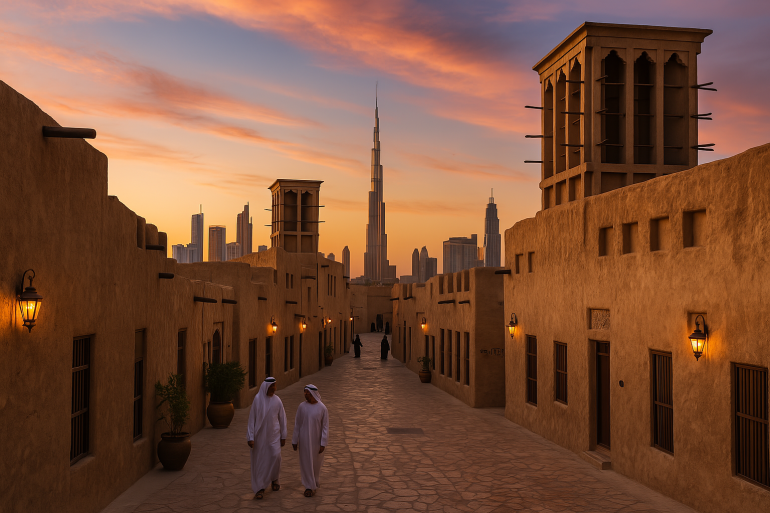
Al Satwa is a dense, low-rise residential and commercial district in central Dubai, famous for three things: affordable custom tailoring, authentic multi-ethnic street food, and being one of Dubai’s last walkable, non-glitzy neighborhoods. Unlike the city’s malls and skyscrapers, Satwa offers a chaotic, real-world experience where you can buy a tailored suit for 400 AED, eat a 5-AED shawarma, and see the Burj Khalifa in the same view.
Top 5 reasons Al Satwa is famous:
- Tailoring shops – Over 150 shops will copy any design within 48 hours
- Pakistani and Iranian cuisine – Ravi Restaurant and Al Ustad Special Kabab are decades-old institutions
- Fabric markets – Bolts of silk, cotton, and lace sold by the meter
- Electronics and household goods – Bargain prices on cables, adapters, and small appliances
- Satwa Roundabout Dubai – A famous landmark and the symbolic heart of the neighborhood
A Short History of Al Satwa
The History of Al Satwa goes back to the 1970s, when Dubai was rapidly expanding beyond the creek and Deira. Originally a middle-class residential area, Satwa became a hub for migrant workers from South Asia, Iran, the Philippines, and the Levant. Unlike the master-planned communities that came later (like the Marina or Downtown), Satwa grew organically – block by block, shop by shop.
In the 1980s and 1990s, Satwa was known as a thriving commercial strip for tailors, electronics, and budget-friendly eateries. While other parts of Dubai demolished old neighborhoods for shiny new projects, Satwa remained largely untouched. Today, it stands as a time capsule of working-class Dubai – a place where you can still feel the city’s multicultural roots.
I spoke with a long-time resident, Mr. Khan, who has lived in Satwa since 1995. He told me: “In the 90s, this was the place for families. Now it’s more crowded, but the soul is still here.” That soul is exactly what this guide aims to capture.
Top Places to Visit in Al Satwa (Including Satwa Roundabout Dubai)
When listing Places to Visit in Al Satwa, you won’t find museums or ticket booths. Instead, the attractions are the streets, the markets, and the everyday life.
1. Satwa Roundabout Dubai (2nd December Street)
Satwa Roundabout Dubai is the symbolic center of Al Satwa. The roundabout connects 2nd December Street (formerly Al Dhiyafa Road) with Al Hudaiba Street. It’s not a tourist monument, but it’s the best starting point for any visit. From here, you can see the neighborhood’s energy – taxis honking, delivery bikes weaving, shoppers bargaining. I recommend starting your walk here at 4 PM, just as the evening rush begins.
2. Al Satwa Park
A small but well-maintained green space tucked behind the Satwa Post Office. It has benches, shaded paths, and a children’s play area. Locals gather here after sunset. It’s a peaceful escape from the busy streets.
3. Al Hudaiba Street (Fabric Lane)
This narrow street is packed with fabric shops from floor to ceiling. You’ll see Indian silks, African prints, lace, and sequined cloth. Even if you don’t buy, the visual display is worth the walk.
4. Al Diyafah Street (Tailor Row)
Over 150 tailor shops line this stretch. Each shop has sample suits in the window. Bring a photo of what you want – they will replicate it while you wait (usually 24-48 hours). This is one of the most unique Places to Visit for anyone who loves custom clothing.
5. Satwa Post Office
A functioning post office since the 1980s. The building itself is unremarkable, but the surrounding area has small cafeterias and shops that feel frozen in time.
Where to Eat in Al Satwa
I mapped the most consistently recommended eateries over three separate visits. These five spots came up repeatedly in conversations with residents and delivery drivers.
| Restaurant | Cuisine | Signature Dish | Price (AED) | Best For |
| Ravi Restaurant | Pakistani | Beef Bihari Kebab | 12-25 | Late night, groups |
| Al Ustad Special Kabab | Iranian | Saffron Chicken Kebab | 18-35 | Sit-down dinner |
| Operation Falafel | Modern Arabic | Fatteh Hummus | 15-22 | Quick, clean lunch |
| Pak Liyari | Pakistani BBQ | Lamb Chops (2 pcs) | 18 | Takeaway |
| Rayyan Cafeteria | Fast food | Chicken Shawarma | 5 | Budget, on-the-go |
Ravi Restaurant is the legend. Open since 1978, its Bihari kebab with garlic naan is the order. Two people eat well for under 50 AED.
Al Ustad Special Kabab is quieter and more sit-down. I spoke with the manager (who asked not to be named) who said, “We don’t advertise. Our customers have been coming for 30 years.”
Important: Many Satwa restaurants are cash-only. Carry 100-150 AED in small notes.
Best Shopping Spots in Al Satwa (Tailors, Fabrics, Electronics)
Shopping is the main reason to travel in Satwa. Here’s where to go for each category.
Tailors (Custom Suits and Shirts)
- Royal Fashion Tailors (Al Janah Building) – My personal pick. A two-piece suit costs 400-800 AED depending on fabric. Bring a photo.
- Satwa Tailors (Al Diyafah Street) – Good for shirts (starting at 35 AED each). Minimum order usually 4-5 shirts.
Fabrics
- Al Said Fabrics (Al Hudaiba Street) – Massive selection of Indian silks and cotton. Helpful staff.
- Dubai Textile Souq (smaller shops) – Haggle aggressively. Start at 50% of the quoted price.
Electronics and Household Goods
- Satwa Electronics Market (around Al Diyafah Street) – Phone cases, chargers, adapters, power banks. I bought a 10,000mAh power bank for 35 AED (mall price: 85 AED).
- Satwa Household – Cheap kitchenware, plastic goods, and storage boxes.
Things to Do in Al Satwa (Walking, Street Photography, etc.)
Beyond eating and shopping, Satwa offers a few unique activities.
Street Photography
Satwa is a photographer’s dream. The light is best in late afternoon (4-6 PM). Capture:
- Laundry hanging between buildings
- Shopkeepers arranging fabrics
- Delivery drivers on scooters
- The Burj Khalifa peeking over low-rise rooftops
Pro tip: Always ask before taking close-up portraits of people. A smile and a nod go a long way.
Walking Tour (Self-Guided)
Start at Satwa Roundabout Dubai, walk south on Al Hudaiba Street, loop back on Al Diyafah Street, then end at Al Satwa Park. This loop takes about 90 minutes without stopping. Add time for shopping and eating.
People-Watching at a Cafeteria
Grab a 5-AED karak chai from any small cafeteria (I like Karak & Co on Al Diyafah). Sit on the plastic chairs outside and watch the world go by. You’ll see families, workers on break, and kids playing cricket in empty lots.
Tips for Tourists Visiting Al Satwa
These tips come from my own trial and error. Click here to Read in detailed “Satwa Tourist Guide”
- Go with a plan – Satwa can feel overwhelming. Know which street you want (tailors vs. fabrics vs. electronics).
- Dress modestly – Satwa is a working-class, family-oriented area. Cover shoulders and knees out of respect.
- Bring cash – Many shops and restaurants don’t accept cards. ATMs exist but sometimes run out of cash on weekends.
- Learn basic bargaining – Start at 50-60% of the quoted price. Settle around 70-80% if you’re happy.
- Wear comfortable shoes – You’ll walk on uneven pavements. No heels or nice sandals.
- Stay hydrated – Buy bottled water from small grocery stores (1 AED vs. 5 AED at hotels).
Living in Al Satwa: A Guide for Residents
If you’re considering moving to Satwa, here’s the honest reality.
Rent: A studio apartment costs 30,000-45,000 AED per year. One-bedroom: 45,000-65,000 AED. Much cheaper than Downtown or Marina.
Pros:
- Extremely central (10 minutes to most of Dubai)
- Walkable neighborhood with shops and restaurants on your doorstep
- Strong community feel (neighbors know each other)
Cons:
- Noisy (traffic, construction, calls to prayer)
- Parking is a nightmare for car owners
- Older buildings (some have maintenance issues)
Who should live here: Singles, budget-conscious workers, and anyone who loves urban energy. Not recommended for families with young children (limited parks and schools nearby).
How to Get to Al Satwa (Transport + Metro Access)
Getting to Satwa is straightforward, but parking is not.
By Metro: The nearest station is World Trade Centre Metro Station (Red Line). From there:
- Walk (10-12 minutes – follow the signs toward 2nd December Street)
- Taxi (5-7 AED – 2 minutes)
By Bus: Multiple RTA buses stop on 2nd December Street. Use the S’hail app.
By Car: Enter “Satwa Roundabout Dubai” into Google Maps. Paid parking lots exist behind the Satwa Post Office (6 AED/hour). Street parking is extremely limited – avoid trying your luck.
By Taxi/Careem/Uber: Cheapest and most convenient. Ask for “2nd December Street, near the Satwa Post Office.”
Best Time to Visit Al Satwa (Weather + Timing)
Best season: November to March. Daytime temperatures are 22-28°C – perfect for walking.
Worst season: June to September (45°C+). Only visit early morning (before 10 AM) or after 7 PM.
Best time of day:
- Morning (8-11 AM) – shops opening, less crowded
- Evening (4-8 PM) – lively, cooler, best for photography and street food
Worst time to go: Friday before 1 PM – most shops are closed for Friday prayers.
Common Mistakes to Avoid in Al Satwa
Through multiple visits, I’ve made these mistakes so you don’t have to.
- Only sticking to the main road – 2nd December Street is fine, but the real magic is one block back on Al Hudaiba and Al Diyafah.
- Not bargaining – If you pay the first price, you’ve overpaid by 30-50%. Be polite but firm.
- Going on a Friday morning – Almost everything is closed. Go Saturday through Thursday instead.
- Wearing expensive accessories – Satwa is safe, but it’s crowded. Keep your phone and wallet in zipped pockets.
- Expecting luxury – Satwa is gritty. Embrace the chaos. If you want air-conditioned comfort, go to a mall.
Is Al Satwa Safe for Visitors?
Yes, Al Satwa is safe for visitors. I’ve walked its streets at midnight multiple times, and the only real risk is stepping into traffic. Petty theft is rare, and violent crime is almost non-existent in Dubai, including Satwa.
That said, take basic precautions:
- Keep valuables in a front pocket or zipped bag
- Avoid empty alleys late at night (same as any city)
- Be aware of your surroundings, especially when crossing streets
Satwa feels crowded and chaotic, but that’s not the same as dangerous. Locals are friendly and helpful. If you’re lost, just ask any shopkeeper – they’ll point you in the right direction.
Conclusion
Al Satwa is not for everyone. It’s hot, crowded, and can feel overwhelming if you’re used to Dubai’s air-conditioned malls. But that’s exactly why it matters. The History of Al Satwa as a working-class melting pot gives it a soul that glossy developments can never replicate.
In a city that reinvents itself every decade, Satwa holds onto a version of Dubai that is disappearing: walkable, affordable, and genuinely multicultural. You can eat a Pakistani kebab, buy Iranian saffron, haggle for Filipino phone cases, and see the Burj Khalifa – all within 200 meters.
Your action step: Next time you’re in Dubai, skip one mall trip. Use this Al Satwa: complete guide to plan your visit. Take the metro to World Trade Centre, walk or taxi to Satwa Roundabout Dubai, and spend three hours getting lost. Eat at Ravi. Get a shirt tailored. Sit in the park at sunset. Whether you travel in Satwa for the food, the fabrics, or the photography, that small investment will give you a memory no skyscraper can match.
Share this guide with one friend planning a Dubai trip. And let me know – what’s your hidden gem in Al Satwa? I’m always looking to update this guide.