



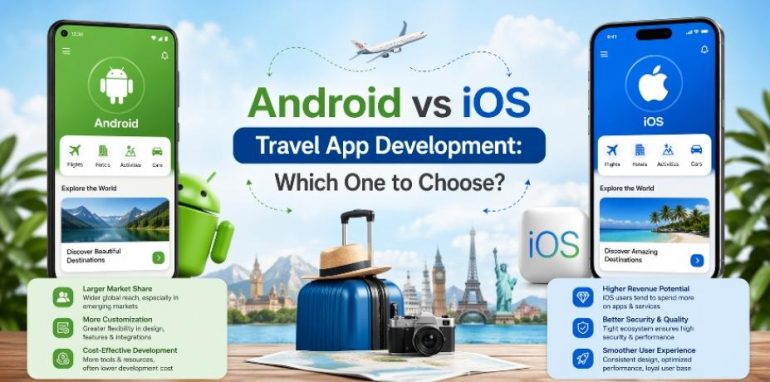
Choosing between Android and iOS for your travel app can shape your business success from day one. Both platforms offer strong opportunities, but each comes with different benefits, costs, and user expectations.
For startups and business owners, this decision is not just technical; it directly impacts reach, revenue, and user experience.
Popular travel apps show how the right platform strategy can drive growth and customer engagement. Android offers a wider audience reach, while iOS is known for higher user spending and a premium experience.
So, which one should you choose for your travel app? In this post, we will break down key differences, benefits, and factors to help you make the right decision for your business goals.
Understanding Android and iOS App Development
Android and iOS are the two leading platforms for mobile app development, each with its own ecosystem and user base. Android apps are built using languages like Java or Kotlin and run on a wide range of devices with different screen sizes.
iOS apps are developed using Swift or Objective-C and run only on Apple devices. This allows better control over performance and design consistency. Understanding these differences helps businesses choose the right platform based on their target audience, budget, and app goals.
Key Differences Between Android and iOS Travel Apps
Android and iOS travel apps differ in terms of audience reach, development approach, performance, and user behavior. This makes it important to understand these differences before choosing the right platform for your business.
1. Market Share and Audience Reach
Android: Android holds the largest global market share, making it ideal for reaching a wider audience across different regions and device types. It is especially strong in emerging markets where affordable smartphones are more common.
iOS: iOS has a smaller market share but attracts users from premium segments. It is more popular in regions like the US and Europe, where users often have higher spending capacity and brand loyalty.
2. Development Cost Comparison
Android: Android development can be slightly more expensive due to device fragmentation and the need for testing across multiple screen sizes and versions. This increases development effort and quality assurance time.
iOS: iOS development usually offers efficient cost to develop a travel app due to fewer devices and consistent design standards. Developers spend less time on testing, which helps reduce overall development and maintenance costs.
3. Development Time and Complexity
Android: Android apps take more time to develop due to multiple devices, OS versions, and screen sizes. Developers must ensure compatibility across a wide range of configurations, which increases complexity.
iOS: iOS apps are quicker to build due to a limited number of devices and consistent system guidelines. This reduces complexity and helps developers complete projects faster with fewer compatibility issues.
4. UI/UX Design Differences
Android: Android offers more flexibility in UI design, allowing developers to customize layouts and user flows. However, maintaining consistency across devices can be challenging due to varied screen sizes.
iOS: iOS follows strict design guidelines, ensuring a clean and consistent user experience. This makes apps visually appealing and easy to use, but limits design flexibility compared to Android.
5. Revenue and Monetization Opportunities
Android: Android apps rely more on ads and a larger user base for revenue generation. While downloads are higher, user spending is generally lower compared to iOS platforms.
iOS: iOS users are more likely to spend on apps and in-app purchases. This makes it a strong platform for monetization through subscriptions, premium features, and paid applications.
6. App Performance and Security
Android: Android performance can vary depending on device quality and specifications. Security is improving, but the open ecosystem makes it slightly more vulnerable to risks and inconsistencies.
iOS: iOS offers better performance due to hardware and software integration. It also provides stronger security features, making it a preferred choice for apps that handle sensitive user data.
7. Maintenance and Updates
Android: Maintaining Android apps requires regular updates for different devices and OS versions. This increases effort and cost, as developers must ensure compatibility across a fragmented ecosystem.
iOS: iOS apps are easier to maintain due to fewer devices and faster adoption of updates. This simplifies testing and ensures users receive updates quickly with minimal issues.
8. Pros and Cons
Android: Android offers a wider reach, flexibility, and higher downloads. However, it comes with challenges such as device fragmentation, greater testing effort, and lower user spending than iOS.
iOS: iOS provides better security, performance, and higher revenue potential. However, it offers limited customization options and has a smaller user base than Android, which has a broader global market reach.
When to Choose Android for Travel App Development?
You should choose Android for travel app development when your goal is to reach a wider global audience, especially in regions where Android devices are more common. It is a strong option for startups targeting high user volume and diverse markets.
Working with an experienced travel app development company can help you build a scalable Android app that supports different devices and user needs. Android is also ideal if your business model depends on ads, higher downloads, and flexible customization options.
When to Choose iOS for Travel App Development?
You should choose iOS for travel app development when your target audience includes premium users who prefer high-quality design and smooth performance. It works well in regions where Apple devices are widely used, and users are more willing to spend on apps and services.
iOS is also a good choice if you want faster development with fewer device variations and better security. It helps deliver a consistent user experience and is ideal for apps that focus on subscriptions, in-app purchases, and a polished interface.
Final Thoughts
The choice between Android and iOS is not about which platform is better, but which one aligns with your business strategy. Each platform serves a different purpose, and making the right decision early can impact your app’s growth, user engagement, and overall return on investment.
If your goal is to capture a larger market and build strong visibility, Android offers a clear advantage. On the other hand, if you are targeting high-value users and better monetization, iOS provides a more refined and profitable ecosystem.
Many successful travel businesses start with a focused platform strategy and expand based on user response and market demand. Evaluating your audience, budget, and long-term vision will help you make a smarter choice. A well-planned platform decision sets the foundation for a scalable and successful travel app.