



The final cut of an action blockbuster showcases incredible stunts, massive set pieces, and heroic performances. But behind every frame, an army of crew members performs feats just as impressive. From grips and electricians to special effects wizards and camera operators, hundreds of professionals work together to bring a director’s vision to life. This massive team functions like a well-oiled machine, and like any machine, it needs fuel.
On a film set, that fuel comes from on-set catering. This often-overlooked department is absolutely critical to the success of any production. It’s a world of intense logistics, demanding schedules, and surprisingly delicious food.
Feeding the Crew: A Huge Undertaking
Feeding a film crew is far more complex than just ordering a few pizzas. A major motion picture can have anywhere from 100 to 500 people on set on any given day. This includes not only the cast and director but also dozens of specialized teams responsible for lighting, sound, costumes, props, and more. Each person needs meals and snacks to keep them going through long, physically demanding workdays. This responsibility typically splits between two distinct services: catering and craft services.
Catering provides the main meals of the day, usually breakfast and lunch, served at scheduled times. These are hot, sit-down meals designed to give the entire crew a proper break and substantial nourishment. Craft services, on the other hand, is the all-day snack-and-beverage station. It’s the go-to spot for a coffee, a bottle of water, a piece of fruit, or a handful of pretzels between takes. While craft services keep energy levels up throughout the day, the main catering service truly powers the production.
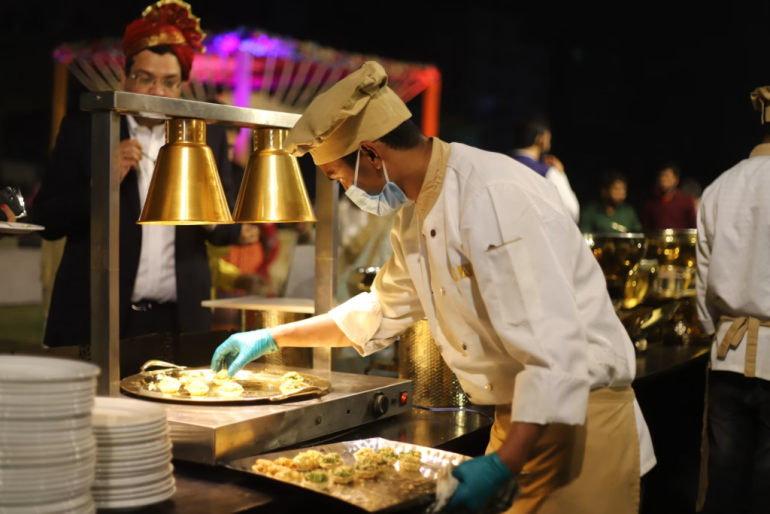
The scale is immense; a caterer for a large film might serve over 600 full meals a day, every day, for months on end. This requires a dedicated team of chefs, servers, and support staff operating out of mobile kitchens. These are essentially full-service restaurants on wheels, which is a different operation than choosing lobster meat at Maine Lobster Now. Understanding the difference between craft services and catering is fundamental to grasping the flow of a production day.
High-Demand Schedules
A typical day on set might begin before sunrise and end long after sunset. For the cast and crew, the scheduled meal break is often the only significant pause in a relentless schedule. This makes the quality and efficiency of the catering service incredibly important for morale.
A poorly managed or delayed lunch can throw off the entire day’s schedule, costing the production thousands of dollars in lost time. More importantly, it can drain the energy and focus of a crew that needs to be at its best.
Imagine a stunt team preparing for a complex sequence or a camera operator needing steady hands for a crucial shot. Their performance depends on being well-fed and mentally sharp. A delicious, satisfying meal can completely reset the mood on set, turning a stressful afternoon into a productive one. Caterers must be prepared to serve hundreds of people within a very tight window, typically one hour. They work in sync with the Assistant Director’s schedule, ensuring that food is ready the moment the “lunch” call is made, whether that’s at noon or 2 a.m. for a night shoot.
High-Quality Food
Long gone are the days of mystery meat and soggy vegetables on set. Today’s film productions understand that investing in high-quality food means investing in the project itself. A well-fed crew is a happy and productive crew. Modern set caterers are professional chefs who specialize in creating diverse, healthy, and appealing menus that can satisfy a wide range of palates and dietary needs. On any given day, the menu will include options for vegetarians, vegans, and those with gluten, dairy, or other allergies.
This focus on quality comes from a practical need: keeping the cast and crew healthy and energized over a long shoot. A production can’t afford to have people getting sick or feeling sluggish due to poor nutrition. Fresh ingredients, balanced meals, and variety are key.
Many catering companies pride themselves on creating restaurant-quality dishes, from fresh salad bars and carving stations to themed meals like Taco Tuesday or Sushi Day. This attention to detail shows the crew that their well-being is valued, fostering a positive and collaborative work environment. The planning that goes into a film set catering menu is extensive, often requiring weeks of preparation to source ingredients and design menus that won’t become repetitive over a multi-month shoot.
Gourmet Options for Busy Professionals
While daily meals need to be practical and nutritious, on-set dining can sometimes become a truly gourmet experience. This might be to celebrate the end of a long week, mark a production milestone, or simply provide a special treat for the hardworking cast and crew. On high-budget productions, it’s not uncommon to see chefs preparing made-to-order pasta, grilling fresh fish, or serving premium desserts. These moments provide a significant morale boost and make everyone feel appreciated. For example, a Friday lunch featuring fresh lobster rolls can feel like a luxurious reward after days of intense, focused work.
This desire for convenient, high-quality meals extends beyond the film set. Many busy professionals in demanding fields look for ways to enjoy gourmet food without the time commitment of cooking from scratch. For a catering chef planning a special menu or a home cook wanting to create a memorable meal, sourcing the right ingredients is the most important step. When it comes to a classic like the lobster roll, for instance, the quality of the seafood is everything. Whether on a bustling film set or in a quiet home kitchen, the principle is the same: great ingredients are the foundation of a fantastic meal.
The Logistics of On-Location Dining
Perhaps the most impressive aspect of film set catering is the sheer logistical challenge. Productions often shoot in remote or difficult-to-access locations, from desolate deserts and dense forests to the middle of a blocked-off city street. The catering company has to be completely self-sufficient, bringing in their own mobile kitchens, power generators, fresh water supplies, and refrigeration. These aren’t just food trucks; they are sophisticated, custom-built vehicles that house everything needed to prepare and serve hundreds of meals safely and efficiently.
Caterers must adhere to strict health codes, maintaining precise temperature controls for both hot and cold foods in environments ranging from freezing cold to scorching hot. Imagine setting up a full-service kitchen in a muddy field in the pouring rain or on a scorching desert highway. The team must adapt to any condition while ensuring every meal served is safe and delicious.
The process involves meticulous planning, from calculating the exact amount of food needed to coordinating delivery schedules for fresh produce in remote areas. The complex world of mobile kitchen logistics is a masterclass in planning and execution, ensuring that no matter where the movie magic is happening, a hot meal is never far away.
Ultimately, on-set catering is far more than a simple meal service. It is the backbone of a production, a critical department responsible for the health, morale, and performance of the entire cast and crew. The next time you watch an action-packed movie, take a moment to appreciate the invisible army of chefs and caterers who helped fuel the fire.