



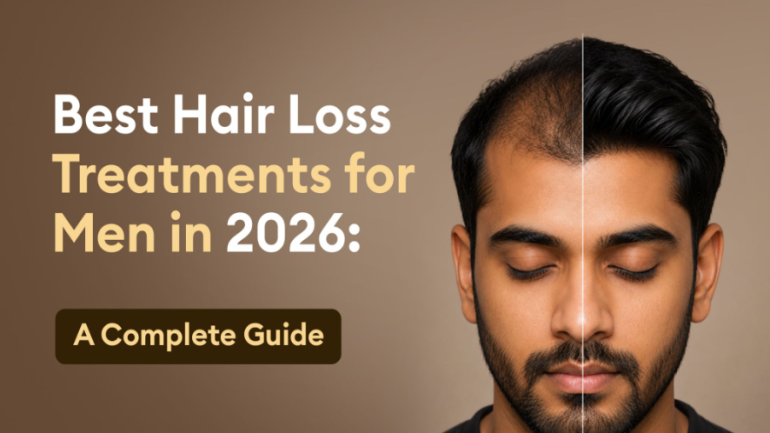
Hair loss affects more than half of men during their lifetime and remains one of the most common concerns discussed in dermatology and aesthetic clinics worldwide.
Fortunately, hair restoration has evolved dramatically over the past decade. What was once limited to medications and surgery now includes a growing range of regenerative treatments designed to support hair growth, follicular health, and scalp regeneration.
With so many options available, the challenge for many men is no longer finding a treatment but understanding which treatment is right for their stage of hair loss and long-term goals.
This guide explores the best hair loss treatments for men in 2026 and how they compare.
Understanding Male Pattern Hair Loss
The most common form of hair loss in men is androgenetic alopecia (male pattern hair loss).
The process typically begins gradually and may include:
- Receding hairline
- Thinning at the crown
- Reduced hair density
- Progressive follicular miniaturization
Over time, affected follicles become smaller, produce thinner hairs, and may eventually stop producing visible hair altogether.
Because hair loss is progressive, early intervention is often one of the most important factors in long-term hair preservation.
The Best Hair Loss Treatments for Men in 2026
1. Elyara Hair Filler
Best For:
Comprehensive regenerative hair restoration
As understanding of hair biology has evolved, many practitioners have begun looking beyond single-pathway treatments toward approaches that address multiple biological processes involved in hair loss.
Elyara Hair Filler represents this newer generation of regenerative hair restoration.
The CE-approved formulation combines hyaluronic acid with seven patented biomimetic peptides and utilizes a double-encapsulation delivery technology designed to support sustained peptide release within the scalp.
Unlike treatments focused primarily on growth factor stimulation, Elyara was developed around a multi-pathway regenerative model designed to support:
- Hair growth signaling
- Follicular activation
- Hair cycle regulation
- Follicular preservation
- Scalp regeneration
- Extracellular matrix support
- Scalp environment optimization
Pros
- Seven biomimetic peptides
- Sustained-release technology
- Standardized formulation
- No blood draw required
- Multi-pathway regenerative design
Considerations
- Requires professional administration
- Treatment protocol determined by practitioner
Ideal Candidate
Men seeking an advanced regenerative treatment designed to support multiple aspects of follicular biology and scalp health.
2. Minoxidil
Best For:
Early-stage hair thinning
Minoxidil remains one of the most widely used hair restoration treatments worldwide.
Applied directly to the scalp, it is commonly used by men experiencing the earliest signs of hair thinning and is often considered a first-line treatment option.
Pros
- Easily accessible
- Non-invasive
- Home-based treatment
- Long history of use
Considerations
- Requires consistent daily application
- Long-term adherence is important
- Results vary between individuals
Ideal Candidate
Men experiencing mild to moderate thinning who are comfortable maintaining a daily treatment routine.
3. Finasteride
Best For:
Managing male pattern hair loss
Finasteride is a prescription medication commonly used to address hormonal factors associated with androgenetic alopecia.
For many men, it remains an important component of long-term hair loss management.
Pros
- Convenient oral treatment
- Widely prescribed
- Commonly used in male pattern hair loss
Considerations
- Prescription required
- Long-term use is typically necessary
- Not suitable for every patient
Ideal Candidate
Men seeking a medical approach to managing androgenetic hair loss.
4. Platelet-Rich Plasma (PRP)
Best For:
Patients interested in regenerative therapies
PRP helped introduce regenerative medicine into mainstream hair restoration.
The procedure involves drawing blood, concentrating platelets, and injecting the resulting plasma into the scalp.
Pros
- Uses the patient’s own blood
- Non-surgical
- Widely available
Considerations
- Requires blood draw
- Growth factor concentration varies between individuals
- Multiple sessions are typically recommended
Ideal Candidate
Men interested in autologous regenerative therapies.
- Growth Factor Concentrate (GFC)
Best For:
Concentrated growth factor delivery
GFC is often viewed as an evolution of PRP, focusing specifically on delivering concentrated growth factors to the scalp.
The treatment has gained significant popularity in recent years, particularly among patients seeking regenerative options.
Pros
- Growth factor-focused approach
- Non-surgical
- Regenerative treatment category
Considerations
- Requires blood collection
- Biological variability exists
- Multiple sessions often recommended
Ideal Candidate
Men interested in advanced growth factor-based treatments.
- QR678
Best For:
Injectable regenerative therapy
QR678 is one of the most recognized injectable hair restoration treatments available today.
The treatment utilizes a proprietary combination of growth factors and signaling molecules designed to support hair restoration.
Pros
- Non-surgical
- Clinic-based treatment
- Regenerative therapy category
Considerations
- Multiple treatment sessions required
- Growth factor-based approach
- Practitioner-dependent protocols
Ideal Candidate
Men seeking injectable regenerative treatment options.
7. Hair Transplant Surgery
Best For:
Advanced hair loss
Hair transplantation remains one of the most established solutions for men experiencing significant follicular loss.
Modern techniques such as FUE and FUT have significantly improved outcomes compared to earlier generations of transplant procedures.
Pros
- Established treatment option
- Direct follicle redistribution
- Suitable for advanced hair loss
Considerations
- Surgical procedure
- Recovery period required
- Donor hair availability is essential
Ideal Candidate
Men with advanced hair loss and sufficient donor hair.
Best Hair Loss Treatment by Stage
Early Hair Thinning
Recommended options:
- Minoxidil
- Finasteride
- PRP
- Elyara Hair filler
Goal:
Maintain existing hair and support early intervention.
Moderate Hair Loss
Recommended options:
- PRP
- GFC
- Elyara Hair Filler
Goal:
Support follicular health and address progressive thinning before significant follicular loss occurs.
Progressive Hair Loss
Recommended options:
- Elyara Hair Filler
- Combination treatment plans
- Advanced regenerative therapies
Goal:
Support multiple biological pathways associated with hair growth and follicular preservation.
Advanced Hair Loss
Recommended options:
- Hair Transplant
- Comprehensive hair restoration programs
Goal:
Restore visible density in areas where follicular loss has become significant.
The Future of Hair Restoration
Hair restoration is no longer limited to medications and surgery.
Advances in regenerative medicine have introduced growth factors, biomimetic peptides, exosomes, and other biological technologies designed to support hair growth through increasingly sophisticated mechanisms.
The future is likely to focus on:
- Targeted biological signaling
- Multi-pathway regeneration
- Sustained-release delivery systems
- Personalized treatment plans
As these technologies continue to evolve, men experiencing hair loss will have access to more effective and individualized treatment options than ever before.
Frequently Asked Questions
What is the best hair loss treatment for men in 2026?
The best treatment depends on the stage of hair loss, treatment goals, and individual circumstances. Options range from Minoxidil and Finasteride to advanced regenerative therapies such as Elyara Hair Filler and hair transplantation.
Is PRP still worth considering in 2026?
PRP remains a widely used regenerative treatment and continues to be part of many hair restoration programs.
What is the newest type of hair restoration treatment?
Advanced regenerative therapies utilizing biomimetic peptides, sustained-release technologies, and multi-pathway biological support represent some of the newest developments in hair restoration.
Is a hair transplant always necessary?
No. Many men explore non-surgical options long before becoming candidates for transplantation.
What makes regenerative treatments different?
Regenerative therapies focus on supporting the biological processes involved in hair growth, follicular health, and scalp regeneration rather than simply managing symptoms.