



Introduction
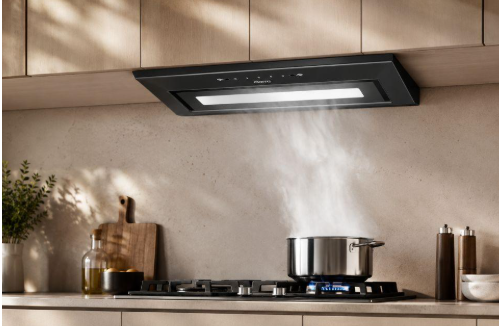
Modern kitchens are no longer isolated cooking spaces. They are open, shared environments where cooking, dining, and social interaction often happen in the same area. While this design is visually appealing, it also creates a challenge—smoke, steam, and cooking odors spread much faster than in closed kitchens.
Without proper ventilation, grease particles can settle on cabinets and walls, while lingering odors affect the comfort of the entire home. Over time, this not only makes cleaning more difficult but can also impact indoor air quality and overall kitchen hygiene.
A modern under-cabinet range hood solves these problems by actively removing airborne grease, heat, and smoke at the source. However, choosing the right model is not just about design—it depends on understanding the key performance features that affect long-term usability, efficiency, and comfort.
Why Proper Kitchen Ventilation Matters Today
In today’s homes, kitchens are used more frequently and for more intensive cooking styles than ever before. From frying and sautéing to grilling and baking, each method releases different levels of smoke, heat, and grease into the air.
If these particles are not properly controlled, they begin to accumulate on nearby surfaces. Cabinets may become sticky, walls can discolor, and unpleasant odors can linger long after cooking is finished. In humid environments, trapped moisture can even contribute to mold growth over time.
From a design and health perspective, ventilation is no longer optional. It is a core part of a functional kitchen system. A properly designed ventilation setup improves comfort, reduces cleaning effort, and helps maintain healthier indoor air for everyday living.
Key Features at a Glance
Before diving deeper into technical details, it helps to understand the most important features that define the performance of an under-cabinet range hood. These elements determine how effectively the system handles airflow, noise, filtration, and usability in real kitchens.
| Feature | Why It Matters | Ideal Range |
| Airflow (CFM) | Removes smoke and heat efficiently | 200–600+ |
| Noise Level | Affects cooking comfort | Low sones |
| Filtration System | Captures grease and particles | Baffle or mesh |
| Size Fit | Ensures proper coverage | 30–36 inches |
| Ducting Type | Impacts efficiency | Ducted preferred |
Each of these features plays a role in overall performance, but their importance becomes more obvious when you look at how they work in real cooking situations.
Airflow Power (CFM) – The Most Important Factor
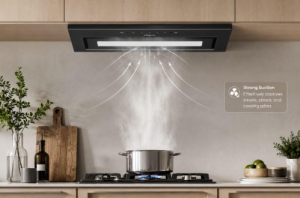
Airflow power, measured in CFM (cubic feet per minute), is one of the most critical performance indicators in any range hood. It determines how quickly smoke, steam, and odors are removed from the kitchen environment.
In real-world cooking scenarios, lower airflow may be sufficient for simple tasks like boiling water or reheating food. However, when cooking methods involve frying or grilling, smoke and grease levels increase significantly, requiring stronger ventilation capacity.
A practical way to understand CFM is to think of it as the “engine strength” of your ventilation system. The higher the airflow capacity, the faster your kitchen air is refreshed after cooking.
- 200–400 CFM for light cooking
- 400–600 CFM for regular daily use
- 600+ CFM for heavy cooking or large kitchens
Professionals often recommend slightly higher airflow capacity than minimum requirements to ensure consistent performance under real cooking conditions.
Noise Level – Why Quiet Operation Matters
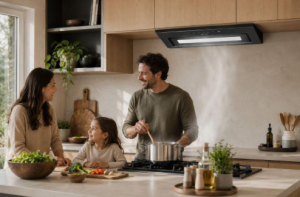
Noise level is often overlooked during the buying process, but it has a direct impact on daily kitchen experience. It is measured in sones, where lower values indicate quieter operation.
In open-concept homes, a loud range hood can easily disrupt conversations, entertainment, or general comfort while cooking. This becomes especially noticeable during long meal preparation sessions or when multiple appliances are running simultaneously.
Modern range hood designs aim to balance airflow power with quiet motor technology. A well-designed system should provide strong suction without creating unnecessary noise that affects the overall kitchen atmosphere.
Filtration System & Air Quality Control
The filtration system is responsible for capturing grease, smoke particles, and airborne contaminants before they circulate through the kitchen or duct system.
In practical use, baffle filters are often preferred in more demanding kitchens because they handle grease-heavy cooking more efficiently and are easier to clean over time. Mesh filters, while more affordable, require more frequent maintenance to maintain consistent performance.
Proper filtration is not only about cleanliness but also about long-term safety. Grease buildup inside ventilation systems can reduce efficiency and increase fire risk if not maintained properly. A high-quality filtration system helps prevent these issues while improving overall air quality.
Ducted vs Ductless Range Hoods
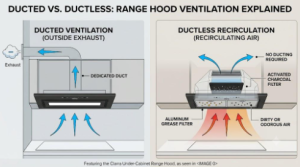
One of the most important decisions when choosing a range hood is whether to go with a ducted or ductless system. Both options serve the same purpose but operate in very different ways.
Ducted systems remove air from the kitchen and expel it outside the home. This makes them highly effective at eliminating heat, smoke, and odors, which is why they are often preferred in permanent kitchen installations.
Ductless systems, on the other hand, filter air through carbon filters and recirculate it back into the kitchen. While they are easier to install and more flexible in apartment settings, they require regular filter replacement to maintain performance.
In most long-term kitchen designs, ducted systems offer stronger and more reliable ventilation, but ductless systems remain a practical solution where external venting is not possible.
Size, Fit & Installation Considerations
Proper sizing plays a crucial role in ventilation efficiency. A range hood should ideally match or slightly exceed the width of the cooktop to ensure full coverage of rising smoke and steam.
Installation height is equally important. If the hood is installed too high, it loses suction efficiency. If it is too low, it may interfere with cooking space and comfort. Proper alignment ensures optimal airflow capture and balanced performance.
When these factors are correctly adjusted, the range hood performs more efficiently and maintains better long-term usability without unnecessary strain on the motor system.
Lighting, Controls & Smart Features
Modern under-cabinet range hoods now include advanced features that improve usability and cooking convenience. LED lighting has become standard because it provides clear visibility over the cooking surface while consuming minimal energy.
Control systems have also evolved from basic buttons to touch panels and digital interfaces, making operation smoother and easier to clean. Some models now include automatic sensors that adjust airflow based on heat or smoke levels.
In advanced kitchen setups, appliances are increasingly designed to complement each other. For example, cooking systems like the Ciarra Nosh Oven can be part of a more integrated kitchen experience where performance and convenience work together seamlessly.
Energy Efficiency & Long-Term Cost
Energy efficiency is becoming an important factor in modern appliance selection. Today’s range hoods use improved motor designs that deliver stronger airflow while reducing electricity consumption.
This not only lowers long-term energy costs but also supports more sustainable household operation. Efficient systems are designed to maintain performance without unnecessary energy waste, making them more practical for everyday use.
Over time, energy-efficient appliances reduce operational costs while also extending system lifespan due to reduced mechanical strain.
Common Kitchen Ventilation Problems and Their Causes
Many common kitchen ventilation issues are not caused by design flaws but by incorrect feature selection during purchase.
When smoke lingers in the kitchen, it is often due to insufficient airflow capacity. Excess grease buildup usually points to inadequate filtration systems. Similarly, excessive noise is typically caused by unbalanced motor performance or low-quality components.
Understanding these issues helps homeowners choose a system that avoids long-term frustration and delivers consistent performance in real cooking conditions.
Expert Buying Checklist
Before making a final decision, it is important to evaluate a few essential factors that directly affect performance and usability in daily cooking environments.
The airflow capacity should match cooking habits, ensuring that smoke and heat are removed efficiently. Noise levels should remain comfortable for the home environment, especially in open kitchens.
Filtration quality, size compatibility, and ducting type should also be carefully considered to ensure long-term satisfaction and efficiency in real use conditions.
- Match CFM with cooking style
- Ensure low and comfortable noise level
- Choose efficient filtration system
- Confirm correct hood size
- Decide between ducted or ductless setup
Final Thoughts
A modern under-cabinet range hood plays an essential role in maintaining a clean, comfortable, and efficient kitchen environment. It directly impacts air quality, surface cleanliness, and overall cooking experience.
When selected with the right features in mind, it becomes a long-term improvement to both kitchen performance and household comfort rather than just a standard appliance.
For homeowners exploring smarter kitchen solutions, Ciarra Appliances continues to focus on practical innovation that supports modern cooking needs and everyday usability.
FAQ
1. What is the most important feature in an under-cabinet range hood?
The most important feature is airflow power (CFM), as it determines how effectively the hood removes smoke, steam, and cooking odors from the kitchen. A properly matched CFM ensures cleaner air and better cooking comfort.
2. How much CFM do I need for my kitchen range hood?
Light cooking typically requires 200–400 CFM, regular home cooking needs 400–600 CFM, and heavy cooking or large kitchens often need 600+ CFM for effective ventilation and air removal.
3. Is a ducted range hood better than a ductless one?
Yes, ducted range hoods are generally more effective because they expel air outside the home. Ductless models are easier to install but rely on filters and require more maintenance.
4. How often should range hood filters be cleaned?
Metal filters should be cleaned every 2–4 weeks depending on cooking frequency. Regular cleaning ensures better airflow, improved efficiency, and longer appliance lifespan.
5. Why is noise level important in a kitchen range hood?
Noise level affects cooking comfort, especially in open kitchens. A quieter range hood allows normal conversation and creates a more pleasant cooking environment without disrupting daily activities.