



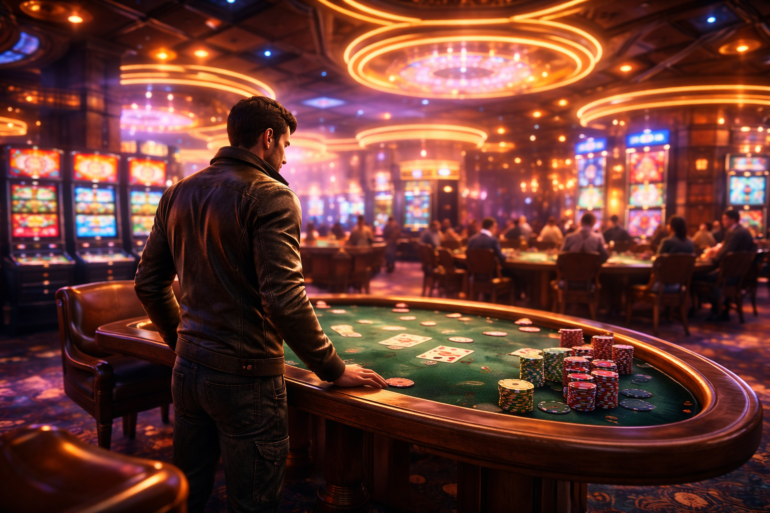
Some video games elevate immersion by adding in-game casinos and thrilling gambling minigames. These features often mirror iconic action movie moments, deepening the cinematic experience of play.
In 2024, there were an estimated 201 million gamers in the United States, and the annual growth of gaming audiences is set to remain stable until 2029. Women currently account for 48 percent of gamers in the United States. Approximately 25 percent of gamers in the United States are millennials aged between 27 and 42 years” (statista.com, 2025). This broad and diverse player base helps explain why risk-and-reward systems like casino minigames resonate so strongly across genres.
For many gamers, the thrill of action isn’t confined to missions and combat. Modern video games often weave in casino environments and betting minigames that offer risk and reward with a stylistic flair that wouldn’t feel out of place in a blockbuster action film. These elements can enhance world-building and give players opportunities to explore entertaining diversions while still advancing the narrative.
The Best Video Games With In-Game Casinos and Gambling Minigames
Here are standout titles that meaningfully integrate casino environments or gambling-style side activities into gameplay:
Grand Theft Auto V – The Diamond Casino & Resort is a fully realized social hub featuring poker, blackjack, roulette and slot machines. It blends narrative missions with leisure activities, reinforcing the game’s satirical take on luxury and excess.
Red Dead Redemption 2 – Poker and blackjack appear in saloons and camp settings, grounding the Western world in period-authentic leisure while allowing players to earn or lose in-game cash through skill and chance.
The Witcher 3: Wild Hunt – Gwent, a strategic card game played throughout the world, became so popular that it spawned a standalone release. Though not a traditional casino game, it captures the tension of wagering and the economics of collectibles.
Fallout: New Vegas – Set in a post-apocalyptic desert built around the New Vegas Strip, the game features multiple functioning casinos where players can gamble, win caps and even get banned for winning too much.
Yakuza 0 – From poker to baccarat and underground betting parlors, this title immerses players in Japan’s nightlife economy, making gambling activities central to its world-building.
Persona 5 – While more stylized, its casino-themed palace transforms gambling imagery into a narrative and gameplay mechanic tied to risk, deception and reward.
Each of these games integrates gambling systems not as throwaway diversions, but as meaningful layers that enhance immersion, economy and pacing.
In-Game Casinos as Interactive Set Pieces
In many action games, casinos become interactive set pieces where players can step away from main objectives and dive into side adventures that still feel cohesive. Here, players aren’t just mashing buttons; they’re engaging with rules, probabilities and rewards in ways that mimic the psychology of actual betting.
Some games even offer narrative tie-ins in which success in a card game or on the roulette wheel earns currency or items that matter later in the story. This blurs the line between “minigame” and “main game,” strengthening immersion and reinforcing player agency.
Multiplayer integration further expands this appeal. Online casino spaces inside games often function as social hubs, encouraging friendly competition, shared experiences and emergent storytelling. These moments deepen player attachment and extend replay value well beyond the main storyline.
Why Games Use Casino Mechanics
Beyond cinematic flair, developers use gambling systems for practical design reasons. Casino mechanics naturally introduce clear risk/reward loops: players stake in-game currency, face uncertain outcomes and receive immediate feedback. That cycle mirrors core gameplay systems such as loot drops, randomized encounters and critical-hit chances.
In large open-world titles, these systems also support in-game economies. Virtual chips, cash or tokens act as currency sinks, helping regulate inflation inside expansive digital marketplaces. When players spend money at poker tables or slot machines, they circulate resources back into the system, creating balance and extending long-term engagement.
Psychologically, gambling minigames tap into anticipation and variable rewards. The uncertainty of a card draw or roulette spin activates the same excitement players feel when opening rare loot crates or completing high-risk missions. Developers carefully calibrate probabilities, payouts and animations to ensure tension feels thrilling rather than frustrating. This balance keeps players invested while maintaining fairness within the game’s virtual economy.
Action Movies and the Allure of High-Stakes Settings
Action movies like Shelter (2026), Copshop (streaming 2026) and Diablo (2025) show how well-designed cinematic sequences create atmosphere, drive character choices and immerse the audience: all of which parallel the goals of well-crafted in-game casino minigames.
In classic and contemporary action films, scenes set in casinos or high-stakes environments often serve as narrative peaks: moments of tension, strategy and style. Think of elegant characters placing a decisive bet before a chase, or a confrontation set against the backdrop of spinning roulette wheels and clinking chips. These sequences heighten drama and immerse audiences in worlds of risk and reward.
Video game designers recognize this cinematic potential. They often use casino settings not just as decorative levels, but as vibrant arenas where players can interact, experience risk and make strategic choices. This cinematic influence makes casino minigames feel less like optional distractions and more like integral, memorable moments similar to those crafted by filmmakers.
Comparing Game Menus, Bonuses and Real Money Online Casinos Offers
The connection between virtual and real gambling experiences lies in shared design philosophy. Both prioritize intuitive interfaces, transparent rules and compelling incentives. For players who enjoy both virtual casino experiences and real-money online casino wagering, this page highlights how developers and operators craft games, bonuses and payment systems to maximize enjoyment. Reviewers at covers.com regularly evaluate casino games, bonus terms and payment options across licensed U.S. betting sites to determine which offer the best real-money gaming experience.
Top sites often feature generous welcome packages, such as matched deposits or no-deposit free spins, that let players experience more games with less initial risk. Testing payment methods such as ACH transfers, PayPal and e-wallets also helps ensure fast, secure deposits and withdrawals, enhancing the overall user experience.
While in-game minigames use virtual currency and don’t carry real financial risk, the design philosophies behind them and real casino games share common DNA: visual clarity, reward structures and satisfying feedback loops that keep players engaged.
Risk, Reward and Player Motivation
In both single-player epics and online sandbox worlds, gambling mechanics reinforce core motivational drivers: autonomy, mastery and reward anticipation. Choosing whether to risk hard-earned in-game currency introduces meaningful decision-making. Winning reinforces confidence and progression; losing can motivate players to refine strategy or seek alternative income streams within the game world.
Developers use these systems to create tension spikes between major story beats. A high-stakes poker hand can deliver a memorable emotional arc without requiring combat or complex mechanics. These quieter yet suspenseful moments diversify pacing and keep long campaigns fresh.
Importantly, well-designed gambling minigames maintain balance. Clear odds, capped payouts and integration with broader progression systems prevent destabilization of the in-game economy while preserving excitement.
Why These Moments Stick With Players
Gambling minigames endure because they blend atmosphere, agency and unpredictability. They give players controlled exposure to risk inside safe, fictional frameworks. Whether competing in poker in a dusty saloon or spinning digital reels in a neon-lit metropolis, players experience suspense that complements the broader narrative.
The blend of action and gambling in video games is much more than a fun diversion: it’s a way to deepen immersion and bring cinematic sensibilities into interactive play. In-game casinos and gambling minigames capture tension, risk, reward and style in ways that resonate with modern audiences. By combining economic systems, psychological engagement and immersive design, these features have secured their place among the most memorable mechanics in contemporary gaming.