



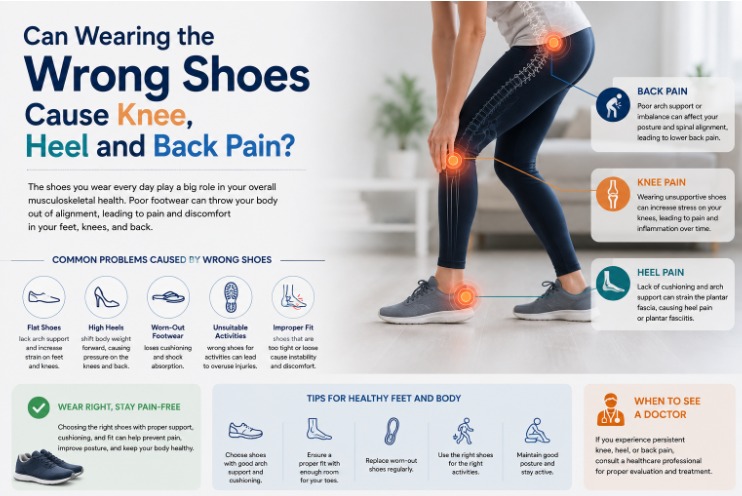
Most people blame ageing, long work hours, or old injuries when pain starts creeping into their knees, heels, or lower back. Yet one common culprit often goes unnoticed: the shoes on your feet.
Your footwear affects how your body moves from the ground up. A poor fit, inadequate support, or worn-out soles can alter your walking pattern, place extra stress on joints, and gradually contribute to discomfort. If you’ve been dealing with persistent aches, it may be time to look down before looking elsewhere.
The Link Between Wrong Shoes and Foot Pain
Your feet contain 26 bones, more than 30 joints, and over 100 muscles, tendons, and ligaments. They absorb impact, maintain balance, and support every step you take.
When footwear fails to provide proper cushioning or support, those forces travel upward through the body. This is why wrong shoes and foot pain often go hand in hand, and why the effects are not always limited to the feet.
Common footwear issues include:
- Shoes that are too tight or too loose
- Worn-out midsoles and soles
- Lack of arch support
- Poor shock absorption
- Unsuitable footwear for specific activities
Even healthy joints can become stressed when the body is forced to compensate for poor foot alignment.
Can Bad Shoes Cause Knee Pain Even If My Knees Are Healthy?
Yes.
Your knees rely heavily on proper foot positioning. If your feet roll inward excessively (overpronation) or outward (supination), the alignment of the knees can be affected with every step.
Over time, this can lead to:
- Knee discomfort during walking
- Pain when climbing stairs
- Increased joint strain
- Fatigue around the kneecap
A simple example is walking on a car with misaligned wheels. The problem may begin at the tyres, but wear eventually appears elsewhere. The same principle applies to the body.
Supportive footwear and quality orthotic insoles can help improve alignment and reduce unnecessary stress on the knees.
How Do I Know If My Shoes Are Causing Heel Pain?
Heel pain is one of the most common signs that footwear needs attention.
Your shoes may be contributing if:
- Heel pain is worse after standing for long periods
- Symptoms improve when wearing different shoes
- The sole appears unevenly worn
- Cushioning feels compressed or flat
- Pain develops after purchasing a new pair
Insufficient support can increase stress on the plantar fascia, the thick band of tissue that runs along the bottom of the foot. This may contribute to conditions such as heel pain and plantar fasciitis.
Products such as heel cups, plantar fasciitis supports, and orthotic insoles can help improve comfort while addressing pressure on the heel area.
What Are the Signs That Your Footwear Is Affecting Your Posture?
Posture is not just about how you sit or stand. It starts with your feet.
When footwear alters your natural alignment, your body may compensate in ways you don’t immediately notice.
Watch for signs such as:
- Lower back stiffness
- Hip discomfort
- Uneven wear patterns on shoes
- Frequent muscle fatigue
- Feeling off balance while walking
- One shoulder appearing higher than the other
Many people spend months stretching sore muscles without realising the issue may begin at ground level.
Supportive footwear helps create a more stable foundation for the entire body.
Can Worn-Out Shoes Lead to Back Pain?
Absolutely.
Most walking and running shoes gradually lose their shock-absorbing ability. Even if they still look fine on the outside, the cushioning materials inside may have compressed significantly.
When this happens:
- More impact travels through the legs
- Joints absorb greater stress
- Walking mechanics change
- Lower back muscles work harder to compensate
Many active Australians replace athletic shoes every 500 to 800 kilometres, depending on activity levels and shoe design. Waiting until shoes visibly fall apart is often too late.
If back discomfort appears without an obvious cause, checking the condition of your footwear is a sensible first step.
What Type of Shoes Should I Wear If I Stand All Day?
If your job keeps you on your feet for hours, support should be a priority rather than an afterthought.
Look for shoes that offer:
- Good arch support
- Adequate cushioning
- Stable heel construction
- Shock absorption
- A comfortable toe box
- Proper fit without excessive tightness
For additional comfort, many people benefit from orthotic insoles, arch supports, and compression socks, particularly during long shifts.
Whether you’re working in healthcare, retail, hospitality, or warehousing, the right footwear can make a noticeable difference to daily comfort and long-term joint health.
Small Footwear Changes Can Make a Big Difference
Pain does not always begin where it hurts.
Knee soreness, heel discomfort, and lower back aches can sometimes trace back to inadequate footwear. Paying attention to shoe condition, fit, and support may help reduce strain throughout the body and improve everyday comfort.
If your shoes have seen better days, replacing them or adding supportive products by Bodyassist such as orthotic insoles, heel supports, or compression wear could be one of the simplest investments you make in your wellbeing.
Your feet carry you through thousands of steps every day. Giving them proper support is a smart place to start.
FAQs
How often should I replace my walking or running shoes?
Ans. Most athletic shoes should be replaced after approximately 500 to 800 kilometres of use, though this varies based on body weight, activity level, and shoe quality.
Can flat shoes cause foot pain?
Ans. Yes. Flat shoes with little cushioning or arch support may contribute to foot fatigue, heel pain, and discomfort in the knees and lower back.
Are orthotic insoles worth trying?
Ans. For many people, orthotic insoles help improve foot alignment, reduce pressure points, and increase comfort during dail activities.
Why do my feet hurt more at the end of the day?
Ans. Extended standing, poor footwear support, and muscle fatigue can all contribute to increased foot discomfort later in the day.
Can supportive footwear help prevent injuries?
Ans. Supportive shoes may reduce excessive strain on muscles, tendons, and joints, helping lower the risk of some overuse-related injuries.