



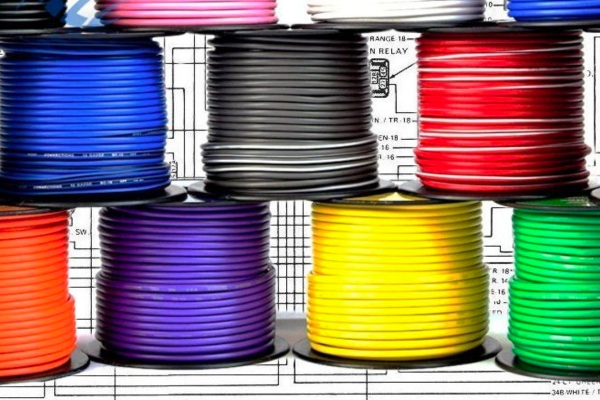
Wire is the least exciting part of a car audio build and one of the easiest to get wrong. Undersized power wire chokes your amplifier, drops voltage, and can run hot enough to be a fire risk. Oversized wire wastes money. The right gauge depends on how much current your system draws and how far the wire has to run, and once you understand those two factors, sizing wire becomes straightforward.
Why wire gauge matters
Wire gauge describes the conductor’s thickness. A lower number means thicker wire (1/0, often written 0G, is large; 8 gauge is small). Thicker wire carries more current with less resistance, and less resistance means less voltage drop between your battery and amplifier. Voltage drop is the enemy: it starves the amp, makes the system sound weak, and generates heat in the wire.
Size by current draw and run length
Two factors drive the decision:
- Current draw. The more total power your amplifiers produce, the more current they pull, and the thicker the wire needs to be. You can estimate current from the amplifiers’ total RMS and efficiency, or work from the total fuse rating on your amps.
- Run length. Longer runs lose more voltage, so a long run may need a thicker gauge than a short one carrying the same current. In most cars the amp lives in the trunk, which is a long run from the battery, so don’t undersize it.
Here’s a general starting guide for power and ground wire:
| Wire gauge | Rough current range |
| 8 GA | Up to ~50 A |
| 4 GA | ~50–100 A |
| 1/0 GA (0G) | ~100 A and up |
Treat these as a starting point and step up a size for long runs or when you’re near the top of a range.
OFC vs CCA: the catch most people miss
Not all wire of the same gauge carries the same current. OFC (oxygen-free copper) is pure copper and carries its full rated current. CCA (copper-clad aluminum) uses an aluminum core with a copper coating, so it costs less but carries less current for the same gauge.
The practical rule: if you choose CCA to save money, size up at least one gauge compared to what you’d use in OFC. A “4 gauge” CCA wire behaves more like a smaller copper wire, so matching it to an OFC sizing chart will leave you undersized.
Match the fuse to the wire
Your inline fuse near the battery protects the wire, not the amplifier. Size the fuse to what the wire can safely carry, so that if there’s a short, the fuse blows before the wire overheats. A fuse larger than the wire’s capacity defeats the purpose.
The Big 3 and amp kits
Two practical add-ons round out a clean install. The Big 3 upgrade replaces the three main factory power and ground cables with larger wire, improving current flow across the whole charging path; it’s a cheap, high-value upgrade for any system that’s grown. And for the amplifier itself, matched car audio wiring kits bundle the correct gauge power and ground wire, fuse, and signal cables together, which removes the guesswork of buying each piece separately and mismatching gauges.
Don’t stop at the power wire
Gauge sizing usually focuses on the big power and ground cables, but the rest of the wiring affects sound too. Keep your ground wire short and bolted to clean, bare metal; a long or rusty ground undoes the benefit of a thick positive cable. On the signal side, route your RCA cables away from power wires to avoid picking up engine and alternator noise, which shows up as whine through the speakers. And don’t undersize speaker wire on a high-power system; while it’s far less demanding than the amp’s power feed, very thin speaker wire on long runs adds resistance you don’t need. Good wire is a system, not a single cable, and the cheap parts of that system are the ones people skip and later regret.
FAQ
What gauge wire do I need for my amplifier?
Size wire to total current draw and run length. As a rough guide, 8 gauge suits up to about 50 amps, 4 gauge handles roughly 50 to 100 amps, and 1/0 gauge covers 100 amps and up. Step up a size for long runs or if you use CCA wire.
Is OFC or CCA wire better?
OFC (pure copper) carries more current per gauge and is the better performer. CCA (copper-clad aluminum) is cheaper and lighter but carries less current, so if you use CCA you should size up at least one gauge to match the performance of copper.
Does the fuse size depend on the wire or the amp?
The inline fuse near the battery protects the wire. Size it to what the wire can safely carry so it blows before the wire overheats in a short. It is not sized to the amplifier, which has its own onboard fuses.