



Introduction
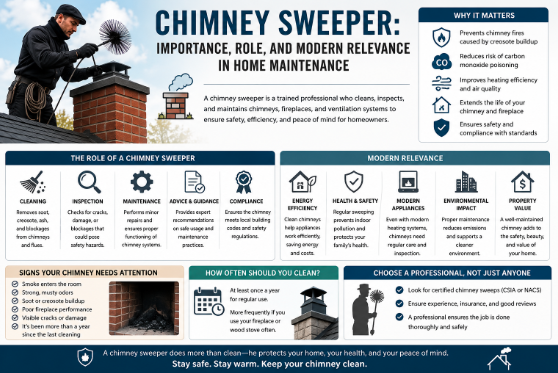
A well-maintained home is not only about interior design and comfort but also about safety, hygiene, and long-term structural durability. Among the many overlooked aspects of home maintenance is the cleaning and upkeep of chimneys, which play a crucial role in ventilation and smoke removal. Over time, soot, creosote, and debris accumulate inside chimneys, creating hazards such as fire risks and poor air circulation. This is where the role of a professional becomes essential, commonly known as a chimney sweeper, who ensures that chimneys remain clean, functional, and safe for daily use. In older times, this profession was even more critical due to widespread use of coal and wood-burning fireplaces, but even today it holds significant importance in both residential and commercial settings.The concept of chimney maintenance is deeply connected to household safety and energy efficiency. A blocked or poorly maintained chimney can lead to dangerous smoke buildup inside living spaces, carbon monoxide leakage, and even chimney fires. Therefore, regular cleaning is not just a recommendation but a necessity. The expertise of a chimney sweeper ensures that such risks are minimized through proper inspection and cleaning techniques. Understanding this profession helps homeowners appreciate the value of preventive maintenance rather than reactive repairs, which are often more expensive and hazardous.
Historical Background of Chimney Cleaning
The history of chimney cleaning dates back several centuries, particularly during the industrial revolution when coal and wood were the primary fuel sources for heating and cooking. During that era, chimneys became heavily clogged with soot, making regular cleaning a necessity rather than an option. Young apprentices were often employed in dangerous conditions to climb narrow chimneys and scrape out soot manually. This early form of chimney sweeper work was physically demanding and extremely hazardous, reflecting the lack of safety regulations at the time.As societies evolved, awareness about occupational safety and health improved significantly. Mechanized tools and safer cleaning methods gradually replaced manual labor inside chimneys. Today, the profession has transformed into a skilled trade that requires training, safety equipment, and knowledge of modern heating systems. Despite technological advancement, the core responsibility remains unchanged: ensuring that chimneys are free from blockages and safe for use. The evolution of chimney sweeper profession highlights how traditional roles adapt to modern safety standards and technological progress.
Role and Responsibilities in Modern Homes
In contemporary settings, chimney maintenance is no longer limited to traditional fireplaces. Many homes now use gas heaters, wood stoves, and industrial ventilation systems that still rely on proper exhaust mechanisms. A trained professional in this field inspects chimneys for cracks, blockages, creosote buildup, and structural damage. Regular maintenance prevents fire hazards and improves energy efficiency by ensuring smooth airflow. The job of a chimney sweeper includes both cleaning and diagnostic evaluation of the entire chimney system.Another important responsibility is identifying hidden risks that homeowners may overlook. For example, birds nesting in chimneys or debris accumulation due to weather conditions can significantly reduce airflow. In such cases, a chimney sweeper not only cleans the chimney but also provides preventive solutions such as installing chimney caps or recommending structural repairs. This makes the role highly valuable in maintaining both safety and efficiency in modern homes.
Safety Hazards and Risks of Poor Maintenance
Neglecting chimney maintenance can lead to serious consequences that affect both property and human life. One of the most common risks is chimney fire, which occurs when creosote deposits inside the chimney ignite due to high temperatures. These fires can spread rapidly and cause extensive damage to the structure of a building. Another major risk is carbon monoxide poisoning, which is often called a silent killer because it is odorless and invisible.A skilled chimney sweeper plays a vital role in preventing these dangers by ensuring regular inspections and cleaning schedules. Without proper maintenance, smoke may also start entering living spaces instead of exiting through the chimney, leading to respiratory issues and discomfort. Additionally, structural damage caused by moisture and soot buildup can weaken the chimney over time. Therefore, investing in professional chimney care is not just about cleanliness but also about safeguarding lives and property.
Tools, Techniques, and Modern Equipment
Modern chimney cleaning has evolved significantly from traditional methods. Today, professionals use advanced tools such as rotary brushes, vacuum systems, inspection cameras, and protective gear to ensure thorough cleaning without damaging the structure. These tools allow a chimney sweeper to reach deep inside the chimney and remove stubborn deposits effectively. Safety equipment such as harnesses and respiratory masks also ensures that the cleaning process is conducted without health risks.In addition to physical cleaning tools, technology has introduced diagnostic equipment that helps in identifying hidden cracks or blockages. Video inspection systems provide a clear view of internal chimney conditions, allowing precise maintenance planning. A modern chimney sweeper relies on both technical knowledge and practical experience to deliver effective results. This combination of traditional skills and modern innovation makes chimney maintenance more efficient and reliable than ever before.
Environmental and Efficiency Benefits
Chimney maintenance is not only about safety but also about environmental responsibility and energy efficiency. A clean chimney ensures proper combustion, which reduces smoke emissions and improves fuel efficiency. When chimneys are clogged, fuel burns inefficiently, producing more pollution and wasting energy. Regular cleaning helps maintain optimal airflow, leading to cleaner combustion and reduced environmental impact.A professional chimney sweeper contributes to environmental sustainability by ensuring that heating systems operate at maximum efficiency. This reduces carbon emissions and promotes cleaner air quality inside and outside the home. Additionally, efficient chimneys reduce fuel consumption, which can lower energy costs for homeowners. In this way, chimney maintenance plays a dual role in both environmental protection and economic savings.
Importance of Regular Inspection
Routine inspection is one of the most important aspects of chimney maintenance. Experts recommend checking chimneys at least once or twice a year depending on usage. During inspection, a chimney sweeper evaluates the condition of flue liners, detects soot accumulation, and checks for any structural damage. Early detection of problems helps prevent costly repairs and reduces safety risks.Regular inspections also help in maintaining compliance with safety standards, especially in commercial buildings where heating systems are used frequently. Neglecting inspection schedules can lead to unexpected breakdowns or hazardous conditions. Therefore, consistent monitoring by a trained chimney sweeper ensures long-term reliability and peace of mind for property owners.
Professional Skills and Training
Becoming a skilled chimney maintenance professional requires proper training and hands-on experience. Understanding different chimney structures, fuel types, and ventilation systems is essential for effective performance. A qualified chimney sweeper must also be knowledgeable about safety regulations, cleaning techniques, and emergency procedures.Training programs often include both theoretical knowledge and practical fieldwork. Professionals learn how to handle tools safely, identify hazards, and communicate effectively with clients. This combination of skills ensures that chimney maintenance is performed efficiently and safely. As technology continues to evolve, ongoing training becomes even more important to stay updated with modern systems and methods.
Future of Chimney Maintenance
With advancements in heating technology and smart home systems, the future of chimney maintenance is expected to become more automated and efficient. Robotics and remote inspection tools are already being tested to reduce manual labor and increase safety. However, human expertise will still remain essential for accurate diagnosis and decision-making.The role of a chimney sweeper will continue to evolve, focusing more on inspection, consultation, and advanced maintenance solutions rather than just physical cleaning. As environmental awareness increases, demand for energy-efficient and eco-friendly heating systems will also grow, making chimney maintenance an important part of sustainable living.
Conclusion
Chimney maintenance is a critical aspect of home safety, energy efficiency, and environmental responsibility. From historical origins to modern technological advancements, the profession has continuously evolved to meet changing needs and safety standards. The expertise of a chimney sweeper ensures that chimneys remain clean, functional, and safe for everyday use, preventing hazards such as fire, smoke damage, and carbon monoxide poisoning.Regular inspections, proper cleaning techniques, and modern tools all contribute to maintaining a safe and efficient heating system. As homes become more advanced, the importance of professional chimney care will continue to grow. Ultimately, investing in chimney maintenance is an investment in safety, comfort, and long-term sustainability for every household.