



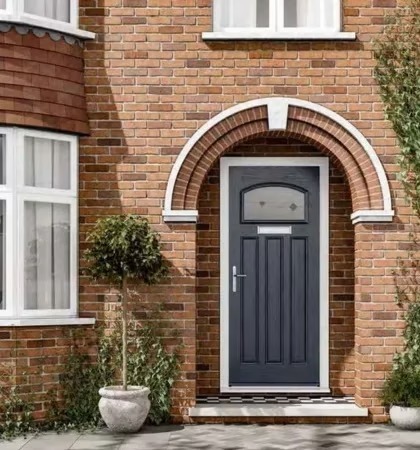
A composite door is a front door built from several materials layered together instead of just one, and that mix is exactly why more homeowners are switching to them. There’s a certain feeling when your front door gets stuck again, or cold air sneaks in around the edges every time the wind blows. Most people just live with it for years. But now, more homeowners are looking at composite door Glasgow instead of fixing the same old wooden door again and again. Once you see what these doors are made of, it’s easy to understand why.
What Makes Composite Doors Different?
In simple terms, a composite door is made by pressing several materials together into one solid door, rather than using just wood or just plastic on their own.
A composite door is not made from just one material. It is built from a few layers pressed together. Usually, there is a wood core in the middle, some foam for insulation, and a strong outer layer that stands up to bad weather. Because of this mix, the door becomes very strong. It also does not warp or swell the way a plain wooden door often does.
This makes a real difference over time. The door keeps its shape. The colour does not fade or peel as painted wood does. So you don’t have to sand it down and repaint it every couple of years just to keep it looking good.
There is also less to worry about day to day. It won’t jam shut in the rain. It won’t crack after a cold winter. And you won’t need to repaint it once the colour starts to look tired. It is made to be low effort, and that suits most homeowners just fine.
If you’ve ever had a door that sticks every time it rains, you already know why that matters.
Composite vs uPVC vs Timber
Timber doors look classic, and they can suit older homes well. But they need regular painting or varnishing. They are also the most likely to warp when the weather turns damp. uPVC doors, on the other hand, need very little care and often cost less. However, they can look a bit plain, and they tend to flex more than composite doors over time. Composite sits right in the middle. It looks closer to timber, but it needs as little care as uPVC. On top of that, it is stronger because of its layered build.
None of the three options is wrong. It really depends on how much upkeep you want to do, and what look you want for the front of your home.
Why They Suit Glasgow Homes?
Glasgow’s weather is not gentle. Between the rain, the wind, and the sudden cold snaps, a front door goes through a lot each year. Composite doors are built to handle exactly that. They keep their shape and their finish no matter what the weather brings, which is more than can be said for a lot of older wooden doors still hanging on across the city’s tenements and terraces.
Security matters too. Most composite doors come with multi-point locks as standard. This means far more protection than just one lock on its own. If you live on a busy street, or in a tenement close, that extra bit of security offers real peace of mind.
Then there’s how it looks. A new front door, in a colour that suits your home, can completely change how the house looks from the street. It is one of the easiest ways to freshen up the outside of your home without doing a full renovation. Swapping a tired grey door for a deep blue or a classic black one can lift the whole front of the house. It’s the kind of change neighbours notice, even if they can’t quite say why.
Energy Efficiency and Comfort
Old front doors let out a lot of heat. If you live in a Victorian flat or an older tenement in Glasgow, you’ve probably felt that cold patch near the door before. Composite doors have a strong insulating core inside them. This helps keep the warmth in and the cold out. As a result, your heating system doesn’t have to work as hard, and the rooms near your front door stay a bit more comfortable during the colder months.
This works even better when it’s paired with good double glazing Glasgow homes already have fitted. When your windows and your front door are both doing their job well, you can really feel the difference. Rooms stay warmer for longer. You’re not stuck fighting a draught from one weak spot while the rest of the house stays cosy. It’s a bit like patching one hole in a jumper but leaving another one open. You only get the full benefit once both spots are fixed.
Over a full Scottish winter, this difference can really add up, both in comfort and in what you spend to heat your home.
What to Consider Before Buying?
Before you choose a new door, here are a few things worth thinking about:
- Core thickness: A thicker core usually means better insulation in cold weather. So it’s worth asking what’s actually inside the door, not just how it looks on the outside.
- Locking system: Multi-point locks should come as standard, not as something you pay extra for.
- Colour and finish: Think about how it will look next to your brickwork or render, not just how it looks on its own in a showroom.
- Glazing: Decorative glass panels often suit older, more traditional homes. A plain panel usually looks better on a more modern property.
- Fitting: Even a great door won’t work well if it is fitted badly. So this matters just as much as the door itself.
It’s also worth asking how the door has actually been tested for weather resistance and security, instead of judging it on looks alone. A door that performs well should be able to prove it with real testing, not just a sales pitch. And don’t be afraid to ask about the warranty either. A longer warranty is usually a good sign that the maker trusts their own product.
A Few Common Questions
How long do composite doors last?
With normal care, a good composite door can last for a long time, well beyond what most timber doors manage. The core does not break down the way timber can, so it keeps working well long after an old wooden door would need fixing or replacing.
Do they need much maintenance?
Not really. A quick wipe with warm water is usually enough. There is no need for painting, sanding or varnishing, and that is one of the biggest reasons people move away from timber doors in the first place.
Will a composite door work on an older property?
Yes, in most cases. These doors come in styles and colours that suit older, period-style homes too, including decorative glass options. So they don’t look out of place on a traditional Glasgow terrace or tenement.
A Practical Upgrade Worth Considering
A new front door might not be the most exciting job on your to-do list, but it is one of the most useful. It affects how safe your home feels, how warm it stays, and how it looks from the street, all at the same time. For homeowners across Glasgow dealing with an old door, composite has become a solid and low-fuss choice. It stands up well to the local weather, and it doesn’t ask for much in return besides an occasional wipe-down.