



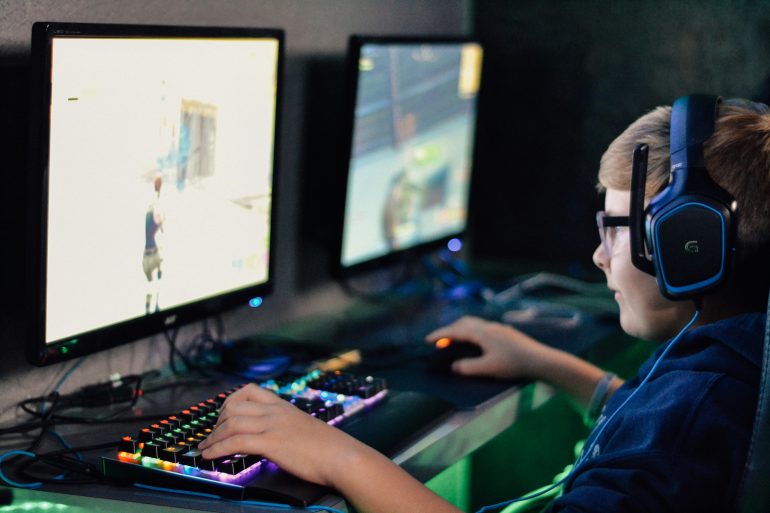
The highlight reel makes it look effortless. One player alone against four, low on health, no time on the clock, and somehow the round ends with four bodies on the floor and an arena losing its mind.
What the reel does not show is the eleven years that produced that thirty seconds. Counter-Strike has been turning teenagers with fast hands into professionals for over two decades, and the job is considerably less glamorous than the footage suggests.
The pipeline is brutal and completely open
There are no scouts in the traditional sense, no academies with entrance requirements, no gatekeepers deciding who gets a chance.
What exists instead is a ladder that anyone can climb from a bedroom. Public matchmaking feeds into competitive platforms. Those feed into amateur leagues. Amateur leagues feed into lower-tier professional teams. Every stage is visible, every stage is measurable, and every stage is full of people who are very good and will still never make it.
The openness is genuinely admirable and genuinely merciless. Nobody can block a talented player from rising. Nobody will catch one who is not quite good enough, either.
What the job actually looks like
Ask a professional how they spend a day and the answer is duller than expected.
Individual mechanical practice comes first — aim training, movement drills, the repetitive fundamentals that keep the physical skills sharp. Then team practice, playing structured matches against other professional teams to test strategies. Then review, sitting together watching recordings of their own matches and picking apart what went wrong.
Then, frequently, watching recordings of opponents. Counter-Strike at the top level is a preparation game. Teams study each other’s tendencies obsessively — which positions a player favours, how a team responds to a particular opening, what they do when they are behind. Matches are often decided by which side did more homework.
Add travel, media obligations, sponsor commitments and the ordinary business of living in a shared house with four colleagues, and the romance thins considerably.
The technical obsession is real
One detail that surprises people new to the scene is how much attention professionals pay to their equipment and configuration.
Mouse sensitivity is calibrated to a precision that sounds absurd until you understand that muscle memory is built around it and changing it means rebuilding months of work. Monitors are chosen for response characteristics. Peripherals are carried to events rather than trusted to venue equipment.
The software side is equally deliberate. Professionals run stripped-down configurations, disable anything that could introduce inconsistency, and adjust the parameters their game launches with. This is documented territory rather than secret knowledge — writeups covering the best launch options for Counter-Strike 2 circulate widely, and much of what professionals use is available to anyone willing to read.
The logic is that at their level everyone can aim. What separates results is who has removed the most sources of unpredictability from their environment.
Careers are short
The uncomfortable arithmetic is that most professional careers last a handful of years.
Reaction time declines with age, gradually and unavoidably. But the more common ending is not physical. It is burnout, roster changes, a team folding, or simply being replaced by someone younger and hungrier. The supply of talented players vastly exceeds the number of professional positions.
The scene has responded reasonably well. Retired players move into coaching, analysis, broadcasting and content creation, and several have built larger audiences after retiring than they had while competing. The knowledge does not expire even when the reflexes slow.
Why this game and not another
Dozens of competitive shooters have launched with professional ambitions since Counter-Strike began. Most are gone.
The ones that survive tend to share the same quality: skill accumulated over years remains relevant. When a game changes fundamentally every season, the veterans lose their advantage and the audience loses the narrative. Counter-Strike has resisted that. A player who learned a position a decade ago still knows it.
That stability is why the scene has stories that span years — rivalries, redemption arcs, veterans who left and came back. It is what makes the clutch worth watching. You are not just seeing someone win a round. You are seeing eleven years arrive at once.