



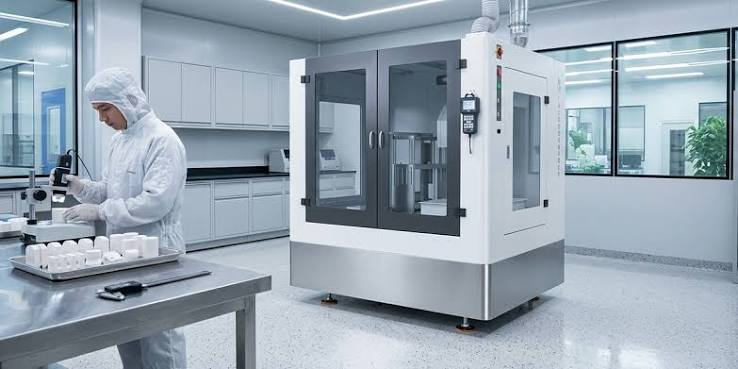
Anyone who has spent time around industrial cutting equipment knows that not all materials play nice with traditional blades. Granite cracks unpredictably. Sapphire glass chips at the edges. Advanced ceramics shatter if you so much as look at them wrong. This is where the diamond wire saw earns its reputation as one of the most valuable tools in modern manufacturing, and it’s exactly the kind of challenge that companies like Zelatec have built their business around solving.
Why Traditional Cutting Methods Fall Short
Before diamond wire technology became widely accessible, manufacturers dealing with tough substrates had limited options. Standard blades wear down quickly, generate excessive heat, and often leave behind rough or uneven edges that require costly secondary finishing. For anyone working with hard and brittle material cutting, this was simply the cost of doing business. Stone fabricators, semiconductor producers, and aerospace component makers all wrestled with the same frustrations: slow cutting speeds, high material waste, and inconsistent results from one batch to the next.
The introduction of diamond wire cutting changed that equation considerably. Instead of relying on a rigid blade that forces its way through material, a diamond wire saw uses a thin, flexible wire embedded with industrial diamond particles. The wire moves continuously through the workpiece, grinding rather than tearing through even the densest substrates. That distinction matters enormously when you’re working with materials that crack under stress.
How Diamond Wire Saws Actually Work
The mechanics behind this technology are deceptively simple. A steel wire, coated or beaded with synthetic diamond segments, is looped around a series of pulleys and driven at high speed. As the wire contacts the material, the diamond particles abrade the surface layer by layer rather than applying sudden pressure. This gradual, controlled approach is precisely what makes hard and brittle material cutting so much more manageable than it used to be.
Because the wire itself is thin, kerf loss is minimal compared to conventional saw blades. That means less wasted material, which translates directly into cost savings for manufacturers working with expensive substrates like sapphire, quartz, or technical ceramics. The flexibility of the wire also allows it to follow curved or irregular cutting paths that a rigid blade simply couldn’t manage, opening up design possibilities that were previously impractical.
Where Zelatec Fits Into the Picture
This is the space where Zelatec has carved out a strong reputation. Rather than offering a generic cutting solution, Zelatec has focused specifically on engineering diamond wire saw systems built for demanding industrial environments. Their equipment is designed with tension control and wire speed consistency in mind, two factors that make an enormous difference when precision tolerances are tight and material costs are high.
What sets Zelatec apart isn’t just the hardware itself but the understanding behind it. Cutting sapphire ingots requires a different approach than slicing through reinforced concrete samples or processing silicon wafers. Zelatec’s engineering teams seem to grasp that nuance, tailoring wire specifications, diamond concentration, and machine parameters to match the specific demands of hard and brittle material cutting across different industries. That kind of specialization tends to show up in the finished product, whether it’s a smoother surface finish or fewer microfractures along the cut edge.
Practical Benefits Manufacturers Actually Notice
Beyond the technical specifications, there are real operational advantages that come with adopting diamond wire saw technology. Reduced downtime is one of the most immediate. Because diamond wires wear more evenly and predictably than conventional blades, maintenance schedules become more manageable and less disruptive to production timelines.
Noise and vibration also drop noticeably compared to older cutting methods, which matters both for workplace safety and for the structural integrity of delicate materials. When you’re cutting something as brittle as monocrystalline silicon, even minor vibrations can introduce defects that aren’t visible until later stages of production. A stable, well-engineered system like what Zelatec provides helps minimize that risk from the outset.
Choosing the Right System for Your Operation
Not every facility needs the same configuration, and this is where working with a manufacturer that understands the full scope of hard and brittle material cutting really pays off. Wire diameter, diamond bead spacing, and tension settings all need to align with the specific material being processed. Getting these variables wrong doesn’t just slow production, it can compromise the quality of every piece that comes off the line.
Final Thoughts
The shift toward diamond wire saw technology reflects a broader trend in manufacturing toward precision, efficiency, and material conservation. For industries built around hard and brittle material cutting, this isn’t a passing trend but a fundamental shift in how difficult substrates get processed. Companies like Zelatec are pushing that evolution forward, and for manufacturers still relying on outdated cutting methods, it might be time to take a closer look at what modern diamond wire systems can offer.