


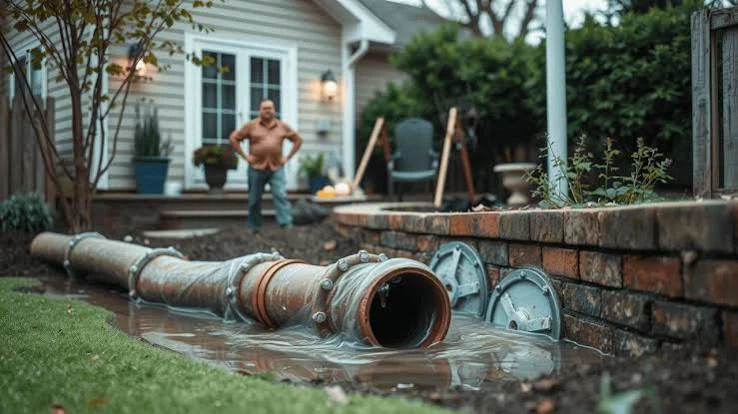
When homeowners hear that an underground pipe is broken, many picture the worst-case scenario: excavators, damaged lawns, lifted paving, exposed trenches and days of disruption. Sometimes digging is necessary. But it is not the only repair option for every damaged drain.
Trenchless pipe relining can often repair a damaged pipe from the inside, with little or no excavation. For suitable pipes, it creates a new internal lining that seals cracks, bridges gaps and reduces root entry points. This is why pipe relining Sydney homeowners ask about is often discussed as an alternative to full excavation, not just a temporary patch.
Why Excavation Was Once the Default
For many years, damaged underground pipes were repaired by digging down to expose the affected section, cutting it out and replacing it. This approach still has its place, especially when a pipe has collapsed, lost its shape or needs major realignment.
The drawback is disruption. Excavation can affect lawns, driveways, tiles, garden beds, retaining walls, paths and established landscaping. On narrow Sydney blocks or strata properties, access can also be difficult. Even a small pipe repair can become complicated if the damaged section sits under concrete, paving or a built structure.
Because many homeowners only know about excavation, they may assume damage automatically means digging. That is not always the case.
How Trenchless Relining Works
Pipe relining repairs the pipe from within. The damaged drain is first cleared and cleaned so the inside surface is ready. A CCTV camera is used to inspect the pipe and confirm whether relining is suitable. A flexible liner coated with resin is then inserted into the pipe and positioned across the damaged section.
Once the liner cures, it forms a new internal pipe wall. This can seal cracks and open joints, smooth rough internal surfaces, and help prevent tree roots from entering at the repaired section. The existing pipe remains in place, but the new lining carries the flow.
For many homeowners, the main benefit is that the repair can be completed without digging up large sections of the property.
When Relining Is a Genuine Alternative
Relining is often suitable where the pipe is cracked, root-affected, leaking at joints or worn but still has enough shape to support the liner. It can be useful in older clay or earthenware drains where roots have entered through joints, as long as the pipe has not fully collapsed.
It is also worth considering when the damaged section runs under landscaping, paving, driveways, paths or areas that would be expensive to reinstate. For many pipe relining services in Sydney, the aim is to repair the pipe while reducing surface disruption.
However, suitability should always be confirmed by inspection. A camera view is important because relining depends on the condition and shape of the existing pipe.
When Digging Is Still Unavoidable
Relining is not suitable for every pipe. If a drain has collapsed completely, has major sections missing, is badly crushed, has severe misalignment or has lost its grade, excavation may be the correct option. A liner needs a path to follow and a pipe shape that can be restored internally.
Digging may also be needed where the pipe needs to be redirected, replaced at a junction, upgraded in size or repaired alongside other structural works. In some cases, a small targeted excavation is used together with relining to solve a larger problem.
The honest answer is that the best repair is not always the least invasive one. It is the one that suits the actual pipe condition.
What Homeowners Often Get Wrong
Some homeowners assume relining is a cheaper shortcut or a lesser repair because it avoids excavation. Others assume excavation is always stronger because the old pipe is physically removed. Both views oversimplify the choice.
A well-suited relining job can be a long-term structural repair for the damaged section. A poorly suited relining job, however, will not solve a pipe that has collapsed or moved too far out of position. Excavation can be necessary and effective, but it may also cause avoidable disruption if the pipe could have been repaired internally.
The decision should be based on evidence from inspection, not assumption.
How a Plumber Helps Compare Options
A plumber will usually clear the pipe, inspect it with CCTV, locate the damaged section and assess the severity of the fault. They will look at root entry, cracks, pipe shape, joint movement, depth, access and what sits above the pipe.
From there, they can explain whether relining, excavation or a combination is more appropriate. The discussion should include disruption, access, repair scope and the likelihood of solving the cause rather than just clearing the blockage.
This helps homeowners make a practical decision instead of reacting to the fear of digging.
Conclusion
A broken underground pipe does not always mean the entire backyard needs to be dug up. Trenchless relining can often repair suitable damaged drains from the inside, reducing disruption to lawns, paving and gardens.
The right choice depends on the condition of the pipe. A professional inspection can show whether relining is realistic or whether excavation is genuinely required, giving homeowners a clearer path to a repair that addresses the problem properly.