



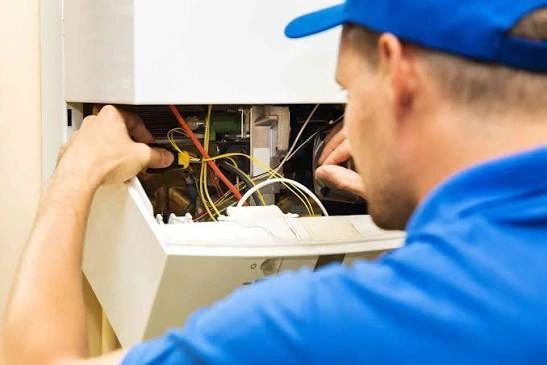
Yes, servicing differs slightly between the two. A combi boiler service focuses on the heat exchanger, built in expansion vessel, pressure relief valve, and ignition system, and usually takes under an hour. A system boiler service covers all of that plus the separate hot water cylinder, its immersion heater, expansion vessel, and any zone valves, so it can take a bit longer. Gas safety checks and combustion testing apply to both boiler types regardless of these differences.
If you’ve booked an annual boiler service before, you already know the routine: an engineer turns up, runs a series of checks, and signs off a certificate before leaving. What often surprises homeowners is that the checklist isn’t identical for every boiler. Combi boilers heat water on demand and have a shorter list of components to inspect, while system boilers rely on a separate hot water cylinder and expansion vessel that both need their own attention. The core safety checks are the same either way, but the parts list and time on site can differ.
Combi Boilers vs System Boilers: What’s Actually Different
A combi boiler heats water directly from the mains whenever a tap is turned on, with no storage tank or separate cylinder involved. Everything, including the expansion vessel in most cases, sits inside one compact unit. That makes servicing more straightforward since there’s only one appliance to open up and inspect.
A system boiler heats water and sends it to a separate hot water cylinder, usually installed in an airing cupboard. This setup needs its own expansion vessel, and often includes zone valves that direct hot water to different parts of the house. Because there are more components spread across the property, a system boiler service takes in more ground than a combi service.
What Happens During a Combi Boiler Service
An engineer working on a combi boiler will typically go through the following steps:
- Visual inspection of the casing, seals, and flue terminal for damage or corrosion
- Checking gas pressure and burner performance against the manufacturer’s settings
- Testing the heat exchanger for signs of scale build up or corrosion
- Checking the pressure of the built in expansion vessel
- Testing the pressure relief valve and safety cut offs
- Checking the condensate pipe for blockages, especially in cold weather
- Running the boiler through its full cycle to confirm the thermostat and controls respond correctly
What Happens During a System Boiler Service
A system boiler service includes everything above, plus additional checks on the wider heating system:
- Inspecting the hot water cylinder, its insulation jacket, and any signs of leaking
- Checking the cylinder’s immersion heater and thermostat settings
- Testing the separate expansion vessel for correct pressure
- Checking zone valves and motorised valves for smooth operation
- Bleeding radiators if the engineer finds trapped air during testing
- Testing the cylinder’s temperature and pressure relief valve
Where the Service Actually Differs
The table below sums up the main differences engineers work through on each boiler type.
| Component Checked | Combi Boiler | System Boiler |
| Heat exchanger | Yes | Yes |
| Burner and gas pressure | Yes | Yes |
| Built in expansion vessel | Yes | Sometimes, depends on model |
| Separate expansion vessel | Not applicable | Yes |
| Hot water cylinder | Not applicable | Yes |
| Immersion heater | Not applicable | Yes |
| Zone valves | Rarely fitted | Often fitted |
| Condensate pipe | Yes | Yes |
| Flue and ventilation | Yes | Yes |
Why Annual Servicing Matters for Both Types
Skipping a year rarely causes an immediate problem, but small faults build up quietly. A worn seal, a slightly high gas pressure, or a blocked condensate pipe can all turn into a breakdown in the middle of winter. An annual boiler safety inspection catches these issues early, confirms the flue is venting properly, and checks for carbon monoxide risks before they become dangerous. This applies just as much to a combi boiler tucked in a kitchen cupboard as it does to a system boiler feeding a full house of radiators.
Landlords and Boiler Servicing Rules
Anyone renting out a property with a gas boiler has a legal duty to arrange checks every year, regardless of whether the property has a combi or system setup. A landlord boiler service must be carried out by a Gas Safe registered engineer, who then issues a certificate confirming the appliance is safe to use. This isn’t optional paperwork. It protects tenants from carbon monoxide risk and protects landlords from liability if something goes wrong.
Key points for landlords to keep in mind:
- The check must happen every 12 months without exception
- Only a Gas Safe registered engineer can carry out the inspection and sign the certificate
- Tenants must be given a copy of the current certificate, usually within 28 days of the check
- Records should be kept for at least two years in case of a dispute or inspection
What an Annual Gas Boiler Check Actually Tests
An annual gas boiler check goes beyond simply confirming the boiler switches on. Engineers are testing for safety as much as performance, and the process usually follows a set order:
- Checking for gas leaks at every joint and connection
- Measuring flue gas readings to confirm safe combustion
- Inspecting the flue terminal outside the property for blockages or damage
- Testing ventilation to make sure the boiler gets enough air to burn gas safely
- Checking the case for missing panels or damaged seals that could let fumes escape
- Confirming all safety devices shut the boiler down correctly when triggered
Warning Signs Your Boiler Needs Attention Before Its Next Service
Some problems don’t wait politely for the next annual visit. Book an engineer sooner rather than later if you notice any of the following:
- Banging or kettling noises: often caused by limescale build up around the heat exchanger
- A yellow or flickering pilot light: should normally burn blue, and a change in colour can point to poor combustion
- Falling system pressure: can indicate a hidden leak somewhere in the pipework
- Soot or staining around the boiler casing: a sign that fumes aren’t venting the way they should
- Radiators heating unevenly: often points to trapped air or a failing valve rather than the boiler itself
Frequently Asked Questions
1. Do combi boilers need servicing as often as system boilers?
Yes. Both boiler types need a check every 12 months regardless of how they’re configured. The frequency doesn’t change, only the specific parts being inspected during the visit.
2. Can the same engineer service both combi and system boilers?
Yes, as long as they’re Gas Safe registered and qualified to work on both boiler types, which most residential heating engineers are.
3. How long does a system boiler service take compared to a combi?
A combi service usually takes under an hour, while a system boiler service often runs a bit longer because of the extra cylinder and valve checks involved.
4. Is a boiler service the same as a gas safety check?
Not exactly. A gas safety check focuses specifically on confirming the appliance is safe to use, while a full service also includes performance checks and general maintenance on top of the safety testing.
5. What happens if a landlord skips the annual boiler check?
Skipping the check breaches legal safety duties and can lead to fines, invalidated insurance, and serious risk to tenants from undetected faults or carbon monoxide leaks.
6. Do system boilers need their cylinder serviced separately?
No, the cylinder is checked as part of the same appointment. A separate visit isn’t usually needed unless the cylinder itself develops a fault between services.
7. Can I service my own boiler instead of hiring an engineer?
No. Gas appliances must legally be serviced by a Gas Safe registered engineer, and attempting it yourself can be dangerous as well as invalidate any warranty.
8. What’s the biggest servicing difference between combi and system boilers?
The main difference is the extra cylinder, immersion heater, and separate expansion vessel that only system boilers have, all of which need their own checks during the visit.
9. Does a boiler service include checking the radiators?
Basic checks like bleeding trapped air are often included, but a full radiator balance or power flush is usually a separate job rather than part of a standard service.
10. How do I know if my boiler is a combi or a system type?
A combi boiler has no separate hot water cylinder anywhere in the property, while a system boiler will have a cylinder, usually in an airing cupboard, connected to it.
Getting Your Boiler Checked Properly
Whether you’re running a combi tucked into a kitchen cupboard or a system boiler feeding a cylinder upstairs, the underlying goal of a service is the same: catching small issues before they turn into a breakdown or a safety risk. The checklist just needs to match the boiler in front of the engineer rather than a generic template. 0800 Homefix sends Gas Safe registered engineers who know both setups well, so whichever type you have, the check gets done properly and the paperwork is sorted at the same time.