



Fire doors are designed to do an important job: help slow the movement of fire and smoke through a building while protecting escape routes and supporting safe evacuation.
But installing the correct fire door is only the starting point.
Doors are used every day. They are opened, closed, pushed, pulled, occasionally damaged and sometimes altered during routine maintenance or refurbishment. Hinges can loosen, seals can deteriorate and self-closing devices can gradually fall out of adjustment.
This is why regular fire door inspection and planned fire door maintenance london should work together as part of a building’s wider fire safety strategy.
For landlords, managing agents, freeholders and commercial property operators, understanding the difference between the two can make it easier to identify problems early, organise repairs and maintain safer buildings.
What Is a Fire Door Inspection?
A professional fire door inspection london examines the condition and operation of a fire door and its associated components.
An inspection should look beyond the appearance of the door leaf. Fire doors operate as complete assemblies, so the frame, hardware, seals and closing mechanism can all affect performance.
Typical areas checked during an inspection can include:
- Fire door leaf and general condition
- Door frame
- Door alignment
- Perimeter gaps
- Threshold gaps
- Intumescent strips
- Cold smoke seals
- Fire-rated hinges
- Self-closing devices
- Locks and latches
- Handles and ironmongery
- Glazing where present
- Letterplates and viewers
- Closing and latching performance
- Signs of damage or unauthorised alteration
The purpose is to identify defects that could prevent the door from operating as intended during a fire.
Why Fire Door Inspections Are Important
Many fire door problems develop gradually.
A door that worked correctly when originally installed may not remain in the same condition several years later.
Heavy use can cause the door to drop slightly within the frame. A closer can become weak. Smoke seals may become damaged or painted over. New locks, handles or other components may be fitted without considering compatibility with the existing fire door assembly.
Individually, some of these problems can appear minor.
Together, however, they may affect how effectively the door restricts the movement of fire and smoke.
Regular inspections allow building managers to identify these problems before they become more serious.
Common Problems Found During Fire Door Inspections
Professional inspections frequently identify defects relating to both the condition of the door and its hardware.
Excessive Gaps Around the Door
Fire doors need appropriate gaps between the door leaf and frame.
If gaps become excessive because of poor installation, movement or wear, the door may not provide the intended level of protection.
This is one reason inspectors take door alignment and clearances seriously rather than simply checking whether the door opens and closes.
Damaged Intumescent Strips and Smoke Seals
Intumescent materials are designed to react to heat, while smoke seals help restrict smoke movement where required.
If these components are missing, damaged, loose, painted over or incorrectly installed, remedial action may be needed.
Faulty Self-Closing Devices
A fire door is of limited value if it is regularly left partially open.
Self-closing devices should be capable of returning the door to its closed position correctly.
Problems can include:
- Door closers that are too weak
- Doors that slam excessively
- Doors that stop before reaching the frame
- Incorrectly adjusted closers
- Damaged or loose closer components
These issues can often be identified and addressed through routine inspection and servicing.
Worn Hinges
Fire doors can be relatively heavy, placing considerable strain on hinges.
Loose, damaged or inappropriate hinges can cause the door to drop, creating uneven gaps or preventing proper closing.
Damaged Door Leaves and Frames
Impact damage, cracks, holes, warping and inappropriate modifications can all create concerns.
The frame is just as important as the door itself because the components need to operate together as an effective doorset.
What Is Fire Door Maintenance?
While inspection identifies problems, maintenance is about keeping the door working correctly.
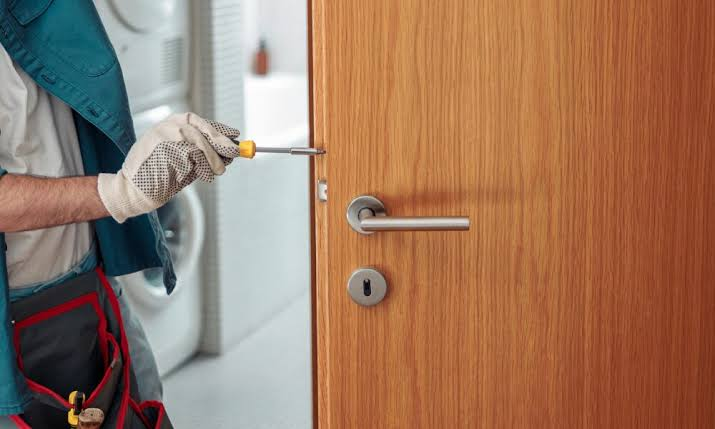
Professional fire door maintenance may include routine servicing, adjustments and targeted repairs intended to maintain the performance of existing fire doors.
Maintenance can include tasks such as:
- Adjusting door closers
- Realigning door leaves
- Tightening or replacing suitable hinges
- Replacing damaged smoke seals
- Replacing damaged intumescent strips
- Adjusting latches and keeps
- Correcting suitable door gaps
- Servicing ironmongery
- Repairing minor frame defects
- Checking closing performance
- Replacing worn compatible components
The exact work required will depend on the type of door, its condition and the findings of the inspection.
Fire Door Inspection and Maintenance Are Not the Same Thing
The two services are closely connected but serve different purposes.
A fire door inspection determines the condition of the door and identifies defects.
Fire door maintenance deals with ongoing servicing, adjustment and suitable corrective work needed to keep the door functioning properly.
A simple way to understand the process is:
Inspection → Identify defects → Maintenance or remedial work → Re-check → Ongoing monitoring
This approach is usually more effective than waiting until a door has deteriorated so far that major repairs or full replacement become necessary.
Why Preventative Maintenance Can Save Money
Fire door maintenance is sometimes treated as something that should only happen after a door fails an inspection.
That can be an expensive approach.
Minor issues are often easier to correct when they are found early.
For example, a door that has started to drop slightly may initially require hinge or alignment adjustment. If the issue continues without attention, it could damage the frame, seals, locking mechanism or door leaf.
Similarly, a poorly adjusted closer can repeatedly slam the door, increasing stress on the hinges and frame.
Preventative maintenance therefore has two potential benefits: helping maintain fire safety performance and reducing avoidable deterioration.
Which Buildings Need Particular Attention?
Fire doors are used across many different property types, but some environments place especially high demands on them.
Blocks of Flats
Communal doors and flat entrance fire doors play an important role in protecting shared escape routes and supporting compartmentation within residential buildings.
Because these doors may be used frequently, regular checks are particularly valuable.
HMOs and Shared Accommodation
Houses in multiple occupation can contain numerous fire doors protecting bedrooms, kitchens, corridors and staircases.
High occupancy levels and frequent daily use can increase wear and make routine monitoring important.
Offices
Office fire doors may protect staircases, corridors, plant rooms, storage areas and other parts of the building.
Facilities managers should include these doors within planned fire safety inspection and maintenance programmes.
Hotels
Hotels often contain a large number of bedroom and corridor fire doors.
With guests using the doors throughout the day and night, closer performance, hardware condition and door alignment can change over time.
Schools and Educational Buildings
Doors in schools, colleges and other educational premises can experience heavy use.
Regular checks can identify damage to hinges, door closers, seals and hardware before problems become more severe.
Healthcare Premises
Hospitals, clinics and care environments can have complex evacuation strategies, making effective compartmentation particularly important.
Reliable fire doors form part of maintaining that protection.
Retail and Commercial Properties
Shops, restaurants, warehouses and other commercial buildings may use fire doors to protect escape routes or separate different risk areas.
Regular inspection helps ensure those doors have not been compromised through everyday business activity or alterations.
When Can a Fire Door Be Repaired?
Finding a defect does not automatically mean a complete new fire door is required.
Many problems can potentially be corrected through appropriate maintenance or remedial work, depending on the door and the nature of the defect.
Examples can include:
- Adjusting a self-closing device
- Replacing damaged seals
- Correcting suitable door alignment
- Repairing certain frame defects
- Replacing compatible hinges
- Adjusting locks and latches
- Replacing unsuitable or worn hardware
Where the door leaf, frame or complete assembly is severely damaged, incorrectly specified or unsuitable for its intended purpose, replacement may instead be required.
A competent inspection helps determine the appropriate next step.
Keep Records of Inspections and Maintenance
Good fire safety management involves keeping records as well as completing physical work.
Property managers may benefit from retaining:
- Fire door inspection reports
- Door schedules
- Photographic evidence
- Identified defect records
- Remedial work records
- Maintenance documentation
- Installation information
- Relevant certificates
- Dates for future inspections
These records create a clearer history of each door and can help demonstrate that identified problems are being managed.
They are also useful when fire risk assessments, property management reviews or future inspections take place.
Avoid Unnecessary Door Replacement
One advantage of combining professional inspection with competent maintenance is that it can help distinguish between doors that genuinely require replacement and doors that can reasonably be repaired.
Automatically replacing every door with a minor defect can be expensive and unnecessary.
On the other hand, repeatedly repairing a fundamentally unsuitable or heavily damaged door can also be a false economy.
The best decision comes from understanding the actual condition of the complete doorset.
A Practical Fire Door Management Cycle
Property managers looking after multiple fire doors can benefit from a planned approach rather than dealing with each problem separately.
A practical programme might involve:
- Identify all relevant fire doors
Create an accurate door schedule and identify locations throughout the building.
- Carry out inspections
Assess the physical condition and operation of each door.
- Record defects
Document missing components, damage, excessive gaps or operational problems.
- Prioritise corrective work
Address issues according to their nature and urgency.
- Complete maintenance or remedial work
Service, adjust or repair suitable existing doors.
- Replace doors where necessary
Where a door cannot reasonably be brought to an appropriate standard, replacement may be required.
- Maintain records
Keep inspection and maintenance documentation together.
- Repeat the process
Fire door safety requires ongoing management rather than a one-off inspection.
Professional Fire Door Inspection and Maintenance in London
Landlords and property professionals managing buildings across London may prefer to work with a provider that can manage both the assessment and the corrective work.
Liviosiv provides fire door inspection and fire door maintenance services for residential and commercial properties across London, including flats, HMOs, apartment blocks, offices, retail premises, schools, healthcare environments and other managed buildings.
Their inspection service assesses key parts of the complete doorset, including the leaf, frame, gaps, seals, hinges, closer, glazing and ironmongery.
Where ongoing attention is needed, their maintenance service focuses on preventative servicing and appropriate repairs to help maintain reliable fire door operation.
This can provide a more straightforward route from identifying a defect to getting the necessary work completed.
Final Thoughts
Fire door safety cannot be managed effectively through installation alone.
Doors change as buildings are occupied and used. Components wear out, closers lose adjustment, seals become damaged and modifications can alter how the original doorset performs.
Regular fire door inspection helps identify those changes.
Planned fire door maintenance helps address them before they develop into larger safety and compliance problems.
For landlords, freeholders, managing agents and businesses, treating inspection and maintenance as one continuous process can improve building safety, simplify long-term compliance management and help extend the useful life of suitable existing fire doors.