


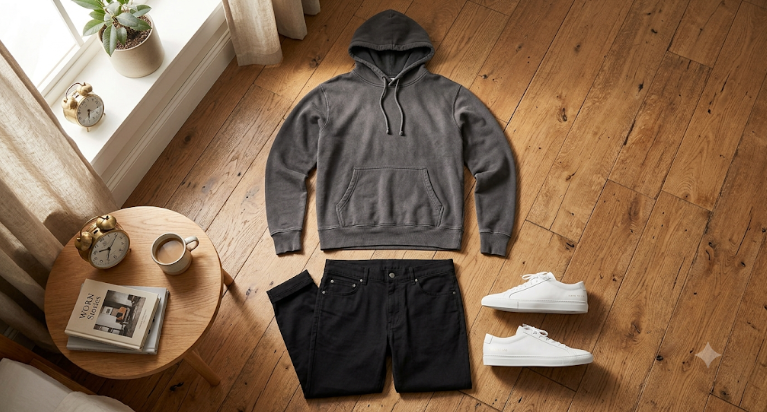
Mornings are not when creativity happens. You’re half awake, you’re already late, and the last thing your brain can handle is a styling decision. So you grab whatever’s on top and spend the day feeling slightly off. I did this for years. The fix wasn’t buying better clothes or learning more rules. It was building a system so the decisions were already made before I woke up. A good hellstar hoodie and the right pants can be a two-second choice instead of a ten-minute standoff with your closet. That’s what this is about. Let’s build you something that works on your worst mornings, not your best ones.
Decision Fatigue Is the Real Enemy
Here’s what’s actually going wrong on those bad mornings, and it isn’t your wardrobe. It’s that you’re asking your brain to solve a fresh problem at the worst possible time. Every morning you’re rebuilding an outfit from scratch, evaluating dozens of combinations, and doing it under time pressure while barely conscious. No wonder the results are inconsistent. The people who always look put-together aren’t making better decisions than you. They’re making fewer decisions, because they solved the problem once and now they just repeat the answer. That’s the whole difference. Think about how much mental effort goes into a normal morning. Which top, which pants, do these colors work, are these shoes clean, is this too casual for today. Six questions before coffee. Multiply that by every workday and you’re spending real cognitive energy on something that should be automatic. Meanwhile, the same energy could go toward literally anything else. My honest opinion? Most people don’t have a clothing problem, they have a systems problem. The pieces in your closet are probably fine. The combinations were never worked out in advance, so you re-derive them badly every day under pressure. Fix the system and the same clothes suddenly perform better. Nothing changes except that the thinking already happened at a calmer moment, which is exactly when thinking works best.
Build Three Defaults and Stop There
The core move is simple: build three outfits that definitely work, then wear versions of them forever. Not seven. Three. That covers a work week with room to breathe, and three is few enough that you’ll actually remember them. Here’s how to pick them. Take a calm weekend hour and actually try things on, building complete outfits from your existing pieces. Photograph each one that works. Those photos become your reference, and on a bad morning you just look at your phone and copy yourself. Sounds almost too easy, but it removes the entire decision layer. Each default should serve a different situation. One casual for normal days, one slightly sharper for when you might see people who matter, and one comfortable for the days you’re barely functioning. Different needs, different answers, all pre-solved. Keep the pieces overlapping heavily. If all three defaults use the same pants, that’s a feature, not a bug, because it means less to keep clean and track. A neutral parke sweatshirt works beautifully as a default anchor since its relaxed cut and clean lines slot into multiple setups without adjustment. Then wear them repeatedly without guilt. Nobody’s tracking your outfits as closely as you think, and looking consistently good beats looking varied and inconsistent every single time.
The Order That Makes It Fast
Even with defaults built, some mornings you’ll improvise. Follow this order and improvising still takes under five minutes:
- Check the weather first, since temperature eliminates most options immediately and narrows the field
- Pick your bottoms next, because you own fewer pants than tops and it’s the smaller decision
- Choose a top that works with those pants, not the other way around
- Grab the cleanest shoes that match the formality level of what you’ve built
- Add one thing, whether that’s a beanie, a jacket, or nothing at all if you’re running late
Starting with bottoms surprises people, since everyone reaches for the top first. But you probably own four pairs of pants and twenty tops, so choosing the smaller category first eliminates more options faster. It’s just efficient. Weather comes before everything because it settles the layering question, which is the biggest structural decision in the whole outfit. Once you know whether you need a jacket, half the choices disappear. That last step is deliberately optional too. Adding an accent is nice when you have the bandwidth, and completely skippable when you don’t. A plain outfit worn cleanly beats an over-decorated one thrown together in panic. Run this sequence a few times and it drops to about ninety seconds.
Prep Beats Speed Every Time
The fastest morning is the one where the work already happened the night before, and this is where most of the real gain lives. Sixty seconds of evening effort saves ten minutes of morning chaos. Lay tomorrow’s outfit out before bed. That’s genuinely it. The whole trick. When your clothes are sitting on a chair ready to go, morning-you doesn’t make a single decision, just puts things on. Check the weather that evening while you’re at it, so you’re not standing at a window at 7am wondering about a jacket. Beyond nightly prep, weekly prep matters more than people think. Do your laundry on a schedule so your defaults are actually available, since a system that depends on a hoodie that’s currently in the wash isn’t a system. Keep your rotation small enough that laundry stays manageable. Clean your shoes on a schedule too, because scuffed sneakers undo an otherwise good fit and you never notice until you’re already out the door. Here’s the hands-on detail worth adopting: keep a small brush and a cloth by the door and give shoes ten seconds on your way out. That habit alone has saved more of my outfits than any styling rule. One honest limitation: prep only helps if you’re consistent, and the nights you skip it are exactly the mornings you’ll need it most. So make it small enough that you’ll actually do it tired. Thirty seconds, not a ritual.
Pieces That Make Defaults Possible
Certain pieces do disproportionate work in a fast wardrobe, and stacking your closet with them makes everything easier:
- A dark neutral hoodie, since it goes with everything you own and never needs a color decision
- Black or charcoal tapered pants, which pair with any top and read appropriately for most settings
- One clean pair of versatile sneakers, ideally leather in a neutral tone that hides scuffs
- A plain heavyweight tee in a neutral, working solo or as a base layer under everything
- One structured jacket that fits over your bulkiest top, removing the layering question entirely
The common thread is neutrality. Every piece here matches everything else here, which is the entire point. Loud pieces are fun but they demand decisions, and decisions are what you’re trying to eliminate. Save the bold stuff for days you have energy. The jacket point deserves attention since it’s the one people get wrong. If your jacket doesn’t fit over your hoodie, you have two half-systems instead of one working one. Test that combination before you rely on it. My preference is leather sneakers over canvas for a default, purely because they wipe clean in five seconds and canvas doesn’t. Practicality wins on a Tuesday.
Variation Without Effort
Wearing three defaults forever sounds boring, and it isn’t, but you do need a way to vary things without rebuilding the system. The move is changing one element at a time. Take a default that works and swap exactly one piece. Same hoodie, different pants. Same pants, different top. Same everything, different shoes. Each single swap creates a new outfit that’s guaranteed to work because the base was already proven. So three defaults with three variations each is nine outfits, and you did almost no thinking. That’s the leverage. Accessories multiply this further at zero cost. A beanie shifts an outfit toward casual and cozy. A cap tilts it sporty. Pushing your sleeves up changes the balance slightly. None of these require a decision beyond yes or no. Seasons handle themselves too, since the same core defaults work year-round with layers added or removed. Your summer default and your winter default might be identical apart from a jacket. Color is your slowest variable and that’s fine. Introduce one new color piece every few months, test it against your defaults, and keep it only if it works with at least two of them. Anything that only works with one thing is a liability in a fast wardrobe. Vary from a proven base and you get range without ever facing a blank slate.
Making It Stick
Systems fail when they’re too complicated to maintain, so keep this deliberately small. Three defaults, photographed. A tight rotation of neutral pieces. Sixty seconds of prep at night. That’s the whole thing, and it fits in your head permanently. Don’t over-engineer it. I’ve watched people build elaborate outfit spreadsheets and abandon them within a month, because the maintenance cost exceeded the benefit. Simple survives. Give it two weeks before judging. The first few days feel strange because you’re breaking a habit, even a bad one. By day ten you’ll notice you haven’t thought about clothes at all, and that’s when it clicks. Revisit your defaults seasonally, not constantly. Twice a year, spend an hour rebuilding them around the weather and whatever new pieces you’ve added. Between those sessions, just run the system. Also, let yourself break it. Some days you’ll want to actually think about an outfit and enjoy it, and that’s the point of having a system, because it frees energy for when you want to spend it. The default isn’t a cage. It’s a floor, so your worst mornings still clear a decent bar. Everything above that is yours.
Final Words
Getting dressed well isn’t about owning more or knowing more. It’s about deciding once instead of every morning. Build three outfits that work, photograph them, stock your closet with neutrals that match each other, and lay tomorrow’s clothes out tonight. Then vary one element at a time when you want something different. Five minutes becomes ninety seconds, and the results get more consistent rather than less. Your closet was probably fine all along. The system was the missing part, and it costs one calm hour to build.
FAQ BLOCK
Q: Won’t people notice I’m repeating outfits?
A: Far less than you think. Nobody tracks your clothes as closely as you do, and looking consistently good beats looking varied and inconsistent. Repeating a proven outfit is what well-dressed people quietly do.
Q: Why start with pants instead of the top?
A: You own fewer pants than tops, so choosing the smaller category first eliminates more options faster. It’s just more efficient than picking a top and then hunting for something that matches it.
Q: How many outfits should I have as defaults?
A: Three. That covers a work week with room to breathe and is few enough to actually remember. More than three and you’re back to making decisions, which is exactly what you’re trying to avoid.
Q: What’s the single best habit to start with?
A: Laying tomorrow’s outfit out before bed. Sixty seconds at night removes every morning decision. Check the weather while you’re at it so you’re not guessing about a jacket at 7am.
Q: Do I need to buy new clothes for this to work?
A: Usually not. Most people have a systems problem, not a wardrobe problem. Spend a calm hour building outfits from what you own first, and only buy to fill gaps the system actually reveals.