



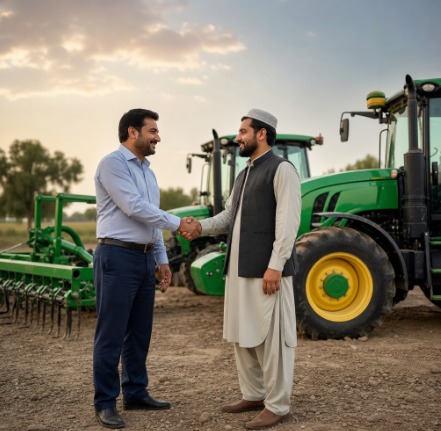
Agriculture has always been defined by its tools. From the earliest hand-drawn plows to the GPS-guided combines of today, the machinery a farmer chooses determines not just productivity, but the long-term viability of the operation. In a landscape where equipment decisions carry enormous financial and operational weight, the relationship between a farmer and a trusted equipment dealer has never been more important. Understanding that relationship — and what makes it work — is essential for any producer looking to grow sustainably in a competitive market.
The Enduring Importance of Agricultural Equipment Dealers
Farm equipment dealerships occupy a unique position in the agricultural supply chain. They are not simply storefronts where tractors and combines are exchanged for dollars. At their best, they function as strategic partners — offering technical expertise, financing guidance, parts availability, and service support that can mean the difference between a successful harvest and a costly breakdown. The dealer relationship is built over years, sometimes generations, and it reflects a deep understanding of local soil conditions, crop types, and the specific demands of regional farming operations.
This is especially true in the mid-South and Midwest, where row crop farming, grain production, and livestock operations demand a wide range of equipment solutions. Producers in these regions rely on dealers who stock not just the machines, but the knowledge to back them up. A dealership that understands the difference between a 200-horsepower utility tractor and a 400-horsepower row crop tractor — and can explain why one suits a particular operation better than the other — is worth far more than any online catalog.
Mechanization as a Strategic Investment, Not Just a Purchase
For many producers, the transition from older or manual farming methods to fully mechanized operations is a multi-year journey that requires careful planning. Equipment upgrades must align with cash flow cycles, land expansion plans, and labor availability. Rushing into a major purchase without understanding total cost of ownership — including fuel, maintenance, insurance, and depreciation — can strain an operation’s finances for years. This is why working with an experienced dealer who can walk through the numbers honestly is so valuable.
If you’re navigating this transition, a practical roadmap for moving from manual farming to mechanized agriculture can help you understand the key milestones, financial considerations, and equipment categories that should guide your decision-making process. Mechanization is not a single event — it is a progression, and having a clear framework makes each step more deliberate and cost-effective.
Matching Equipment to Operation Size and Crop Type
One of the most common mistakes producers make when upgrading equipment is purchasing machinery that is either undersized for their current needs or oversized for their realistic growth trajectory. An undersized tractor leads to overwork, premature wear, and reduced efficiency. An oversized machine, on the other hand, creates unnecessary fuel costs and may be difficult to maneuver in smaller fields or tighter operations. The right dealer will ask the right questions before recommending a solution — questions about acreage, soil type, tillage practices, and five-year growth plans.
Precision agriculture technology has added another layer of complexity to these decisions. Modern equipment often comes equipped with telematics, auto-steer systems, variable rate application capabilities, and data integration platforms. Understanding which of these features will genuinely improve your operation — versus which are simply impressive on a spec sheet — requires honest, experienced guidance from someone who has seen these systems perform in real field conditions.
The Historical Roots of American Farm Equipment Innovation
To appreciate where agricultural equipment is today, it helps to understand where it came from. American farm machinery has a rich and sometimes surprising history, shaped by industrial innovation, wartime manufacturing shifts, and the ingenuity of engineers who understood that feeding a nation required constant mechanical improvement. One fascinating chapter in that history involves the Minneapolis Ford tractor, a machine that represents a pivotal moment in the evolution of American farm power. This detailed look at the unique Minneapolis Ford tractor offers a compelling glimpse into how early 20th-century engineering decisions continue to echo through modern equipment design.
Understanding that history matters because it reminds producers and dealers alike that the equipment industry has always been driven by a desire to solve real problems on real farms. The machines may have changed dramatically, but the underlying mission — helping farmers work more efficiently, more safely, and more profitably — has remained constant for over a century.
Service, Parts, and the Long Game
Purchasing a piece of equipment is only the beginning of the relationship. The true test of a dealership’s value comes in the years that follow — when a hydraulic line fails during planting season, when a sensor malfunctions mid-harvest, or when a critical part needs to be sourced quickly to avoid costly downtime. Dealers who maintain robust parts inventories, employ certified technicians, and offer responsive service scheduling provide a level of operational security that cannot be replicated by purchasing equipment through an auction or an online marketplace.
Downtime in agriculture is not an abstract inconvenience. A combine that sits idle for three days during peak harvest can translate directly into yield loss, quality degradation, and missed market windows. This is why the service infrastructure behind a dealership is just as important as the machines on the lot.
H&R Agri-Power: A Regional Standard for Equipment Excellence
When producers across the mid-South and surrounding regions think about where to turn for reliable equipment, expert guidance, and long-term support, one name consistently rises to the top. H&R Agri-Power has built a reputation over decades as a dealership that combines the product depth of a major equipment provider with the personalized service of a locally rooted business. With multiple locations, a comprehensive inventory of new and used equipment, and a team of knowledgeable professionals who understand the demands of regional agriculture, H&R Agri-Power stands as a benchmark for what a modern farm equipment dealer should be.
Their commitment extends beyond the sale. From precision agriculture support to financing options and parts availability, the dealership is structured to serve producers at every stage of their operation — whether they are just beginning to mechanize or managing a large-scale commercial farming enterprise.
Conclusion: Choosing Partners, Not Just Products
The future of farming will be shaped by technology, but it will be built on relationships. The producers who thrive in the coming decades will be those who invest not just in the right equipment, but in the right partnerships — with dealers who understand their land, their goals, and their challenges. Whether you are evaluating your first major equipment purchase or planning a fleet upgrade across multiple operations, the quality of the guidance you receive will matter as much as the quality of the machines you buy. Choose your dealer with the same care you choose your seed, your inputs, and your markets. The harvest depends on all of it.