



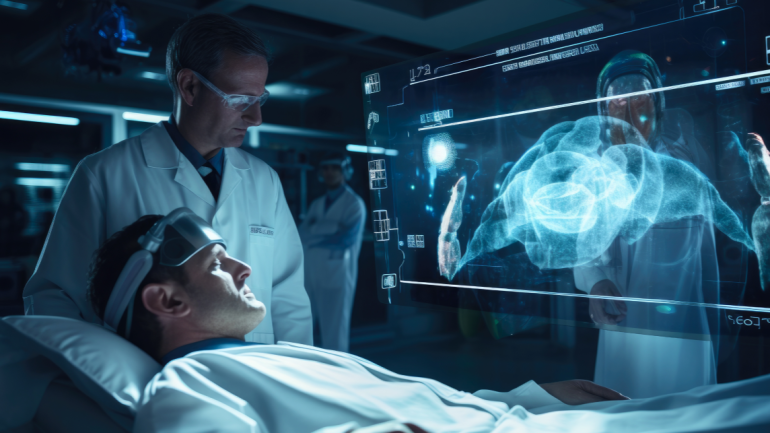
Not too long ago, the idea of a “smart hospital” belonged to science fiction—facilities where machines could think, predict illnesses before symptoms appeared, robots handled routine care, and doctors relied on intelligent systems that could analyze vast medical datasets in seconds. What once felt futuristic is now steadily becoming part of modern healthcare infrastructure.
Today’s hospitals are evolving into highly connected ecosystems powered by artificial intelligence, automation, cloud computing, and advanced healthcare data platforms. This transformation is not just about technology adoption—it is about redefining how care is delivered, documented, managed, and optimized.
The journey from traditional hospitals to smart hospitals is accelerating faster than ever, and it is reshaping everything from clinical workflows to administrative operations.
The Foundation of Smart Hospitals
At the core of smart hospitals lies integration. Unlike traditional healthcare systems where departments function in silos, smart hospitals unify data, devices, and workflows into a single intelligent network.
Electronic health records (EHRs), AI-driven diagnostic tools, wearable devices, and cloud-based management systems all work together to create real-time visibility across the patient journey.
Platforms like those offered by healthcare technology providers such as CureMD have played a role in this shift by supporting digitized workflows for clinics and hospitals, enabling smoother coordination between clinical and administrative functions.
The foundation of smart hospitals rests on three pillars:
- Connectivity: Seamless data exchange between systems and devices
- Intelligence: AI and analytics that turn data into actionable insights
- Automation: Reduction of manual tasks across clinical and operational workflows
Artificial Intelligence as the Brain of Smart Hospitals
Artificial intelligence is arguably the most transformative force behind smart hospitals. AI systems now assist in diagnostics, predict patient deterioration, optimize scheduling, and even help in treatment planning.
For example, AI algorithms can analyze radiology images faster and often with higher consistency than traditional methods. Predictive analytics can identify patients at risk of readmission, allowing clinicians to intervene earlier.
Beyond clinical care, AI is also reshaping administrative efficiency. Billing systems, coding workflows, and documentation processes are increasingly automated, reducing human error and improving revenue cycle performance.
Healthcare platforms like CureMD integrate AI-driven features into their solutions to support clinical documentation, billing accuracy, and practice efficiency—helping providers shift focus from paperwork to patient care.
Robotics and Automation in Clinical Settings
Robotics is no longer limited to experimental surgeries. Modern hospitals use robotic systems for medication delivery, lab sample transport, and even patient assistance in rehabilitation programs.
Automated systems reduce the workload on healthcare staff, allowing them to dedicate more time to patient interaction. In high-demand environments such as emergency rooms, automation ensures faster response times and improved operational efficiency.
This level of automation is also extending into back-office healthcare functions such as scheduling, billing, and insurance verification.
The Role of Data in Smart Healthcare Ecosystems
Data is the lifeblood of smart hospitals. Every patient interaction generates valuable information—from vital signs and lab results to treatment outcomes and billing records.
However, raw data alone is not useful. Smart hospitals rely on advanced analytics to transform this data into meaningful insights.
Hospitals now use predictive models to:
- Forecast patient admission rates
- Identify disease trends within populations
- Optimize staffing requirements
- Improve treatment pathways
The ability to analyze structured and unstructured data in real time is what separates modern healthcare systems from traditional ones.
Telehealth and Remote Monitoring Expansion
One of the most visible outcomes of smart hospital evolution is the expansion of telehealth. Virtual consultations, remote diagnostics, and wearable health monitoring devices have made healthcare more accessible than ever.
Patients can now receive care without physically visiting a hospital, while physicians can monitor chronic conditions remotely using real-time data.
This shift is particularly impactful for rural or underserved regions where access to specialists is limited.
Telehealth also integrates seamlessly with hospital systems, ensuring continuity of care between virtual and in-person visits.
Administrative Transformation: The Hidden Backbone
While clinical innovation often gets the spotlight, administrative transformation is equally important in smart hospitals.
Behind every successful healthcare encounter is a complex system of scheduling, insurance verification, credentialing, billing, and compliance management.
One of the most time-consuming processes in healthcare administration is provider credentialing. Many organizations now rely on Medical Credentialing Companies to ensure that physicians are properly verified, licensed, and enrolled with insurance networks.
To improve efficiency further, healthcare organizations are increasingly choosing to Outsource Credentialing Services. This reduces administrative burden, accelerates onboarding of providers, and ensures compliance with regulatory requirements.
By outsourcing these complex tasks, hospitals can focus more on patient care while maintaining operational efficiency.
The Rise of Smart Mental Healthcare Systems
Mental health services have also undergone significant transformation with the rise of digital healthcare platforms.
Modern clinics now use Mental Health Practice Management Software to streamline appointment scheduling, patient records, therapy session tracking, and billing processes.
This technology is especially important because mental health care requires consistent patient engagement and long-term treatment tracking. Digital systems make it easier for providers to monitor progress and maintain continuity of care across multiple sessions.
Additionally, telepsychiatry integrated with smart platforms has expanded access to mental health services, reducing stigma and increasing convenience for patients.
Interoperability: The Key to Connected Care
One of the biggest challenges in healthcare technology has always been interoperability—the ability of different systems to communicate with each other.
Smart hospitals solve this by adopting standardized data formats and integrated platforms that connect EHRs, lab systems, imaging tools, and billing software.
Without interoperability, healthcare systems remain fragmented, leading to inefficiencies, errors, and delays in care delivery.
Modern healthcare ecosystems aim to eliminate these gaps entirely, ensuring that patient data follows them across every touchpoint in the healthcare journey.
Cybersecurity in Smart Hospitals
As hospitals become more digitally connected, cybersecurity becomes a critical concern. Patient data is highly sensitive, and breaches can have serious consequences.
Smart hospitals invest heavily in:
- Encryption technologies
- Multi-factor authentication
- Continuous network monitoring
- AI-based threat detection systems
The goal is to create a secure digital environment where data can be shared safely without compromising patient privacy.
The Human Element in a Smart Hospital Era
Despite all technological advancements, healthcare remains fundamentally human. Smart hospitals are not designed to replace doctors or nurses—they are designed to support them.
Technology reduces administrative burden, enhances diagnostic accuracy, and improves operational efficiency, but the human element of empathy, judgment, and care remains irreplaceable.
The most successful healthcare systems are those that strike a balance between automation and human connection.
Challenges on the Path to Full Digitization
While the rise of smart hospitals is promising, it is not without challenges.
Some of the key obstacles include:
- High implementation costs
- Resistance to technological change among staff
- Data privacy concerns
- Integration issues with legacy systems
- Need for continuous training
Healthcare organizations must address these challenges strategically to fully realize the benefits of digital transformation.
The Future of Smart Hospitals
Looking ahead, smart hospitals will become even more advanced and autonomous. Artificial intelligence will evolve from supportive tools to predictive decision-making systems.
We can expect:
- AI-assisted surgeries with real-time feedback
- Fully automated administrative workflows
- Personalized medicine based on genetic data
- Real-time global health monitoring systems
- Expansion of virtual hospitals without physical boundaries
The hospital of the future may not even resemble what we know today. Instead, it will be a distributed, intelligent healthcare network that exists both physically and digitally.
Conclusion
The rise of smart hospitals represents one of the most significant transformations in modern healthcare history. What once existed in science fiction is now becoming everyday reality.
From AI-driven diagnostics to automated administrative workflows, from telehealth expansion to integrated data ecosystems, healthcare is entering a new era of intelligence and connectivity.
As technology continues to evolve, platforms like CureMD and other healthcare technology providers will remain part of the broader digital ecosystem enabling this transformation. Meanwhile, operational innovations such as Outsource Credentialing Services, reliance on Medical Credentialing Companies, and adoption of Mental Health Practice Management Software will continue to streamline healthcare delivery behind the scenes.
The future of healthcare is not just smart—it is connected, predictive, and patient-centered.
About Author:
Nathan Bradshaw is a digital health and healthcare IT expert specializing in EHR, RCM, and practice management systems. With 10+ years of industry experience, he helps healthcare organizations bridge the gap between clinical care and technology. He regularly shares insights on AI in healthcare, operational efficiency, and the future of medical practice transformation.