



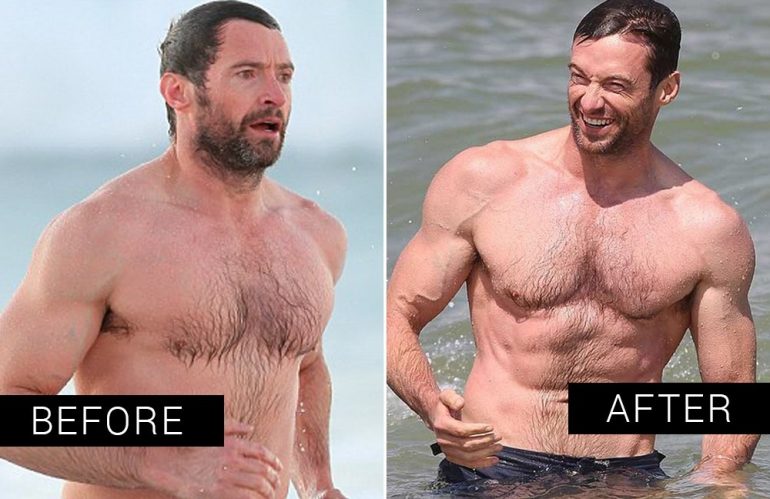
Hollywood has a strange ability to make physical transformation look effortless. One movie shows an actor as an ordinary person, and a few scenes later that same character appears with broader shoulders, defined abs, powerful legs and an entirely different presence.
Behind those dramatic transformations, however, there is usually a combination of intense preparation, professional coaching, carefully structured nutrition, recovery and months of consistency. For entertainment audiences, the result is a spectacular physique. For the actor, it can mean hundreds of hours of preparation before the cameras even begin rolling.
The fascination with movie-star transformations has also influenced modern fitness culture. Gym-goers increasingly follow celebrity workouts, bodybuilding influencers and transformation challenges while searching for the methods that can produce extraordinary results.
But what really happens behind the scenes?
The Hollywood Transformation Formula
There is no universal Hollywood body-transformation formula.
An actor preparing to play a superhero needs a different physique from someone portraying a professional boxer. A character who spends most of the movie running and fighting may require athletic conditioning, while a villain might need a larger, intimidating appearance.
Before training begins, the actor, director, trainer and production team often determine what the character should look like.
The goal might be:
- More muscle mass
- Lower body fat
- Greater athleticism
- Improved strength
- A wider upper body
- Better muscular definition
- Increased endurance
- A combination of several characteristics
Once the target is established, the preparation can begin.
The Transformation Starts Long Before Filming
Movie audiences usually see the final product, not the months of preparation behind it.
Actors can spend many months changing their physiques. Training schedules may include several weekly resistance-training sessions combined with conditioning, mobility work and character-specific practice.
The process can become particularly demanding when the role involves action scenes.
An actor may need to look muscular while also being capable of running, jumping, climbing, fighting and performing choreography. That means simply becoming bigger isn’t enough.
The physique needs to work.
Building the Foundation With Strength Training
Resistance training is one of the most important components of a body transformation.
Exercises such as presses, rows, squats, pull-ups and other compound movements can help develop overall strength and muscle. Additional exercises can then target specific areas that need more attention.
For a superhero-style appearance, trainers may place considerable emphasis on the shoulders, upper chest, back and arms. For a fighter character, training may focus more heavily on the legs, core, conditioning and explosive movement.
Progressive overload is another important concept.
Rather than performing exactly the same workout forever, training can gradually become more challenging. This may involve additional repetitions, resistance, volume or improved technique.
The process isn’t glamorous every day.
Sometimes it simply means showing up for another workout when the excitement of the original transformation has disappeared.
Nutrition: The Other Half of the Transformation
A dramatic physique cannot be built through training alone.
Nutrition provides the energy and nutrients required to support training and recovery. Actors working toward muscle gain may increase their calorie and protein intake, while actors preparing for a leaner appearance may eventually reduce calories.
The important point is that the diet usually changes according to the stage of preparation.
During a muscle-building phase, the objective may be to provide sufficient energy for growth. Later, the focus may shift toward maintaining muscle while reducing body fat.
This is why the famous “movie diet” isn’t necessarily one specific meal plan.
The diet has to match the individual.
The Transformation Isn’t Always Natural-Looking
This is where Hollywood becomes particularly interesting.
Movie physiques can create unrealistic expectations because viewers rarely see the complete process. Actors may have professional chefs, personal trainers, nutritionists, physiotherapists and large amounts of time dedicated to preparation.
They also benefit from professional lighting, camera angles, costumes, makeup and post-production.
A physique can look dramatically different depending on how it is photographed.
A famous actor standing under carefully positioned studio lighting can look considerably more muscular than the same person under ordinary gym lighting.
That doesn’t mean the transformation isn’t real. It simply means the final cinematic appearance is a combination of physical preparation and filmmaking.
The Conversation Around SARMs
As celebrity transformations have become more extreme, online fitness communities have increasingly discussed SARMs, or selective androgen receptor modulators.
SARMs are compounds designed to interact with androgen receptors, and they have attracted attention because of their potential effects on muscle and physical performance. However, they are not simply harmless alternatives to anabolic steroids.
Research and regulatory warnings have raised concerns about potential adverse effects, product quality and the limited understanding of long-term consequences.
This distinction is particularly important because internet discussions can make SARMs sound far more predictable than they actually are.
A dramatic transformation should never automatically be interpreted as evidence that an actor used SARMs or another performance-enhancing substance. Unless there is credible evidence, claims about an individual’s drug use are speculation.
Dutch Anabolen and the Online Fitness Market
The growing interest in bodybuilding has also produced a large online market surrounding anabolic steroids and related products. Dutch Anabolen is an example of terminology encountered within this online market and bodybuilding culture.
For readers researching anabolic steroids, it is important to separate online marketing from medical evidence. Product claims, dosage recommendations and transformation promises found on commercial websites do not establish that a substance is safe or appropriate.
Anabolic-androgenic steroids can produce significant physiological effects and carry potentially serious health risks. Anyone researching them should consider reliable medical information rather than relying exclusively on promotional material or bodybuilding forums.
The entertainment industry may make rapid physical change look exciting, but health considerations remain much more important than achieving a particular appearance on a deadline.
What About Enclomiphene and PCT?
Another subject frequently discussed in bodybuilding communities is enclomiphene, particularly in conversations about post-cycle therapy, commonly called PCT.
Enclomiphene is an isomer of clomiphene and has been studied in relation to testosterone production. Within bodybuilding communities, it is sometimes discussed as a potential component of recovery following the use of anabolic-androgenic substances.
However, online PCT discussions can oversimplify a complicated medical issue.
Hormonal suppression following anabolic steroid use can vary considerably between individuals. There is no universally appropriate PCT protocol that can safely be copied from an internet forum.
Anyone experiencing hormonal problems after using performance-enhancing substances should seek medical assessment and appropriate laboratory testing rather than attempting to design a treatment protocol based on social-media advice.
This is one area where the difference between entertainment content and medical advice matters enormously.
The “Movie Muscle” Illusion
One of the most entertaining aspects of Hollywood transformations is the illusion of speed.
A movie trailer may show an actor as an ordinary person in one scene and an enormous action hero in another.
The audience sees seconds.
The actor may have spent six months preparing.
This is similar to a movie montage showing someone becoming an expert fighter after a few minutes of screen time. Cinema compresses time because storytelling requires it.
Real body transformation doesn’t work that way.
Muscle growth takes time. Fat loss takes time. Strength development takes time.
There can be dramatic changes, but they generally require consistent effort.
Why Actors Look Bigger on Screen
There is also an interesting psychological effect.
A character’s physique is part of storytelling.
Costumes can make shoulders appear wider. Tight shirts emphasize muscularity. Strategic lighting creates deeper shadows around the chest and abdominal muscles. Camera positioning can make an actor appear larger.
Even posture matters.
Standing with the shoulders back and chest elevated can create a dramatically different silhouette compared with relaxed posture.
This is why recreating a movie-star appearance in an ordinary gym mirror can sometimes be disappointing.
You’re comparing real life with cinema.
The Most Important Ingredient: Consistency
Remove the Hollywood budget, famous trainer and professional chef, and one factor remains available to almost everyone: consistency.
A sustainable training program performed for a year will generally produce more meaningful results than an extreme program followed for three weeks.
The same applies to nutrition.
A realistic eating plan that someone can follow consistently is usually more useful than an extremely restrictive diet that cannot be maintained.
Recovery matters too.
Sleep, rest and managing training fatigue are essential parts of long-term progress.
Transformation Should Be Inspiration, Not Pressure
Hollywood body transformations can be incredibly motivating.
They demonstrate what can happen when someone combines training, nutrition, discipline and professional support.
But they can also create unrealistic expectations.
An actor’s body is part of their job. Productions can provide resources that ordinary people don’t have. A fitness enthusiast shouldn’t feel pressured to reproduce a celebrity physique within an arbitrary deadline.
Instead, use the entertainment industry as inspiration.
Set personal goals.
Track strength.
Measure progress.
Improve gradually.
And focus on health alongside appearance.
Final Thoughts
The most fascinating thing about Hollywood body transformations isn’t a secret supplement or mysterious workout.
It’s the amount of preparation hidden behind the final image.
A dramatic physique can represent months of resistance training, carefully planned nutrition, recovery, conditioning and professional guidance. At the same time, conversations around SARMs, anabolic steroids, Dutch Anabolen, enclomiphene and PCT demonstrate how strongly entertainment culture influences the wider fitness industry.
The important lesson is to distinguish cinematic fantasy from real-world physiology.
Hollywood can turn six months of preparation into a 90-second montage.
Your body doesn’t have to follow the same script.
Build your physique patiently, understand the risks surrounding performance-enhancing substances, use reliable information and remember that the most impressive transformation is one that improves your fitness without sacrificing your long-term health.