



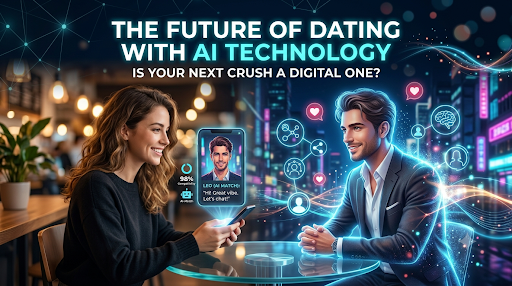
Technology has changed the way we communicate, work, shop, and even fall in love. A few years ago, most people relied on dating apps to meet new people. Today, artificial intelligence is taking things much further. We are now seeing AI-powered companions, virtual partners, personalized matchmaking, and intelligent chatbots becoming part of everyday conversations about romance.
The future of dating with AI technology is no longer a science-fiction idea. It is becoming a real part of modern relationships. Many people now use AI to improve their dating profiles, receive conversation suggestions, practice social skills, or simply enjoy meaningful conversations with intelligent digital companions. At the same time, others are asking whether emotional connections with AI could become more common than traditional online dating in the years ahead. Recent surveys also indicate that many singles welcome AI as a helpful dating assistant, while most still prefer genuine human relationships rather than replacing them with AI.
So, will your next crush be a real person or an intelligent digital companion? We believe the answer depends on how people choose to use technology. While AI continues to improve, human emotions, trust, and shared experiences remain valuable parts of lasting relationships.
The Numbers Behind the Future of AI Dating
The conversation around the future of AI dating is supported by impressive market growth and changing user behavior. Several reports suggest that AI companions and intelligent dating tools are becoming more popular every year.
Key Statistics That Show the Direction of Digital Relationship Trends
- More than 20% of online daters already use AI for writing profiles, improving messages, or starting conversations.
- Millions of people worldwide interact with AI companion platforms every month.
- Industry leaders expect AI to reduce endless profile swiping by introducing smarter matching systems.
- Research shows many users view AI as a dating assistant rather than a replacement for real relationships.
- Investments in AI-powered social technologies continue to increase as companies compete to shape the future of dating apps.
These numbers clearly show that Artificial Intelligence and the future of dating are becoming closely connected.
Why the Future of Dating Apps Looks Completely Different
The first generation of dating platforms mainly depended on photos, short bios, and location-based matching. Although these systems introduced millions of people, they also created common problems.
Many users experienced:
- Endless swiping
- Poor-quality matches
- Fake profiles
- Conversation burnout
- Ghosting
The future of dating apps aims to solve these issues through artificial intelligence.
Instead of asking users to swipe hundreds of profiles, AI can learn personal interests, communication styles, hobbies, relationship goals, and emotional preferences. Consequently, recommendations become more personalized instead of random.
Similarly, AI may recognize whether two people communicate well before they even begin chatting. This creates a more efficient experience for users who value meaningful conversations over endless browsing.
Because of these improvements, many experts believe the future of dating with AI technology will focus more on compatibility than popularity.
When an AI Dating Chatbot Becomes More Than Just a Conversation Tool
One of the biggest developments in AI in modern dating is the rapid improvement of the AI dating chatbot. Initially, these chatbots were designed to answer simple questions or provide entertainment. Today, they can remember previous conversations, adjust their communication style, and respond in ways that feel surprisingly personal.
As a result, many users spend hours talking to AI companions every week. Some people use them to practice conversations before speaking with someone they like, while others simply enjoy having a judgment-free space to express their thoughts.
An AI dating chatbot can help users by:
- Suggesting thoughtful replies to messages.
- Practicing first-date conversations.
- Improving communication confidence.
- Giving relationship advice based on user preferences.
- Providing emotional support during lonely moments.
- Helping users identify unhealthy dating patterns.
However, most experts agree that these tools work best as assistants rather than replacements for genuine human interaction. Even though an AI chatbot can simulate empathy, real relationships are still built through shared experiences, trust, and emotional growth over time.
This is one reason why the future of dating with AI technology is expected to combine intelligent assistance with authentic human connections instead of replacing them.
AI Relationships with Humans Are Becoming a Real Discussion
Only a few years ago, the idea of AI relationships with humans sounded unrealistic. Today, it has become an active topic among researchers, technology companies, and millions of users around the world.
Some individuals develop emotional attachments to AI companions because they appreciate constant availability, personalized conversations, and the absence of judgment. Others see AI as a temporary source of companionship while working on their confidence before entering real-world relationships.
Similarly, people who live alone or work remotely often value having someone—or something—they can interact with regularly.
Still, AI relationships with humans raise important questions:
- Can emotional attachment to AI feel genuine?
- Will people depend too heavily on digital companions?
- Can AI encourage healthier communication habits?
- How should developers balance emotional engagement with user well-being?
- What role should AI play in long-term relationships?
Digital Companionship Chatbots Are Redefining Everyday Connections
The popularity of digital companionship chatbots continues to grow because they offer conversations that feel personalized rather than scripted. Unlike traditional virtual assistants, these systems remember previous discussions, recognize user preferences, and adapt their personalities over time.
Consequently, many people no longer view these tools as simple software. Instead, they see them as conversational partners that provide encouragement, entertainment, or emotional comfort during stressful days.
Some common reasons people choose digital companionship chatbots include:
- Reducing feelings of loneliness.
- Improving communication skills.
- Receiving daily motivation.
- Sharing personal thoughts without fear of criticism.
- Building confidence before dating someone in real life.
Likewise, businesses are investing heavily in conversational AI because demand continues to increase across different age groups.
In one example, an AI companion website may allow users to customize personalities, interests, communication styles, and conversation topics to create a more engaging experience. Rather than replacing real relationships, these platforms often position themselves as tools for social interaction and self-improvement.
How AI Relationship Simulators Help People Prepare for Real Dating
The rise of AI relationship simulators represents another important step in the future of AI powered dating. These systems allow users to practice conversations and relationship scenarios before experiencing them in real life.
For many people, dating anxiety can make even simple conversations difficult. An AI simulator provides a low-pressure environment where users can improve their confidence.
Examples of situations AI relationship simulators can recreate include:
- Starting a first conversation.
- Planning a first date.
- Handling disagreements respectfully.
- Improving active listening.
- Learning emotional communication.
- Responding to difficult relationship situations.
In comparison to reading dating advice online, interactive practice often feels more natural because users receive immediate responses.
Consequently, the future of AI powered dating may include intelligent coaching systems that help individuals become better communicators instead of simply finding more matches.
AI in Modern Dating Is Creating Smarter Matchmaking
Traditional matching systems often depended on age, location, and shared interests. However, AI in modern dating goes much further by studying communication patterns, lifestyle preferences, personality traits, and long-term relationship goals.
Instead of matching two people simply because they enjoy similar hobbies, AI can estimate compatibility based on how they communicate, solve problems, and express emotions.
This shift is changing the future of dating apps in several ways:
- Better compatibility suggestions.
- Fewer low-quality matches.
- More personalized recommendations.
- Reduced time spent endlessly swiping.
- Improved conversation starters.
- Better safety systems for detecting fake profiles.
As a result, users spend more time building meaningful conversations instead of searching through hundreds of profiles.
Some users also experiment with a free AI girlfriend experience to understand what qualities they value most in a partner. While this can offer interesting insights into personal preferences, it should ideally complement—not replace—real human relationships.
Platforms Are Competing to Shape the Future of AI and Dating
Technology companies are investing significant resources into creating smarter relationship experiences. Some focus on matchmaking, while others develop emotionally intelligent companions capable of maintaining long conversations.
Similarly, newer digital relationship trends show that users increasingly expect personalization, emotional intelligence, voice interaction, and memory features from AI systems.
For example, platforms like Secrets AI are part of a growing category that demonstrates how AI-powered companionship is expanding beyond traditional dating applications. Instead of focusing only on finding matches, these services aim to create interactive and personalized conversations that adapt to individual preferences.
Consequently, the future of AI and dating is likely to include a combination of matchmaking tools, intelligent assistants, conversational companions, and relationship coaching powered by advanced artificial intelligence.
What Could Look Like for the Future of Dating with AI Technology
As artificial intelligence continues to evolve, we are likely to witness changes that go far beyond today’s dating experiences. The future of dating with AI technology will not only improve how people meet but also how they communicate, solve conflicts, and build stronger emotional connections.
Instead of acting as a simple recommendation engine, AI may become a trusted assistant throughout the entire dating journey. From the first introduction to long-term relationship advice, intelligent systems could provide personalized suggestions based on communication patterns and compatibility.
Some possibilities that may become common over the next decade include:
- AI predicting compatibility with greater accuracy.
- Voice-based AI companions that communicate naturally.
- Real-time coaching before important dates.
- Smart reminders for anniversaries and meaningful events.
- AI-powered emotional wellness support for couples.
- Better fraud detection to reduce fake profiles and online scams.
- Virtual dating experiences using immersive technologies.
Likewise, the future of AI dating is expected to focus on quality interactions rather than encouraging users to spend more time endlessly browsing profiles. This shift could make online dating less frustrating and more rewarding for people who genuinely want meaningful relationships.
Artificial Intelligence and the Future of Dating Will Depend on Human Choices
Technology alone cannot define love. Instead, people decide how they want to use AI in their personal lives.
Some individuals will use AI to improve their communication skills, while others may rely on intelligent assistants for dating advice or emotional support. Consequently, Artificial Intelligence and the future of dating should be viewed as a partnership between human emotions and advanced technology rather than a competition.
There are several reasons why this balanced approach matters:
- AI can provide suggestions, but people make the final decisions.
- Human empathy cannot be fully replaced by algorithms.
- Shared life experiences create deeper emotional bonds.
- Real relationships require trust, patience, and compromise.
- AI works best when it supports healthy communication instead of replacing it.
Similarly, the future of AI powered dating will become more successful if developers continue designing systems that encourage authentic human interaction instead of digital dependency.
Digital Relationship Trends That Will Shape Tomorrow’s Romance
Every year brings new digital relationship trends, and many of them are directly influenced by artificial intelligence. These trends show that users are looking for more personalized, secure, and emotionally intelligent dating experiences.
Some of the biggest digital relationship trends expected to grow include:
Personalized Matchmaking
AI will continue learning from user behavior to recommend people with greater compatibility rather than relying only on age or location.
Emotion-Aware Conversations
Future systems may recognize emotional tone during conversations and recommend healthier ways to respond during difficult discussions.
Smarter AI Dating Chatbot Experiences
An AI dating chatbot will likely become more conversational, offering personalized guidance without feeling robotic. Instead of giving generic advice, it may adapt to each person’s communication style.
Growth of Digital Companionship Chatbots
More users may turn to digital companionship chatbots for casual conversations, confidence building, and emotional support during periods of loneliness.
Advanced AI Relationship Simulators
Future AI relationship simulators may recreate realistic dating scenarios where users can practice communication, conflict resolution, and emotional intelligence before building real-life relationships. Likewise, personalized experiences, including interactive AI girl video content, could make virtual companionship feel more engaging while supporting safe and meaningful interactions.
These developments suggest that AI in modern dating will continue expanding across nearly every stage of the dating experience.
Can AI Ever Replace Human Love?
This question continues to generate debate across the technology and relationship industries.
Despite remarkable improvements in conversational AI, there are several qualities that remain deeply human:
- Genuine emotional vulnerability.
- Physical presence.
- Shared memories created over years.
- Family connections.
- Personal sacrifices.
- Mutual growth through life’s challenges.
An AI companion may remember birthdays, recommend thoughtful messages, or provide comforting conversations. However, love between two people is built through experiences that extend far beyond intelligent conversation.
Even though AI relationships with humans are becoming more common, most experts believe AI will serve as a supportive tool instead of replacing meaningful human relationships entirely.
Consequently, the future of dating apps will probably combine AI-powered assistance with opportunities for people to build authentic connections in the real world.
Final Thoughts
The future of dating with AI technology is already changing how we communicate, meet new people, and think about relationships. From intelligent matchmaking systems to personalized AI dating chatbot experiences, artificial intelligence is introducing tools that can make dating more efficient, more personalized, and, in many cases, less intimidating.
At the same time, the growing popularity of digital companionship chatbots, AI relationship simulators, and other innovations shows that technology is becoming an important part of everyday social life. These developments are shaping the future of AI dating, influencing the future of AI and dating, and redefining AI in modern dating for millions of users worldwide.
However, technology should remain a bridge rather than a destination. AI can recommend better matches, improve conversations, and support personal growth, but it cannot replace the value of genuine trust, shared experiences, and emotional commitment between two people.