



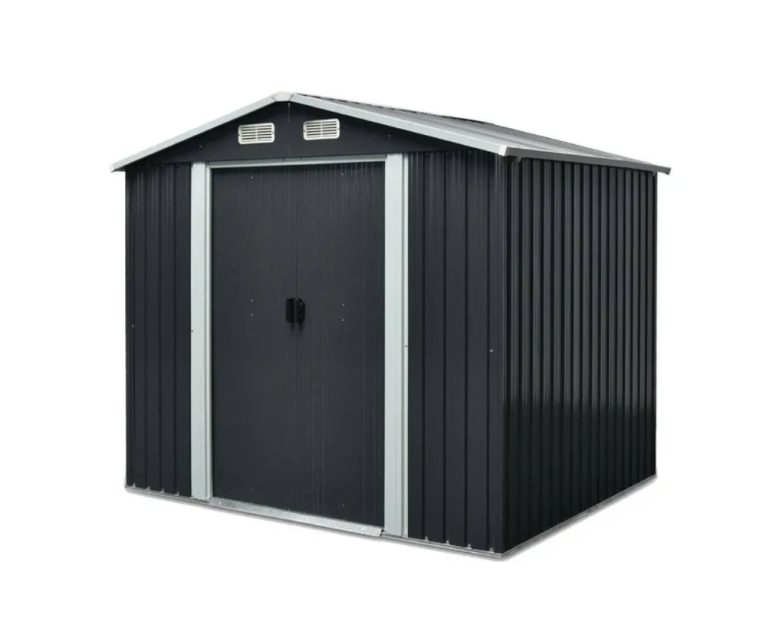
In Canada, industrial sites often operate through rain, snow, freeze and thaw cycles, and wide seasonal temperature changes. These conditions make outdoor storage a practical challenge for warehouse managers, equipment operators, logistics teams, and industrial procurement specialists. A galvanized apex roof metal shed can provide a compact and controlled storage point for tools, maintenance items, packaged supplies, and small equipment that should not be left exposed in open yards.
A product such as the Galvanized Apex Roof Metal Shed shows why this category is useful in real industrial operations. With galvanized corrugated metal panels, an apex roof, a 41-inch sliding door, and built-in air vents, this type of shed supports weather protection, airflow, and basic site organization in a small footprint. In industrial environments, that matters because storage quality affects equipment condition, worker movement, and daily task efficiency.
Why This Storage Format Matters in Canada
Canadian industrial operations often manage a mix of indoor and outdoor workflows. Distribution yards, service depots, agricultural facilities, light industrial lots, and municipal support sites may not have enough enclosed building space for every low-risk storage need. A compact metal shed can fill that gap by creating a dedicated point for items that need protection from moisture, sunlight, and contamination, but do not require full warehouse conditions.
This is especially useful for:
- Groundskeeping tools and repair kits
- Lubricants, buckets, and cleaning materials
- Seasonal accessories and safety supplies
- Small mobile equipment used near loading areas
Common Use Cases and Operating Methods
Decentralized Storage Near the Point of Use
One common method is to place a small shed near the area where tools or consumables are used. This reduces walking time, limits repeated trips to the main warehouse, and supports faster response during maintenance or loading activity.
Support for Seasonal Operations
In Canada, snow tools, de-icing materials, hose assemblies, and summer grounds equipment often rotate through the year. A metal shed can separate seasonal stock from core inventory and keep changeover items accessible without crowding primary storage areas.
Why Efficiency, Safety, and Productivity Matter
Storage is not only about where items are kept. It also affects search time, handling risk, and the condition of materials. When tools are left exposed or stored without order, workers lose time, duplicate purchases become more likely, and avoidable safety hazards appear. Better storage supports:
- Shorter retrieval times
- Lower weather-related damage
- Clearer housekeeping standards
- Reduced trip and clutter hazards
Technical Basics and Capability Considerations
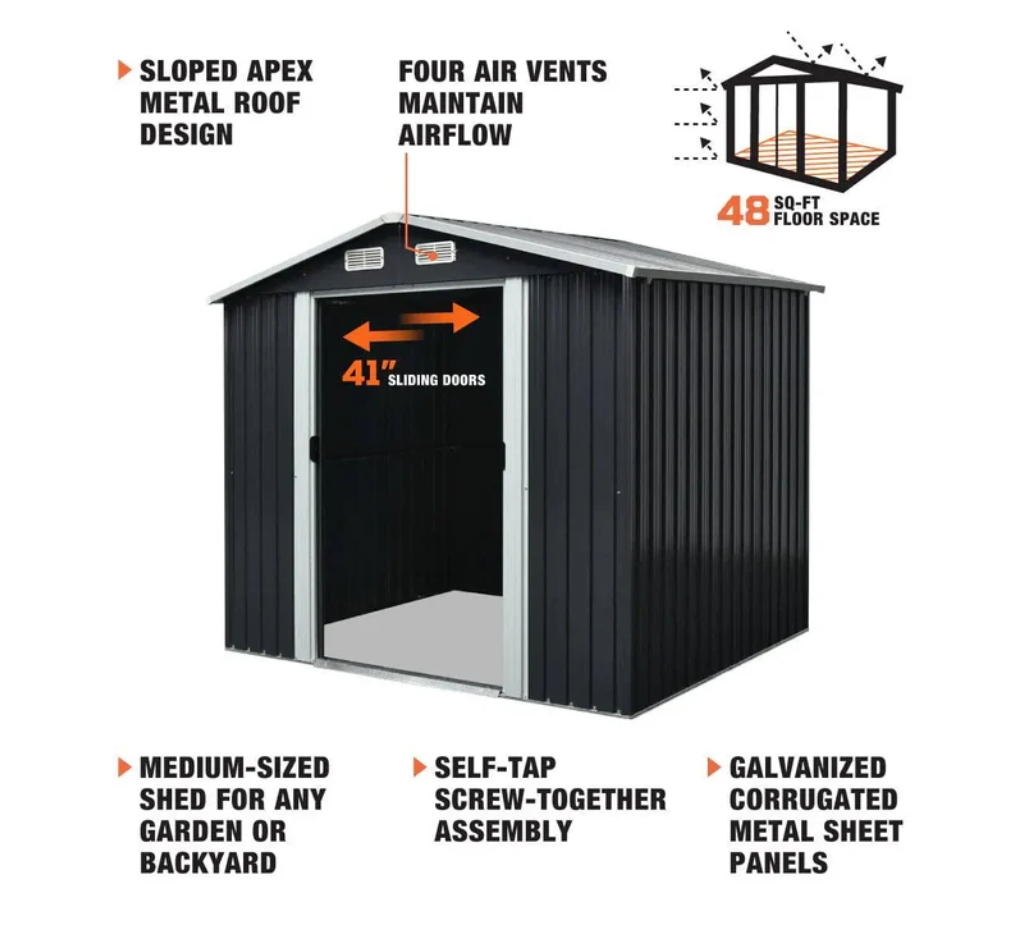
When evaluating a galvanized apex roof metal shed, buyers should review material gauge, dimensions, airflow, access, and assembly method. In this product class, 29 gauge metal sheets and a 22 gauge support frame indicate a light-duty storage structure suited to small equipment and site supplies rather than heavy security or high-load industrial warehousing.
The reviewed model offers about 48 square feet of floor space, a peak height of 81 inches, four air vents, and self-tap screw-together assembly. These details affect what can be stored, how workers enter the shed, and how moisture and odors are managed over time.
Key Factors That Influence Performance
Real performance depends on more than the shed alone. Important factors include foundation quality, drainage, snow exposure, door clearance, ventilation, and daily housekeeping. Local bylaws and permit rules also matter, especially where engineering drawings or site approvals are required.
A poor base or low-lying placement can reduce service life even when the shed material is suitable. Good drainage and correct anchoring are often more important than the nominal product size.
Safety Considerations and Best Practices
- Install the shed on a level, stable, well-drained surface
- Keep walkways clear around the sliding door
- Do not overload wall supports or roof sections
- Separate chemicals, fuels, and incompatible materials
- Use labels and simple location control for stored items
- Inspect fasteners, vents, and panel condition on a regular schedule
Ventilation is especially important when storing products that may release odors or moisture. Even a weather-resistant shed should not be treated as a substitute for compliant hazardous material storage.
Equipment, Tools, and Accessories Commonly Used With These Sheds
Typical related items include anchor kits, shelving, plastic bins, tool hooks, floor panels, moisture control products, and basic padlock systems. For assembly, crews usually need standard household hand tools, measuring tools, gloves, and eye protection.
Advantages, Limitations, and a Real-World Example
The main advantages are compact size, weather resistance, airflow, and easy placement near work zones. Limitations include modest capacity, lighter-duty construction compared with larger industrial enclosures, and the need for careful site selection in snow and wind exposure areas.
A practical example is a logistics yard using a small galvanized shed beside a loading apron to store wheel chocks, spill response kits, battery chargers, and hand tools. That setup can reduce delay during trailer handling while keeping safety equipment protected and visible.
Conclusion: Main Takeaways and Future Trends
For Canadian industrial users, a TMG Industrial galvanized apex roof metal shed is a practical support structure for organized and weather-protected outdoor storage. Its value comes from the combination of access, ventilation, corrosion resistance, and efficient use of limited site space. The best results depend on correct placement, disciplined storage rules, and clear safety controls.
Looking ahead, the industry is likely to move toward more modular outdoor storage layouts, stronger site-level inventory control, and wider use of compact structures that support decentralized operations. For procurement and operations teams, the priority will remain the same: storage solutions that improve safety, protect assets, and fit real working conditions.