



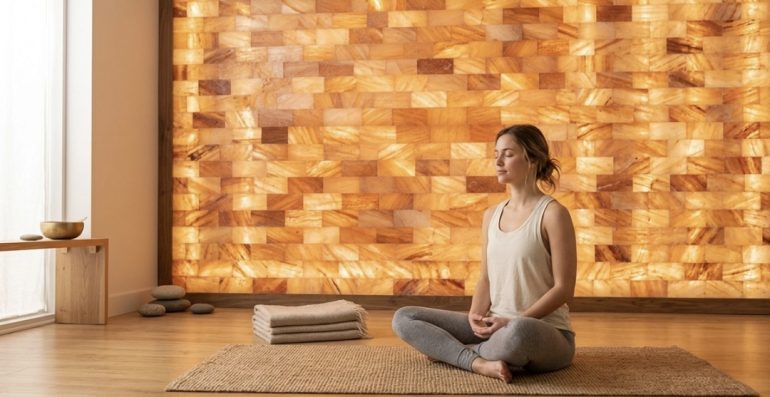
A professional yoga studio salt wall usually includes Himalayan salt bricks, warm LED lighting, proper ventilation, and salt wall glue. Standard construction adhesives may not perform well in humid yoga environments over time.
Since Himalayan salt naturally absorbs moisture from the air, poor installation can eventually lead to loose bricks, surface sweating, or lighting issues. Using low-VOC and wellness-safe bonding materials can also help support a cleaner indoor environment during yoga and meditation sessions, where air quality and comfort are important. Proper installation not only improves durability but also helps reduce maintenance problems and keeps the salt wall looking stable, clean, and visually calming for long-term use.
Why Are Yoga Studios Installing Himalayan Salt Walls?
Yoga studios are designed to support relaxation, breathing, and overall wellness, which is why Himalayan salt walls fit naturally into these spaces. They are frequently positioned in the back of the studio, at the front of meditation corners or at reception.
Salt walls are popular because they:
- Create a warm and peaceful atmosphere.
- Improve the visual design of the studio.
- Support relaxation during meditation
- Works well with backlit lighting systems.
- Match wellness-focused interior designs.
Modern yoga clients also look for spaces that feel natural and calming. A well-installed salt wall improves the studio experience without needing heavy decoration.
Why Regular Glue Fails in Yoga Studio Salt Walls?
Many salt wall problems begin with the wrong salt adhesive.Himalayan salt naturally absorbs moisture from the air, especially in humid environments. Humidity in yoga studios also increases because of sweat, heat, and frequent yoga sessions, especially in hot yoga environments.
Regular construction glue often fails because it:
- Cannot handle moisture exposure
- Turns cloudy behind the lighting
- Cracks under temperature changes
- Releases strong chemical odors
- Weakens over time in humid spaces
Recommended fix: If you want long-term performance in humid yoga environments, choosing the best adhesive for Himalayan salt walls is essential for durability and clean installation results.
Why VOC-Free Salt Wall Glue Matters in Yoga Spaces
Yoga studios focus heavily on clean air. Pranayama and deep breathing involve drawing in the breath for a long time deeply. Volatile organic compounds are referred to as VOCs. These chemicals are emitted to the air by many poor quality adhesives.
A VOC-free salt wall glue helps because it:
- Reduces chemical smell
- Supports cleaner indoor air
- Creates a safer breathing environment
- Works better in wellness spaces
- Fits professional yoga studio standards
This is why many wellness-focused installation systems are designed specifically for humid and air-sensitive environments like yoga studios and halotherapy spaces.
Best Locations for a Salt Wall in a Yoga Studio
The placement of the salt wall affects both the appearance and functionality of the space. Owners of the studio need to pick spots that will help concentration and not make the room crowded.
Popular placement options include:
Feature Wall Behind the Instructor
This is the most common option. The soft glow creates a calming visual background during sessions.
Meditation Corner
Small salt walls work well in quiet meditation areas. They assist with providing a calm space in which to practice mindfulness.
Reception Area
Reception salt walls improve first impressions and give the studio a premium wellness appearance.
Breathwork Rooms
Himalayan salt bricks can help create a warm and peaceful atmosphere in yoga and breathwork rooms.
How Humidity Affects Salt Wall Installation
One of the most important problems sometimes in salt wall building can be humidity.
High humidity can cause:
- Adhesive weakening
- Salt surface sweating
- Brick movement over time
- Lighting damage
- Faster wall deterioration
A special himalayan salt adhesive helps ensure the structure remains safe from failure due to water. The need for proper ventilation is also vital for long term durability. Ideally, yoga studios try to maintain moderate indoor humidity levels (around 40–55%) to help preserve salt wall stability over time.
What Materials Are Needed for a Yoga Studio Salt Wall?
A professional salt wall installation requires more than just bricks.
Common materials include:
- Himalayan salt bricks or tiles
- LED backlighting system
- Wall support structure
- Ventilation spacing
- Power supply for lighting
- Seal-safe mounting materials
A standard 20ft x 15ft yoga studio feature wall may require around 180–220 salt bricks, depending on the design pattern and brick size.
Large commercial studios often choose professional installation to avoid structural mistakes. Professional installations also require proper curing time for adhesives, which can take around 24 to 72 hours depending on humidity and wall size.
Choosing the Right Lighting for a Salt Wall
Lighting affects the general vibe of the yoga room. Warm lighting is ideal as it produces a mellow and relaxed light tone.
Best lighting options include:
- Warm white LED lights
- Adjustable dimmable LEDs
- Indirect backlit panels
- Soft amber lighting systems
Avoid overly bright white lights. They reduce the natural calming effect of Himalayan salt bricks.
The adhesive also matters here. Poor-quality glue may create clouding or reduce the clarity of the backlit glow. A clear bonding system helps preserve the lighting effect.
Design Ideas for Yoga Studio Salt Walls
Different salt wall designs can create different moods and visual effects inside the studio. Studio owners should always choose designs that match their branding and the goals of the client.
Popular design styles include:
Full Brick Pattern
Traditional stacked salt bricks create a natural spa-like appearance.
Mixed Brick Sizes
Combining large and small bricks adds texture and visual depth.
Curved Meditation Wall
Curved walls soften the room design and improve the calming atmosphere.
Minimalist Backlit Panels
Modern studios often prefer clean-lined illuminated salt panels.
A specialized salt wall glue helps maintain alignment and long-lasting stability in all design types.
DIY vs Professional Salt Wall Installation
DIY Installation
Best for:
- Small reception walls
- Compact meditation corners
- Simple panel systems
Challenges:
- Incorrect adhesive use
- Poor lighting placement
- Weak structural support
Professional Installation
Best for:
- Large feature walls
- Commercial yoga studios
- Full backlit systems
Benefits:
- Better durability
- Proper moisture handling
- Safer electrical setup
- Cleaner final appearance
This is why many professionals prefer installation materials that are specifically designed for Himalayan salt wall environments.
How to Maintain a Yoga Studio Salt Wall
Regular maintenance is required to keep salt walls in good condition for looks and durability.
- Maintain balanced indoor humidity levels to help protect the salt wall over time.
- Gently clean with a dry cloth.
- Regularly check lighting systems
- Check for loose bricks after a few months.
Common Mistakes That Damage Salt Walls
Many studio owners make avoidable installation mistakes.
Using Standard Construction Glue
Regular salt wall glue often fails in humid wellness environments.
Overheating the Lighting
Excessive heat can weaken himalayan salt adhesive performance.
Using Cheap Salt Bricks
Low-density bricks crack more easily over time.
A strong himalayan salt adhesive reduces many of these long-term issues.
Why Salt Walls Work Well in Wellness Spaces
Salt walls are not only decorative. They help wellness spaces feel more natural and relaxing. Many clients associate warm lighting and natural materials with calmness and stress relief.
This makes Himalayan salt walls useful for:
- Yoga studios
- Meditation centers
- Salt therapy rooms
- Wellness spas
- Massage therapy clinics
Conclusion
When Himalayan salt wall is installed properly it can elevate the mood of a yoga studio. It can provide a peaceful and relaxed feel, and can help to promote overall well-being.The correct materials, ventilation and Himalayan salt bricks are essential to salt wall installation to provide a long term performance. The most important factor is choosing the right himalayan salt adhesive.
Humidity and breathwork are a constant presence in yoga spaces, and moisture resistance, VOC-free composition, and durability of bonding are crucial. A professional salt wall glue can ensure the stability, cleanliness, and effectiveness of the wall for years. Specialized installation materials such as Saltite can help improve durability, moisture resistance, and long-term wall stability in wellness environments.
FAQs
What is a Himalayan salt wall used for in yoga studios?
A Himalayan salt wall is used to create a calming atmosphere, improve studio aesthetics, and support relaxation during yoga and meditation.
What is the best glue for Himalayan salt walls?
The best glue is a moisture-resistant, low-VOC Himalayan salt adhesive designed for humid environments like yoga studios and spas.
Why does regular salt wall glue fail in yoga studios?
Regular salt wall glue fails due to humidity, heat, and moisture absorption from salt, which weakens standard construction adhesives over time.
Why is VOC-free salt wall glue important?
VOC-free glue improves indoor air quality, reduces chemical exposure, and ensures a safe breathing environment for yoga and meditation.