

Action cinema has evolved from mere spectacle into something far more influential: a visual and structural language that shapes how we play games, consume content, and engage with online communities. The hard-hitting choreography, rhythmic pacing, and visceral intensity of modern action films don’t just entertain – they’ve fundamentally altered our expectations of interactive entertainment. From the arcade cabinets of the 1980s to today’s streaming platforms and mobile ecosystems, the DNA of action cinema pulses through digital culture in ways both obvious and subtle.
The VHS Era: Building the Blueprint for Gaming Aesthetics
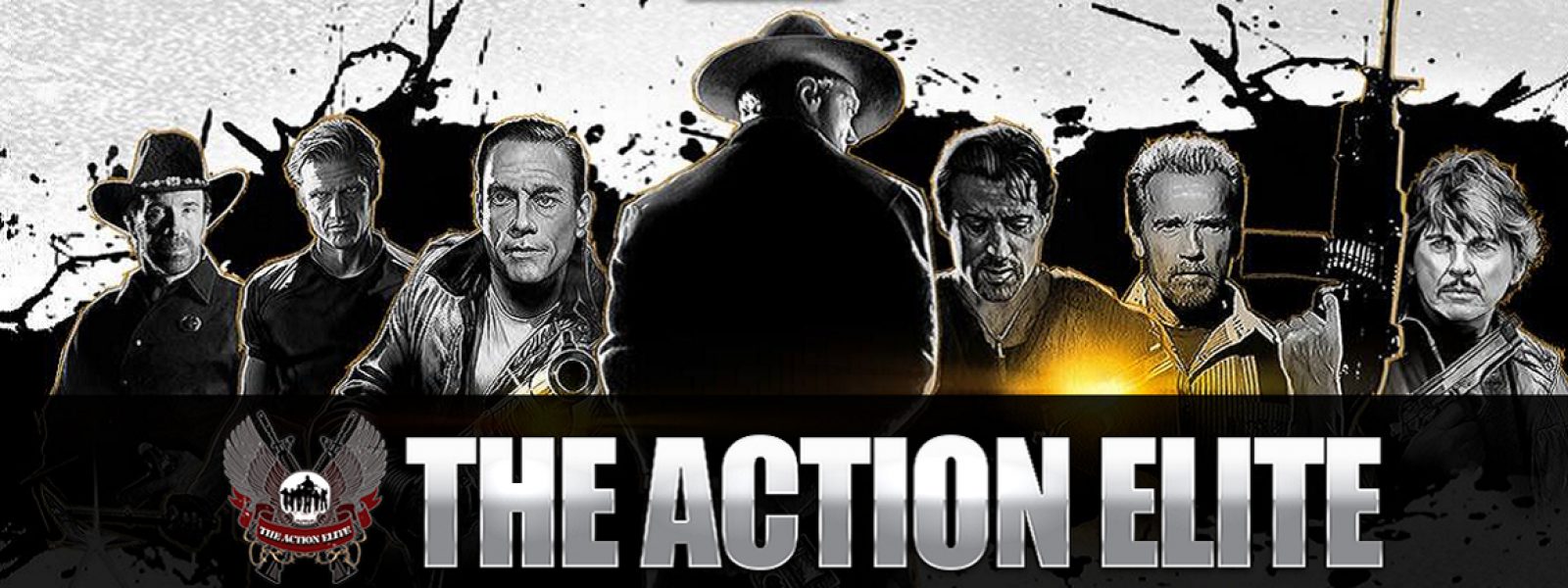
The action films of the 1980s and 90s didn’t just create box office heroes – they established archetypal figures that would define gaming for decades. Stallone’s Rambo, Willis’s John McClane, and the martial arts prowess of Van Damme and Seagal created a template: the lone warrior, outnumbered but unstoppable, progressing through increasingly difficult encounters. This wasn’t accidental symmetry; early arcade and console developers explicitly borrowed from these films.
The structure was perfect for translation. Action films presented clear objectives, escalating threats, and climactic confrontations – essentially “levels,” “enemies,” and “boss fights” before those terms became gaming vernacular. The hard-edged aesthetic of these films, with their industrial settings and gritty violence, found a natural home in pixel art and early 3D rendering. Games like Contra, Streets of Rage, and later titles such as Metal Slug weren’t just inspired by action cinema – they were interactive love letters to it.
When Films Start Playing Like Games
Contemporary action cinema has come full circle, with directors now consciously adopting the visual grammar of video games. The John Wick franchise stands as perhaps the clearest example: each combat sequence functions as a carefully scripted “encounter,” complete with distinct phases, weapon switches, and environmental interactions that mirror game mechanics. The Raid films took this further, structuring entire narratives as vertical level progression through a tower block, complete with mini-bosses and a final confrontation at the top.
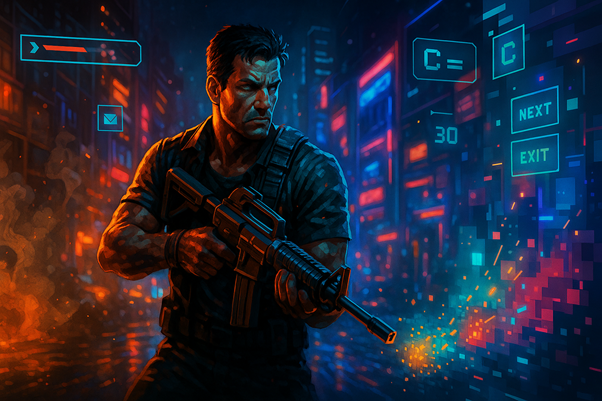
Films like Nobody, Extraction, and Atomic Blonde employ what can only be described as gamification – the deliberate structuring of action around recognisable gaming conventions. Long takes that follow protagonists through multiple combat scenarios evoke third-person gameplay cameras. Visual motifs such as heads-up display-style graphics, skill-based combat that escalates in complexity, and even the protagonist’s visible “loadout” changes all reference gaming culture. Audiences increasingly watch these films through a gamer’s lens, mentally tracking combo chains and appreciating frame-perfect choreography as they would speedrunning techniques.
Arcade DNA in Mobile and Indie Gaming
The aesthetic language of classic action cinema has found unexpected new life in the indie gaming scene and mobile platforms. Pixel art beat ’em ups such as Streets of Rage 4 and Huntdown deliberately channel the VHS-era action aesthetic, complete with neon-soaked cityscapes and muscle-bound protagonists. Mobile endless runners and fighting games strip action down to its purest mechanical essence: strike, block, dodge – the same triumvirate that defined both arcade cabinets and martial arts cinema.
This retro-arcade resurgence isn’t mere nostalgia. The visual clarity of 1980s action cinema – unambiguous good versus evil, clean sightlines, bold colours – translates perfectly to mobile screens and indie budgets. Independent developers can evoke the propulsive energy of a Cannon Films production without requiring Hollywood resources. The language is universal, the appeal timeless, and the mechanical simplicity allows for quick, satisfying gameplay loops that recall both quarter-munching arcade games and 90-minute VHS rentals.
Digital Arenas: Where Fandom Becomes Interactive
Action cinema fandom has evolved into something far more participatory than previous generations experienced. Reddit threads dissect fight choreography frame by frame. Discord servers host watch parties where communities analyse stunt work in real time. YouTube channels compile “kill count” videos that transform narrative cinema into statistical gameplay, whilst TikTok users recreate signature moves, turning choreography into viral challenges.
This represents a fundamental shift in how audiences engage with action content. Streaming culture has transformed passive viewing into active analysis. Fans don’t just watch – they scrutinise, recreate, and compete. The line between audience and participant blurs as fight scenes become shareable content, meme templates, and skill showcases. This “social arcade” approach mirrors gaming culture’s emphasis on community, skill expression, and competitive spectatorship.
The Broader Digital Leisure Ecosystem
Modern action film enthusiasts increasingly extend their passion across multiple digital entertainment formats. The same audience that appreciates the precision of John Wick’s gun-fu often gravitates towards rhythm games, competitive shooters, and other skill-based interactive experiences. This demographic shift reflects a broader trend: audiences now expect multiple entry points into their favourite genres.
Interestingly, this pattern extends into various online entertainment platforms. Data suggests that action film fans increasingly explore diverse digital leisure options, from mobile gaming applications to streaming services. Some even try newest Irish casino sites as part of this wider experimentation with interactive entertainment formats. This isn’t about any single platform but rather indicates how contemporary audiences approach digital recreation as an interconnected ecosystem rather than isolated activities.
Synchronised Evolution: Shared Principles of Action and Play
The convergence of action cinema and gaming isn’t coincidental – it’s structural. Both mediums prioritise adrenaline, visual clarity, rhythmic pacing, and the psychological satisfaction of measurable progress. Games increasingly study cinematic action for lessons in scene composition and dramatic timing. Films, in turn, borrow gaming’s understanding of mechanical progression and spatial challenge.
Consider the shared vocabulary: both mediums discuss “difficulty curves,” “pacing,” and “player/viewer agency.” Modern action directors employ pre-visualisation software originally developed for game design. Game developers hire fight choreographers and stunt coordinators. The cross-pollination runs so deep that distinguishing influence from counter-influence becomes meaningless – they’re now co-evolving art forms.
Looking forward, interactivity appears inevitable for both. Games push towards cinematic presentation through motion capture and photorealistic rendering. Films experiment with branching narratives and interactive elements, from Netflix’s choose-your-own-adventure experiments to VR experiences that place viewers inside action sequences. The boundary between playing and watching grows increasingly porous.
The New Cycle of Influence
Action cinema hasn’t merely influenced digital culture – it has become inseparable from it. The rhythms, structures, and visual language of action films now constitute a universal media grammar understood across platforms and formats. Whether watching a film, playing a game, or engaging with online entertainment, audiences respond to the same fundamental appeals: rhythm, impact, movement, and the visceral thrill of skilful execution.
The future promises even deeper integration. Virtual reality will place audiences directly into fight choreography they once only watched. Interactive films will let viewers make split-second decisions that alter action sequences in real time. Game engines will power film production whilst cinematic principles shape game design at the conceptual stage. The cycle of influence has become a feedback loop, with each medium amplifying the other’s strengths.
Action cinema didn’t just inspire gaming – it helped create a visual and structural language that now defines how we experience digital entertainment altogether. The punch, the rhythm, the perfectly timed cut: these have become the syntax of modern digital culture, understood instinctively by anyone who’s ever held a controller or sat in a darkened cinema, heart racing, utterly absorbed in the kinetic poetry of bodies in motion.