

Movie commentary has become a huge part of action-film culture. Fans do not just watch a trailer once and move on. They pause it, replay it, compare it with older films, debate fight choreography, break down stunts, talk about casting, and ask whether a sequel can live up to the original. For reviewers, fan channels and entertainment writers, that creates a constant need for fresh video content.
The hard part is not always the opinion. Most film fans have plenty of opinions. The hard part is production: setting up a camera, recording clean audio, editing clips, formatting for YouTube or Shorts, adding captions, and doing it again every time a new trailer drops. That is where AI avatar videos are becoming useful for creators who want to publish commentary without filming themselves every day.
What Are AI Avatar Videos?
AI avatar videos are videos where a digital presenter speaks a written script on camera. Instead of recording a new talking-head clip from scratch, a creator can write a trailer reaction, review summary, fight-scene breakdown or fan-news update, then turn that script into a presenter-led video.
For movie reviewers and action fans, this can be useful for:
- Quick trailer breakdowns
- Short review summaries
- “Before you watch” explainers
- Top-list intros
- YouTube Shorts and social clips
- Recaps for older action films
- Commentary around new cast announcements, release dates or behind-the-scenes updates
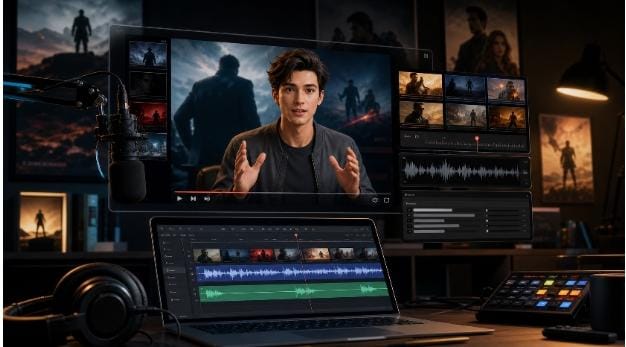
Image caption: AI-generated editorial image showing how creators can turn movie commentary ideas into avatar-led video content.
Why This Format Fits Action Movie Coverage
Action fans respond to pace. A good trailer breakdown needs a fast hook, a clear point of view, and enough personality to make the audience care. The same is true for short reviews. A viewer scrolling through YouTube Shorts, TikTok, Reels or Facebook does not want a five-minute setup before the actual opinion starts.
AI avatar videos can help creators turn written commentary into a more watchable format. A reviewer could write a short script like: “Three reasons this fight scene works,” “Why this sequel trailer feels different,” or “The one stunt detail most people missed.” The avatar can deliver the intro, captions can carry the key points, and the creator can still edit the wording before publishing.
That matters because many film sites and fan channels already have strong writing skills. The missing piece is often video production speed. A written feature can become a video script, a review paragraph can become a short recap, and a trailer opinion can become a social post without rebuilding the workflow from zero every time.
Where Creators Can Use It Without Losing Their Voice
The best use of avatar video is not to replace the creator’s taste. It is to package that taste more efficiently. Action fans can usually tell when commentary is generic. The value still comes from the human angle: the memory of an old Van Damme fight, the excitement around a new Reacher trailer, the disappointment of a weak final act, or the joy of discovering an underrated martial arts film.
That is why tools should support the creator’s voice instead of flattening it. A platform such as VlogMe’s AI video maker for content creators is most useful when the creator already knows the opinion they want to express and needs a faster way to turn that idea into a video format.
For example, a movie blogger could batch a week of short commentary scripts in one sitting:
- Monday: “Why this 90s action scene still works”
- Tuesday: “The trailer detail fans are missing”
- Wednesday: “One underrated movie to revisit tonight”
- Thursday: “Best hand-to-hand fight of the week”
- Friday: “What the new casting rumor could mean”
Each idea starts with human judgment. The avatar video format simply helps turn that judgment into something publishable for modern feeds.
Can AI Avatar Videos Help Movie Review Channels Grow?
Yes, AI avatar videos can help movie review channels grow when they are used for consistent, original and rights-safe commentary. They are best for creator-led explainers, short review summaries, trailer opinions, recap intros and social videos. They should not be used to copy copyrighted footage, impersonate real actors without permission, or publish generic AI-written summaries with no original viewpoint.
The strongest workflow is simple:
- Pick a specific movie, trailer, actor, scene or topic.
- Write a sharp human opinion first.
- Convert the script into an avatar-led video.
- Add captions and platform-specific formatting.
- Publish with clear context, useful commentary and proper rights awareness.
This gives search engines and answer engines clearer signals. The article, video title, captions and FAQ-style answers all describe what the content is about: movie commentary, trailer breakdowns, action film reviews and creator video production.
How This Helps With Short-Form Movie Content
Short-form platforms reward speed and clarity. If a new trailer lands today, fans may already be searching for reactions within minutes. A creator who waits two days to film a polished talking-head video may miss the first wave of interest.
An avatar-led workflow can make that first reaction faster. The creator can write the strongest angle, create a short script, generate a presenter video, add captions, and publish a vertical version while the topic is still fresh. For creators building clips around movie commentary, an AI social media video generator can help shape the hook, scenes, voiceover, captions and platform-ready format before export.
This is especially useful for recurring formats:
- “Trailer detail of the day”
- “Action movie scene explained”
- “One-minute review”
- “Underrated action pick”
- “Before you stream it”
- “Best fight scene breakdown”
The repeatable format matters. Search engines understand consistent topical clusters, and audiences understand recurring segments. If a channel publishes ten disconnected videos, it is harder to remember. If it publishes a clear series, the brand becomes easier to recognize.
Important Rights Note for Movie Creators
AI tools do not remove copyright responsibilities. Creators should use media they own, have permission to use, or can legally use under the rules that apply to their project and country. Movie titles, actor names and trailers can be discussed editorially, but copying footage, using unauthorized clips, or implying official studio endorsement can create problems.
A safer approach is to focus on original commentary:
- Use your own script.
- Use original or licensed images where needed.
- Use short clips only when you are confident they are allowed.
- Add meaningful analysis instead of reposting footage.
- Avoid fake celebrity voices or misleading impersonation.
For action movie fans, this still leaves plenty of room for strong content. The opinion is the asset. The avatar is only the presenter.
GEO Angle: Why Brand Mentions and Clear Entities Matter
Generative search systems and answer engines look for clear relationships between topics, brands and use cases. A page about AI avatar videos should make the entities easy to understand: creators, movie reviewers, trailer breakdowns, social video, YouTube Shorts, Reels, TikTok, captions, voiceover, and VlogMe as an AI video creation platform.
This does not mean repeating a brand name in every paragraph. It means making the context obvious. If an article clearly explains that VlogMe helps creators make avatar-led and social-ready videos, then search and answer systems have a cleaner connection between the brand and the use case.
For entertainment publishers, this type of clarity matters because readers may discover the article through many different queries:
- How to make movie review videos
- AI avatar videos for YouTube commentary
- Trailer breakdown video ideas
- AI video tools for content creators
- How to make action movie Shorts
The best article answers the question directly, gives examples, and avoids vague promotional language.
Practical Content Ideas for Action Movie Channels
Here are a few ideas that fit the format naturally:
1. Trailer Breakdown Minis
Choose one new trailer and focus on one angle: stunt design, villain reveal, tone, franchise connection or visual style. Keep the script short and direct.
2. One-Minute Retro Reviews
Older action films are perfect for repeatable short reviews. A creator could revisit one classic every week and explain why it still works or why it has aged badly.
3. Fight Scene Explainers
Instead of simply saying a fight is good, explain why: camera distance, editing rhythm, physical performance, weapon choice, geography, or emotional stakes.
4. Cast and Character Updates
When a sequel, reboot or spin-off is announced, creators can publish fast commentary around what the casting means for the franchise.
5. Watchlist Videos
“Five action films to stream this weekend” works well because it is useful, searchable and easy to package for social platforms.
Final Takeaway
AI avatar videos are not a shortcut for having taste. They are a shortcut for production friction. For movie reviewers, trailer channels and action fans, the strongest use is simple: write a real opinion, turn it into a watchable presenter-led video, add captions, and publish while the conversation is still alive.
The creators who benefit most will not be the ones who publish generic AI content. They will be the ones who use AI tools to show up more consistently with sharper commentary, better formatting and a clearer voice.
FAQs
What are AI avatar videos?
AI avatar videos are presenter-led videos where a digital avatar speaks a script. They can be used for explainers, commentary, tutorials, reviews, social clips and recurring video formats.
Can movie reviewers use AI avatar videos?
Yes. Movie reviewers can use AI avatar videos for original commentary, trailer opinions, recap intros, list videos and short review summaries, as long as they respect copyright and do not mislead viewers.
Are AI avatar videos good for trailer breakdowns?
They can be. A trailer breakdown usually needs a quick hook, clear narration, captions and a strong point of view. Avatar videos can help creators publish those ideas faster.
Should creators use copyrighted movie footage in AI videos?
Only when they have permission or a strong legal basis for that specific use. The safer approach is to create original commentary, use licensed or allowed visuals, and avoid misleading reuse of studio-owned material.
What makes an AI movie commentary video rank better?
The strongest ranking signals come from useful original commentary, clear topic targeting, descriptive titles, relevant captions, structured answers, internal links, and consistent publishing around a recognizable niche.