



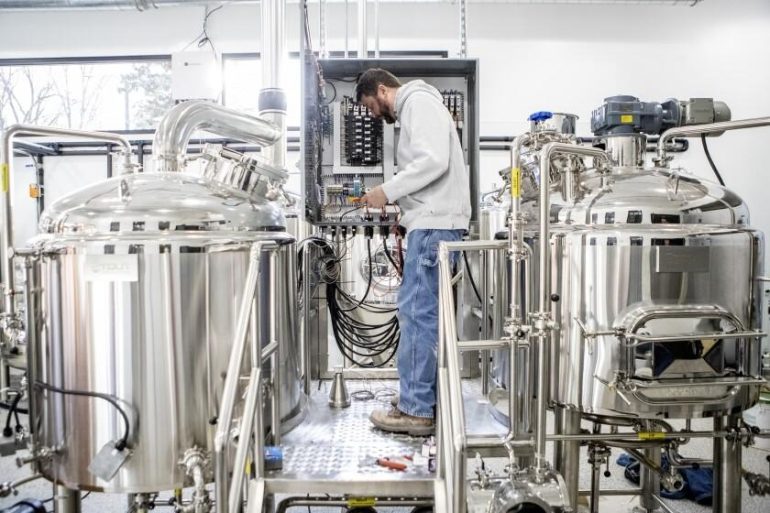
Plan brewery installation by coordinating final equipment drawings with the building, transport route, foundations, drains, utilities, ventilation, structural support, local approvals, contractors, and commissioning schedule. Installation begins before equipment ships.
Assign one project owner to control drawings, decisions, responsibilities, and changes. Confirm what the equipment supplier includes and what local contractors must provide. A missing cable, steam trap, drain connection, glycol header, gas regulator, or lifting plan can delay the entire brewery.
What Building Measurements Must Be Confirmed?
Measure door widths and heights, corridors, stairs, loading access, ceiling height, columns, floor levels, drain positions, wall openings, and available working space. Include crates, lifting equipment, vessel legs, platforms, and rigging angles.
Check the tallest and widest equipment in its shipping orientation and final orientation. A tank that fits upright may not pass through the door or rotate beneath the ceiling. Verify measurements on site rather than relying only on old architectural drawings.
Does the Floor Need Special Preparation?
The floor must support equipment, liquid, platforms, operators, and dynamic loads. Brewing areas also need suitable slope, drains, chemical resistance, cleanability, and safe walking surfaces.
A qualified professional should confirm structural capacity and anchor requirements. Coordinate tank legs and platform columns with drains and floor heating. Repair low areas that collect water before installation. Moving full tanks or cutting new drains after commissioning creates much greater cost and risk.
How Should Equipment Be Positioned?
Position vessels according to product flow, operator movement, hose routing, grain handling, spent-grain removal, cleaning, packaging, and maintenance. Keep raw material, hot process, cellar, and finished-product movement from crossing unnecessarily.
Provide clearance around manways, motors, valves, sample points, instruments, pumps, and removable parts. Leave space for future tanks and utility headers. A compact floor plan is not efficient if operators cannot clean behind vessels or safely replace a pump.
What Utility Work Should Be Completed Before Delivery?
Complete or schedule electrical service, water, hot water, steam or gas, glycol, drainage, wastewater, compressed air, process gas, ventilation, and network connections according to approved utility drawings.
Verify connection size, pressure, temperature, voltage, phase, frequency, flow, and location. Keep final drops adjustable until equipment is set where practical. Flush and test utility lines before connecting them to new brewery equipment. Protect open sanitary connections from construction dust and debris.
How Is Equipment Unloaded and Rigged?
Prepare a lifting plan based on crate size, equipment weight, center of gravity, lifting points, site access, floor capacity, crane or forklift reach, and weather. Use qualified riggers and approved lifting equipment.
Do not lift vessels by nozzles, jackets, or parts not designated for rigging. Protect polished surfaces and insulation cladding. Assign a clear unloading area and inspect shipping condition before moving items. Record damage immediately with photographs and delivery documents.
Who Installs the Process Piping?
Responsibilities vary. The equipment supplier may provide skid piping and vessel manifolds, while local sanitary contractors connect utilities and product lines. Define every boundary in writing.
Process piping should use suitable materials, slopes, supports, weld procedures, valve orientation, drainage, and cleanable routing. Avoid dead legs and trapped low points. Confirm expansion, vibration, and service removal. Pressure or leak test each system using an approved method before chemical cleaning or production.
How Should Electrical and Controls Be Installed?
Use approved drawings to connect panels, motors, sensors, valves, heaters, safety devices, and network equipment. Verify voltage, phase, rotation, grounding, protection, cable routing, enclosure suitability, and emergency stops.
Wet processing areas need appropriate equipment and installation practices. Separate signal cables from power where required. Label both ends of cables. Back up control programs and document final settings. A qualified electrician should inspect the installation before power is applied.
What Is Pre-Commissioning?
Pre-commissioning confirms that equipment is installed, connected, clean, safe, lubricated, and ready for functional testing. It includes checking bolts, anchors, valves, instruments, guards, pump direction, tank drainage, utilities, relief devices, and control inputs.
Remove construction debris and verify that lines are flushed. Test water before using chemicals or product. Complete punch-list items by priority. Do not use production beer to discover incorrect motor rotation, leaking fittings, blocked spray devices, or miswired temperature sensors.
What Happens During Commissioning?
Commissioning tests each system under operating conditions. Activities may include water batches, heating-rate tests, cooling tests, transfers, calibration, cleaning cycles, alarm tests, safety-device checks, and packaging interfaces.
Record expected and actual performance. Confirm flow, temperature, pressure, level, valve sequence, and cycle time. Use approved acceptance criteria. Issues should be documented with an owner and completion date. Commissioning is complete only when the system performs the agreed functions safely and repeatably.
What Training Is Required?
Operators need training in normal operation, cleaning, startup, shutdown, alarms, emergency response, sampling, chemical handling, gas safety, and basic troubleshooting. Maintenance staff need component, electrical, lubrication, spare-parts, and inspection information.
Use the installed equipment rather than classroom slides alone. Record settings and procedures. Train more than one employee so knowledge does not depend on a single person. Keep manuals, drawings, backups, and supplier contacts accessible.
What Should Be Confirmed Before Production Starts?
Confirm commissioning records, water quality, cleaning validation, calibration, safety checks, utility stability, operating procedures, maintenance schedule, spare parts, ingredient readiness, packaging readiness, and product-quality plan.
The brewery systems provider and local contractors should close critical punch-list items before the first brew. Start with a controlled production schedule that allows time for observation and adjustment. Do not plan full commercial output on the first operating day.
What Documents Should Be Closed Out After Installation?
Collect final as-built drawings, utility schedules, electrical schematics, process diagrams, equipment lists, serial numbers, pressure and test records, calibration results, software backups, manuals, spare-parts lists, warranties, training records, and commissioning reports.
Mark field changes on the final documents rather than keeping them only in emails. Store a controlled digital copy and a practical site copy, with a secure off-site backup. Confirm supplier and contractor contacts, warranty start dates, and open punch-list responsibilities. Complete documentation makes future troubleshooting, inspection, and expansion much faster.