



Depression can affect mood, motivation, sleep, concentration, relationships, and everyday functioning. While many people benefit from established treatments such as psychotherapy and medication, treatment responses can vary from person to person. This has increased interest in other evidence-based approaches, including transcranial magnetic stimulation (TMS).
So, how effective is TMS for depression? Research suggests that repetitive TMS (rTMS) can reduce depressive symptoms for some adults with major depressive disorder, particularly in situations where previous treatment has not provided sufficient improvement. However, results vary, and TMS is not appropriate for everyone.
For people researching tms for depression in los angeles, understanding what the evidence actually says can help make conversations with a qualified mental health professional more informed.
What Is TMS for Depression?
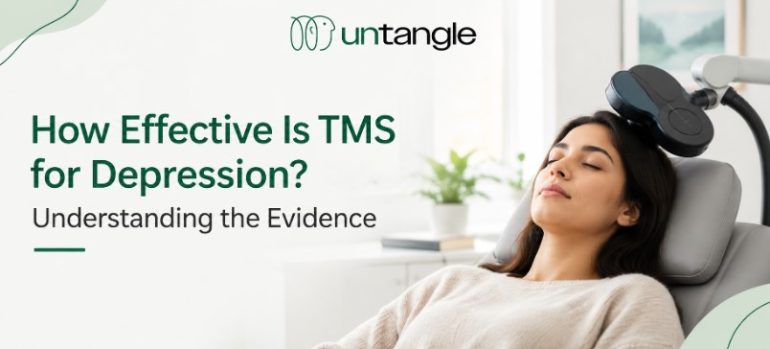
Transcranial magnetic stimulation is a non-invasive brain stimulation treatment. It uses a magnetic coil positioned against the scalp to deliver controlled magnetic pulses to specific areas of the brain involved in mood regulation.
Unlike electroconvulsive therapy (ECT), TMS does not require general anaesthesia. Sessions are typically performed in an outpatient setting, although the exact treatment schedule depends on the TMS protocol and individual circumstances. NICE describes treatment courses that may involve repeated sessions over several weeks.
TMS is generally discussed as a treatment option for adults with major depressive disorder who have not experienced sufficient improvement from previous antidepressant treatment. Specific eligibility depends on the device, protocol, clinical history, and applicable regulations.
What Does the Research Say About Effectiveness?
The evidence base for TMS has developed considerably over the years. Clinical trials have compared active TMS with sham or placebo-like stimulation, while systematic reviews have combined findings from multiple studies.
A recent 2026 systematic review and network meta-analysis included 141 trials involving more than 10,500 participants with major depressive disorder. Several rTMS approaches showed greater efficacy than sham stimulation for depressive symptoms, although the researchers noted considerable variation between studies and rated much of the comparative evidence as low or very low confidence.
Another recent meta-analysis examining TMS in major depressive disorder found improvements in commonly used depression-rating scales compared with control conditions. However, as with other reviews, differences in treatment protocols and study populations need to be considered when interpreting the findings.
The important takeaway is that the research supports TMS as a legitimate treatment option for depression, but it does not mean that every person will experience the same result.
Why Do Results Differ Between People?
Depression is not a single, identical experience. Two people may have the same diagnosis but different symptoms, treatment histories, medical considerations, and responses to previous therapies.
Several factors can influence outcomes.
Treatment Protocol
TMS can be delivered using different stimulation patterns, frequencies, treatment targets, and schedules. Theta burst stimulation (TBS), for example, is a newer form of patterned stimulation that has been studied extensively.
A 2024 systematic review of 23 randomized controlled trials found that some TBS protocols produced higher response rates than sham treatment.
This illustrates why the phrase “TMS” does not describe one single treatment experience.
Individual Treatment History
Previous treatment response is also important. TMS is often considered when someone has not achieved adequate improvement with antidepressant medication.
For example, a person who has tried one or more medications without sufficient benefit may discuss neuromodulation options with a qualified clinician. The appropriate approach depends on their individual circumstances rather than simply the number of treatments they have tried.
Clinical Assessment
A thorough assessment can help determine whether TMS is appropriate. A clinician may consider diagnosis, current symptoms, previous treatments, medications, neurological history, implanted devices, and other relevant factors.
This is particularly important because TMS is not suitable for every person or every form of depression.
What Are the Potential Benefits of TMS?
One practical feature of TMS is that it is non-invasive and generally performed without general anaesthesia. This allows treatment to take place in an outpatient environment.
Research has also reported improvements in depressive symptoms and, in some studies, quality-of-life measures. NICE’s evidence review found sufficient evidence regarding safety and effectiveness for its guidance on rTMS for depression.
Another potential advantage is that TMS can be considered alongside a broader mental health treatment plan. Depending on clinical circumstances, this may include psychotherapy, medication management, lifestyle support, or other approaches.
It is important, however, to distinguish a potential benefit from a guaranteed outcome.
What Are the Risks and Limitations?
TMS is generally considered a non-invasive treatment, but “non-invasive” does not mean completely risk-free.
Temporary scalp discomfort, headaches, facial muscle twitching, or other local sensations can occur. NICE also notes that uncommon but more serious events, including seizures, have been reported.
The evidence also has limitations. Studies may use different stimulation protocols, treatment schedules, comparison groups, and definitions of response or remission. This makes direct comparisons between studies difficult.
Long-term outcomes are another area where continued research is useful. FDA guidance notes limitations in available information concerning long-term safety and effectiveness for rTMS systems.
These considerations highlight why treatment decisions should be based on an individual clinical assessment rather than online success stories or a single research finding.
What Should You Ask Before Considering TMS?
If you are researching tms for depression in los angeles, preparing questions before an appointment can make the discussion more useful.
Consider asking:
- Is TMS appropriate for my diagnosis and treatment history?
- Which TMS protocol would be considered, and why?
- How many sessions are typically recommended?
- What side effects should I know about?
- How will progress be monitored?
- What alternatives are available?
- What should I expect if symptoms do not improve?
It can also be helpful to provide the clinician with a complete history of medications, therapy, previous psychiatric treatments, neurological conditions, and implanted medical devices.
TMS Should Be Viewed as Part of a Broader Treatment Discussion
There is no universal treatment that works in exactly the same way for everyone with depression. TMS may be one option among several, depending on the person’s diagnosis, treatment history, preferences, and clinical circumstances.
For someone exploring TMS in Los Angeles, the goal should not simply be to ask whether the treatment “works.” A more useful question is whether the available evidence, treatment approach, and individual circumstances make TMS a reasonable option to discuss with a qualified professional.
Evidence continues to evolve, particularly around newer protocols and treatment schedules. Staying focused on high-quality research rather than exaggerated claims can help people approach treatment decisions with realistic expectations.
Conclusion
So, how effective is TMS for depression? Current evidence indicates that rTMS can provide meaningful symptom improvement for some people with major depressive disorder, with research showing advantages over sham treatment across numerous clinical trials. At the same time, outcomes vary, protocols differ, and TMS is not suitable for everyone.
For those considering tms for depression in los angeles, a personalised evaluation with a qualified professional is an important step. Understanding the evidence, potential benefits, limitations, and alternatives can help people have a more informed conversation about their treatment options.
Summary
TMS is an evidence-supported option for some adults with depression, but outcomes vary. Understanding the evidence and limitations can support informed treatment discussions.
FAQs
1. Is TMS effective for depression?
Research indicates that TMS can reduce depressive symptoms in some adults with major depressive disorder, although individual responses vary and treatment is not guaranteed to work for everyone.
2. How long does TMS treatment take?
Treatment schedules vary according to the TMS protocol and individual treatment plan. Some conventional courses involve repeated sessions over several weeks.
3. Is TMS the same as ECT?
No. TMS and ECT are different treatments. TMS uses magnetic stimulation without general anaesthesia, while ECT involves an electrically induced seizure under anaesthesia.
4. Is TMS suitable for everyone with depression?
No. Suitability depends on factors such as diagnosis, treatment history, medical and neurological history, medications, and other individual considerations.
5. What should I consider before TMS for depression in Los Angeles?
Discuss your diagnosis, previous treatments, expected benefits, possible side effects, treatment schedule, alternatives, and any relevant medical history with a qualified clinician.
If you are considering TMS and want to understand whether it may fit into your broader treatment plan, Los Angeles Therapy Institute can be a starting point for discussing available mental health treatment options with a qualified professional.