



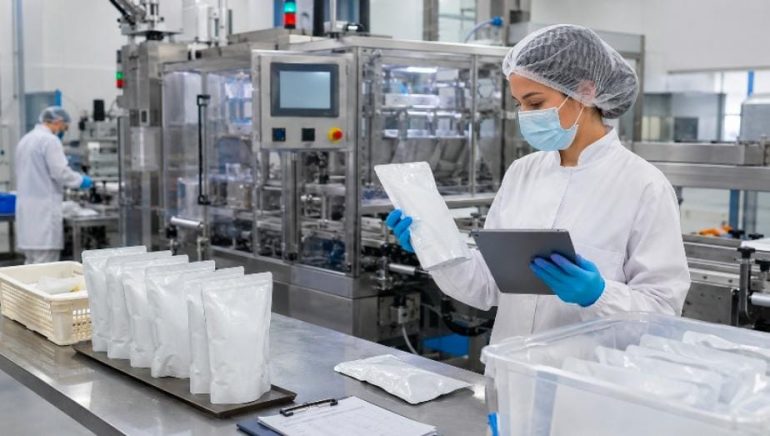
Packaging is no longer only the final step before a product leaves the factory. It affects production speed, product protection, storage, transport, shelf presentation, and the customer experience. For manufacturers working with food, powders, liquids, pet products, household goods, or industrial materials, flexible pouches can offer a practical balance between convenience and efficiency.
Modern Pouch Packaging Machines bring several packaging tasks into one controlled process. Depending on the product and pouch style, a system may handle pouch feeding, opening, filling, sealing, coding, and discharge with less manual handling. This can help a growing factory achieve more consistent output while producing packages that are clean, secure, and ready for retail or distribution.
Why Flexible Pouches Are a Practical Packaging Choice
Flexible pouches are used across many industries because they can hold a wide range of products without requiring a heavy or bulky container. They are suitable for dry foods, snacks, coffee, spices, sauces, detergents, supplements, pet treats, powders, and many other materials.
A pouch can also be designed around how the product will be sold and used. Stand-up pouches offer strong shelf visibility, zipper pouches support repeated opening, flat pouches save space, and spout pouches make many liquid products easier to pour.
Automation Creates a More Predictable Workflow
Manual pouch filling may work for a very small operation, but it becomes difficult to manage as order volumes increase. Employees must repeatedly open bags, measure products, fill them, clear the seal area, and close every package correctly. Small differences can affect weight accuracy, appearance, and sealing quality.
An automated system creates a repeatable sequence. Each pouch moves through the same stages under controlled settings. This makes production easier to monitor and helps managers find the cause of delays or quality issues.
Automation does not remove the need for skilled employees. Instead, operators can focus on setup, material supply, inspection, sanitation, maintenance, and production records rather than repeating the same filling and sealing motions all day.
Product Characteristics Should Guide Machine Selection
The correct machine is not chosen by pouch appearance alone. The product has a major influence on the filling method, contact parts, cleaning needs, and sealing process.
Free-flowing granules such as rice and seeds behave differently from fine powders. Liquids may be thin, thick, sticky, or foamy. Fragile snacks need gentle handling, while dusty materials may require better control around the pouch opening.
Before choosing equipment, a manufacturer should define:
- The product’s form, density, and flow behavior
- The target weight or fill volume
- The preferred pouch type and dimensions
- The required production speed
- Hygiene or dust-control requirements
- Future products that may use the same line
Testing real product and pouch material is often more useful than choosing from a brochure. It shows whether the pouch opens correctly, the filler performs consistently, and the final seal remains clean and secure.
Filling Accuracy Protects Cost and Customer Trust
Consistent filling is important for both cost control and customer satisfaction. Overfilling gives away product and creates a hidden expense across thousands of packages. Underfilling may lead to complaints, rejected goods, or compliance concerns.
The filling system must match the product. Weighing systems are commonly used for granules and piece products, auger fillers for powders, and pumps or piston systems for liquids and pastes. The full setup should be adjusted according to the material, target accuracy, and production rate.
Product feeding must also remain stable. When material reaches the filler unevenly, the line may slow down or produce inconsistent results. Conveyors, elevators, hoppers, and level controls should therefore be planned as part of the complete packaging process.
Seal Quality Is a Critical Production Detail
A pouch may look attractive, but it has little value if the seal fails during storage or transport. Weak, wrinkled, contaminated, or incomplete seals can cause leaks, loss of freshness, damaged cartons, and customer complaints.
Good sealing depends on pouch material, temperature, pressure, contact time, jaw condition, and cleanliness around the seal area. Settings that work for one film structure may not work for another.
Finished packages should be checked regularly. Visual inspection, seal-strength testing, leak checks, and production sampling can detect changes before a large batch is affected. Regular cleaning is equally important because product residue or dust can interfere with sealing.
Changeovers Matter in Multi-Product Factories
Many factories package several flavors, weights, pouch sizes, or customer brands on the same line. In these operations, changeover time directly affects productive hours.
Well-planned Pouch Packaging Machines can support a flexible schedule when filling units, guides, holders, recipes, and controls are configured for the required product range. However, this flexibility should be discussed before purchase rather than assumed after installation.
A good changeover plan includes clear settings, labeled components, cleaning instructions, approved materials, and a test procedure for the first finished packs. Saved recipes can reduce setup variation, but operators should still confirm pouch position, fill weight, coding, and seal quality before full production begins.
Line Integration Prevents Bottlenecks
A packaging machine performs best when the equipment before and after it can keep pace. A fast pouch filler will not reach its expected output if product feeding is inconsistent, inspection equipment stops frequently, or finished packs are removed too slowly.
Manufacturers should study the full flow of materials. This may include feeding, filling, sealing, date coding, checkweighing, metal detection, secondary packing, and case handling.
The goal is not simply to buy the fastest individual machine. It is to build a balanced line in which every stage supports the next. A stable production rate is often more valuable than a high advertised speed that cannot be maintained in real conditions.
Controls and Production Data Support Better Decisions
Modern equipment can give operators control over recipes, temperatures, speeds, alarms, and production counts. These features reduce guesswork and make repeat jobs easier to manage.
Production data can reveal patterns. Frequent stops may point to a material, setup, maintenance, or training problem. Recording downtime reasons helps managers focus improvement efforts where they matter most.
Controls should remain simple enough for operators to understand alarms and make approved adjustments safely.
Maintenance Should Begin Before Problems Appear
Packaging equipment operates through repeated movement, heat, pressure, and contact with products or films. Wear is normal, but many unexpected breakdowns can be reduced through routine care.
A preventive maintenance program may include:
- Cleaning sensors, sealing areas, and product-contact parts
- Checking belts, chains, fasteners, air lines, and connections
- Inspecting sealing jaws and pouch-handling components
- Lubricating approved points on schedule
- Replacing worn parts before they cause further damage
- Keeping essential spare parts available
Maintenance records show which components fail repeatedly and how long parts normally last. This helps the factory plan service during scheduled downtime instead of reacting during an urgent production run.
Operator Training Affects Daily Performance
Even a well-designed machine can produce poor results when setup and operating procedures are inconsistent. Training should cover safe startup and shutdown, normal operation, cleaning, basic adjustments, quality checks, alarm response, and when to request technical support.
More than one employee should understand the line. Cross-training protects production continuity when an experienced operator is absent.
Clear instructions near the machine can support changeovers and sanitation, but they should match the actual equipment.
Packaging Decisions Should Support Future Growth
Buying equipment only for today’s minimum requirement may create another investment sooner than expected. At the same time, purchasing a system far beyond current needs can add unnecessary cost and complexity.
Manufacturers should consider expected volume, future pouch sizes, new products, available floor space, utilities, and the possibility of connecting more equipment later.
Future capability should be discussed during planning. Questions about fillers, conveyors, printers, inspection systems, controls, and factory layout should be answered before approval.
Choosing a Supplier Is Part of Choosing the Machine
Packaging equipment is a long-term production asset, so supplier support matters beyond the sale. A manufacturer should consider whether the supplier understands the product, provides realistic testing, explains the equipment clearly, and can support installation, training, spare parts, and technical questions.
A reliable supplier should also discuss limitations honestly. No single machine performs perfectly with every product, pouch, and speed. Clear technical guidance helps the buyer avoid unrealistic expectations and build a more dependable project.
For businesses comparing flexible packaging solutions, pallasmt.com offers information about pouch formats and automated equipment for different production needs.
Conclusion
Pouch packaging can help manufacturers build a cleaner, more efficient, and more scalable process, but the best results come from careful planning. Product behavior, pouch material, filling accuracy, sealing, changeovers, line balance, maintenance, and operator training all influence daily performance.
The right equipment should not be selected only by maximum speed or purchase price. It should fit the real product, factory workflow, quality expectations, and future plans of the business. When these factors are considered together, pouch packaging automation can become a dependable part of long-term production growth.