



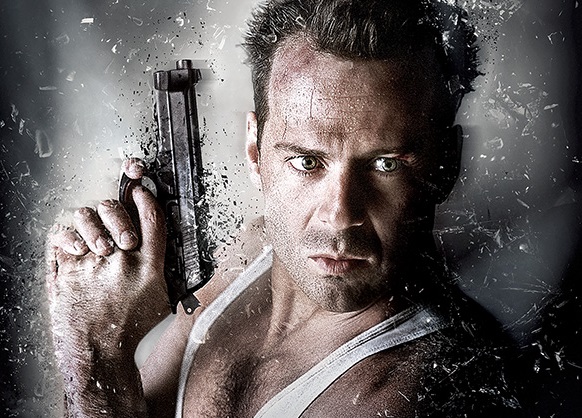
Action movies live and die by their stakes.
You can have the biggest explosions, the most impressive choreography, and the highest budget, but if the audience doesn’t feel what’s at risk, none of it lands the way it should. The best action films understand this. They don’t just show danger — they make you feel it.
And that feeling usually comes from one thing: stakes that matter.
Stakes turn action into story
At its core, a high-stakes scene is about consequence.
It’s not just what’s happening on screen, but what could happen next. When a character is in danger, the audience needs to understand what’s on the line. Is it survival? Reputation? Someone else’s life?
Take films like Die Hard or Mad Max: Fury Road. The action works because the stakes are clear and immediate. Every decision matters, and every mistake carries weight.
Without that, action becomes noise.
Tension is built before the explosion
One of the biggest misconceptions about action movies is that tension comes from the action itself.
In reality, it comes before it.
Directors build tension through pacing, framing, and anticipation. A quiet moment before a fight. A close-up that lingers just a bit longer. A piece of information the audience knows, but the character doesn’t.
All of this creates pressure.
By the time the action starts, the audience is already invested.
The best scenes feel unpredictable
Predictability kills tension.
If the audience feels like they know exactly how a scene will play out, the stakes drop instantly. Great action films avoid this by introducing uncertainty.
A plan goes wrong. A character makes an unexpected choice. The situation escalates in a way that wasn’t obvious at the start.
This doesn’t mean chaos for the sake of it. It means controlled unpredictability — moments that feel surprising, but still earned.
Physical risk vs emotional risk
Not all stakes are physical.
Some of the most effective action scenes work because of emotional risk. A character might survive the fight, but lose something else in the process.
Modern action films often combine both. Physical danger creates immediate tension, while emotional consequences give the scene lasting impact.
That’s what separates a good sequence from a memorable one.
Modern audiences expect more
Today’s audiences are more familiar with action than ever.
They’ve seen the big set pieces, the car chases, the fight scenes. It takes more than scale to impress them. It takes meaning behind the action.
That’s why recent films focus more on character-driven stakes. The action isn’t just happening — it’s tied to who the characters are and what they’re trying to achieve.
When that connection is missing, even the most expensive scenes can feel empty.
Risk as a universal concept
The idea of risk isn’t limited to movies.
It’s something people understand instinctively. Uncertainty, pressure, decision-making — these elements exist in many areas outside of film as well.
In digital environments, that same sense of tension shows up in how outcomes are followed and evaluated. Platforms connected to Melbet (Arabic: ميل بت) reflect how people engage with risk in real time, tracking results and reacting to changing situations.
The core idea is the same. Uncertainty creates engagement.
Pacing keeps stakes alive
Even the best high-stakes concept can fall apart with poor pacing.
If a film moves too quickly, the audience doesn’t have time to process what’s happening. If it slows down too much, the tension fades.
Great action movies find the balance.
They give moments space when needed, then accelerate at the right time. This rhythm keeps the audience engaged from start to finish.
Visual storytelling matters
High-stakes scenes are not just written — they’re shown.
Camera movement, lighting, and editing all contribute to how tension is perceived. A shaky handheld shot can create urgency. A wide, steady frame can emphasize isolation.
Directors use these tools to guide the audience’s emotional response.
When done well, the visuals carry as much weight as the action itself.
Why stakes define the genre
At the end of the day, action movies are about more than movement.
They’re about what that movement represents.
A fight isn’t just a fight. A chase isn’t just a chase. They’re expressions of conflict, risk, and consequence.
Without stakes, those moments lose their meaning.
Final thoughts
High-stakes scenes are what separate great action movies from forgettable ones.
They give the audience a reason to care. They turn spectacle into something personal. And they keep tension alive, even in the biggest set pieces.
Because no matter how big the explosion is, it only matters if something is truly on the line.