



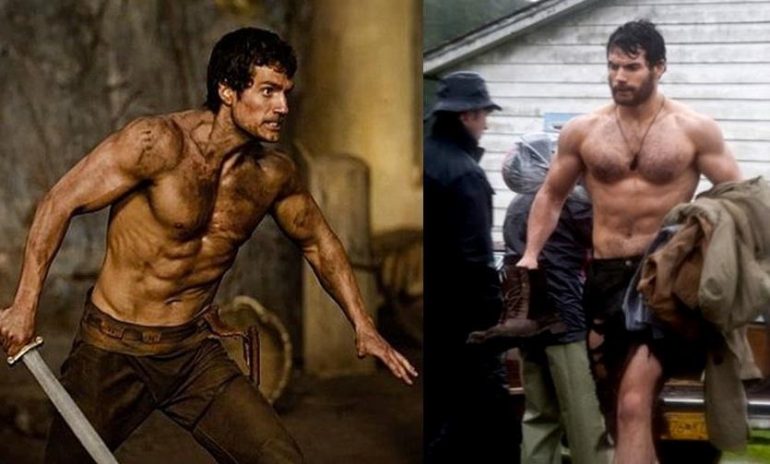
Hollywood has a long history of actors dramatically changing their bodies for demanding film roles. One year an actor may appear relatively lean, and only months later audiences see the same performer with broader shoulders, larger arms, a stronger back and significantly more muscle. These transformations can look almost impossible, but they are usually the result of a carefully organized combination of resistance training, nutrition, recovery, coaching and a tremendous amount of time and discipline.
Recent examples show how different the process can be depending on the character. David Corenswet reportedly gained around 40 pounds for Superman, while Nicholas Galitzine underwent a substantial bulk-and-cut process for Masters of the Universe. Other actors have prepared through boxing, martial arts, athletic conditioning and specialized strength programs rather than simply trying to become as large as possible.
It Starts With the Character
The first step isn’t necessarily stepping into a gym. Trainers and actors usually begin by determining exactly what the character should look like.
A superhero might require large shoulders, a developed chest and visible abdominal definition. A professional fighter may need a combination of muscle, speed, conditioning and explosiveness. A soldier might need a thicker, functional physique rather than the highly defined appearance associated with bodybuilding.
This distinction is important because there is no single “Hollywood workout.” A trainer has to consider the character, the actor’s starting condition, the filming schedule, stunt requirements and the amount of time available.
For example, Bradley Cooper’s transformation for American Sniper required him to become substantially larger to portray Chris Kyle. His preparation involved corrective exercises, strength training, multiple daily sessions and a substantial increase in food intake.
Resistance Training Builds the Foundation
Muscle doesn’t appear simply because someone spends hours in the gym. Actors typically use structured resistance training designed around progressive overload.
Compound exercises such as squats, presses, rows, deadlift variations and pull-ups can train several muscle groups simultaneously. Isolation movements can then be used to bring up specific areas that are particularly important for the character’s appearance.
A typical transformation might include several training phases. The first phase can establish movement quality and basic strength. The next phase may emphasize hypertrophy, while later training can focus more heavily on conditioning, athletic movement and maintaining muscle during filming.
The exact exercises, volume and frequency depend on the individual. A professional actor may also have access to specialists who can adjust the program when fatigue, injuries or filming requirements change.
Progressive Overload Matters
One of the most important principles behind muscle growth is progressive overload. The body needs an increasing training stimulus over time.
That doesn’t necessarily mean adding weight to every workout. Progress can come from performing additional repetitions, improving technique, increasing training volume, controlling movement better or gradually increasing resistance.
For an actor preparing for a role, this process can be highly structured because the transformation has a deadline. Trainers may track exercises, body weight, measurements, recovery and performance throughout the preparation.
This is very different from casually visiting a gym a few times per week. Actors preparing for major physical roles may essentially turn training into a full-time project.
Nutrition Is Just as Important
Training provides the stimulus, but nutrition supplies the energy and nutrients needed to recover and adapt.
Actors attempting to gain muscle generally need enough total calories and adequate protein. Carbohydrates can provide energy for demanding workouts, while dietary fats contribute to overall nutrition and help support normal physiological functions.
The goal isn’t simply to eat as much as possible. Excessive calorie consumption can lead to unnecessary fat gain, which may make the final stage of a transformation more difficult.
David Corenswet’s preparation for Superman illustrates how carefully nutrition can be managed. His trainer described a high-calorie diet based largely on whole foods, with calories adjusted as filming approached.
Brad Pitt’s preparation for Troy is another frequently cited example. Reports describe months of structured training and a nutrition plan designed to support muscle gain while maintaining a relatively lean appearance.
Protein Plays a Major Role
Protein is particularly important during muscle-building phases because it provides amino acids required for repairing and building muscle tissue.
Actors don’t necessarily need exotic foods or complicated diets. Common protein sources include eggs, poultry, fish, lean meat, dairy products, legumes and other protein-rich foods.
Protein shakes can also be convenient when someone has a high calorie or protein requirement and is spending much of the day training or filming.
However, a supplement isn’t a substitute for a balanced diet. Professional athletes and actors generally work with nutrition professionals who consider total calories, macronutrients, food preferences, training demands and the individual’s response to the diet.
Recovery Is Part of the Program
One of the biggest misconceptions about Hollywood transformations is that actors simply train harder than everyone else.
In reality, recovery is one of the most important parts of the process.
Muscle is stimulated during training but adapts during recovery. Sleep, adequate nutrition, rest days and appropriate workload management can therefore make a significant difference.
Actors also have to consider the physical demands of filming. A workout that looks impressive on paper may become counterproductive if the actor must perform demanding stunts, fight choreography or long shooting days immediately afterward.
Current examples reinforce this idea. Theo James, for instance, has shifted toward smarter training and injury management rather than simply following a “more is more” philosophy. His current preparation combines strength work with boxing and performance-focused training.
Conditioning Is More Than Cardio
A movie-ready physique isn’t necessarily created through bodybuilding alone.
Action actors may need to run, jump, climb, fight, carry equipment and perform repeated movements during filming. As a result, conditioning often becomes an important part of preparation.
Boxing can improve coordination and conditioning. Martial arts can help actors learn choreography and movement patterns. Sprinting and circuit training can develop work capacity. Mobility work can help performers move safely through demanding scenes.
Jake Gyllenhaal’s preparation for Southpaw, for example, incorporated extensive boxing work, while other actors have used martial arts and sport-specific training to make their performances more convincing.
The Hollywood Support Team
Perhaps the biggest difference between an actor’s transformation and an ordinary person’s fitness journey is the size of the support team.
An actor may have a personal trainer, strength coach, nutritionist, chef, physiotherapist, massage therapist, stunt coordinator and other specialists.
This makes consistency much easier.
Backstage notes that professional support can be a major factor in rapid body transformations, particularly when studios provide the resources and actors can dedicate substantial portions of their schedules to preparation.
For the average person with a full-time job, family responsibilities and limited training time, comparing their progress directly with a movie star isn’t realistic.
What About SARMs and Performance-Enhancing Drugs?
Discussions about Hollywood physiques often lead to questions about anabolic steroids like Anavar, testosteron, trenbolone and SARMs and other performance-enhancing substances. It is important not to assume that a particular actor used a specific substance simply because their transformation was dramatic. Without reliable evidence, such claims remain speculation.
SARMs, or selective androgen receptor modulators, are compounds that have attracted attention within bodybuilding and fitness communities because of their potential effects on muscle and physical performance. However, they are not risk-free alternatives to traditional training, and their safety profile and long-term effects remain important concerns. Products sold online may also have issues involving inaccurate labeling or contamination.
Swisssarms is one name that appears in online discussions surrounding the broader SARMs and performance-enhancement market. Anyone researching the subject should distinguish between a company’s marketing claims and independent scientific evidence. SARMs should not be treated as an essential component of achieving a movie-style physique.
Anabolen Labs is another name associated with online discussions about anabolic and performance-enhancement products. The existence of a brand or supplier does not establish that its products are safe, authentic or medically appropriate. People considering performance-enhancing substances should understand the potential health and legal implications and consult a qualified medical professional rather than relying on online marketing or bodybuilding forums.
Hollywood Transformations Take Time
Although movie montages can make transformations appear to happen overnight, the reality is usually very different.
A significant physical transformation can require months of preparation. Alicia Vikander reportedly began preparing approximately seven months before filming Tomb Raider, combining resistance training with activities such as MMA, climbing and archery.
Other actors have had even longer preparation periods.
This is why patience remains one of the most important principles for anyone trying to improve their physique. Building substantial muscle naturally is a gradual process, and attempting to reproduce an actor’s appearance in an unrealistically short period can encourage unhealthy practices.
The Final Stage: Getting Camera Ready
Building muscle is only part of the process. Before filming, actors may shift their focus toward maintaining muscle while reducing body fat to reveal greater definition.
Lighting, camera angles, costumes, makeup and cinematography can also dramatically influence how a physique appears on screen.
Some actors may manipulate training volume, carbohydrate intake, hydration and other factors under professional supervision before important scenes. These practices shouldn’t automatically be copied by recreational gym users because aggressive short-term approaches can carry risks.
The final goal is also not necessarily the biggest possible body. Directors and costume designers need a physique that matches the character and works visually within the story.
What Can Regular Gym-Goers Learn?
The biggest lesson from Hollywood transformations isn’t that everyone needs a celebrity trainer or an extreme diet.
Instead, the fundamentals remain surprisingly simple: train consistently, eat appropriately, consume sufficient protein, recover properly and progressively improve performance.
A regular person can apply these principles without trying to reproduce a movie star’s exact body weight or training schedule.
The Hollywood fitness formula is ultimately built around planning, consistency and professional guidance. The extraordinary results audiences see on screen are supported by months of preparation, carefully controlled nutrition, structured resistance training and extensive recovery.
For anyone inspired by an actor’s physique, the smartest approach is to use Hollywood transformations as motivation rather than as a deadline. Build muscle gradually, prioritize health and performance, and remember that the final image on screen represents far more than a few hours in the gym.
Conclusion
Hollywood actors build muscle for movie roles through a combination of resistance training, nutrition, conditioning, recovery and professional support. The exact strategy changes according to the character, but the fundamentals remain consistent.
Whether an actor is preparing to play a superhero, soldier, fighter or athlete, the transformation is usually the result of disciplined preparation rather than a single secret workout or supplement. Understanding that reality can help fitness enthusiasts set more realistic goals while appreciating the extraordinary commitment required to create some of cinema’s most memorable physiques.
Note: This article is for general educational purposes and does not recommend the use of SARMs, anabolic steroids or other performance-enhancing drugs. Individual training and nutrition decisions should be discussed with appropriately qualified professionals.