



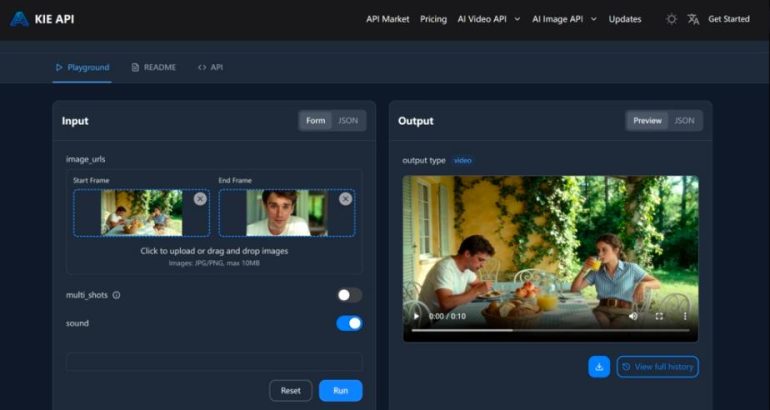
Action trailers live on momentum. Viewers do not stay for a careful explanation of plot mechanics. They stay for impact, escalation, tension, and the promise that something explosive is about to happen. The first few seconds matter more than almost anything else. Pace, conflict, and visual intensity have to arrive early enough to make the audience lean in before the trailer has even started explaining itself.
That is where Kling 3.0 API becomes useful for developers and workflow teams building action promo content. Real value does not come from technology in isolation. Real value appears when action concepts can move faster into trailer-ready drafts, when teaser material becomes easier to iterate, and when high-energy visual ideas can be shaped into repeatable production workflows.
Action Trailer Work Starts With Impact, Not Explanation
Trailer editors and creative teams rarely begin with a full story. More often, they begin with fragments that already carry pressure: a stare before a fight, a vehicle turning into a chase, a weapon reveal, a silhouette entering frame, or a brief moment where chaos feels close. Action audiences respond to those fragments quickly because they communicate tone before they communicate detail.
Action Audiences Respond to Pace Before Plot
Rhythm usually lands first. Movement, danger, and escalation create the initial hook long before viewers understand the whole setup.
Trailer Work Depends on Visual Impact Arriving Early
Strong trailers do not wait too long to deliver energy. Visual force has to appear near the front or the whole piece starts to flatten.
Kling 3.0 API Fits the Workflow Where Action Concepts Need to Become Visual Fast
Creative teams often know the kind of sequence they want. Challenge usually appears later, when those ideas need to turn into visuals quickly enough to support teaser timelines, promo deadlines, and multiple trailer cuts. Delay can drain energy from the process because trailer work depends on speed as much as mood.
Kling 3.0 API Helps Action Ideas Reach Trailer-Ready Drafts Earlier
Chase concepts, confrontation beats, hero entrances, pursuit moments, and pressure-filled reveals can move into draft form earlier, giving teams something concrete to shape and refine.
Kling 3 API Supports Faster Iteration in High-Energy Promo Workflows
Trailer content rarely works on the first pass. Teams usually need to adjust intensity, timing, and visual emphasis across multiple versions. Faster iteration matters more than single-output novelty.
Trailer Work Usually Begins With Moments, Not Full Scenes
Most action trailers are not built around complete dramatic arcs. They are built around memorable moments that hint at a larger world. One burst of motion, one near-impact collision, or one perfectly timed reaction shot can do more than a full scene summary ever could.
Short Bursts of Tension Often Carry More Weight Than Full Explanations
Pressure-heavy fragments leave more room for curiosity. Viewers feel the force of the moment without being given everything too soon.
Kling 3.0 API Works Better When Teams Build Around Moments, Not Entire Stories
Creative teams tend to get more useful output when the target is a specific high-intensity beat rather than an attempt to compress an entire narrative into one piece.
Action Trailer Workflows Depend on Repetition, Variation, and Escalation
One trailer rarely solves the whole promo cycle. Modern action campaigns often require teaser cuts, character-led promos, short vertical edits, social spots, and alternate versions with different emphasis. That repeated variation is where a stronger workflow starts to matter.
One Core Sequence Can Generate Multiple Trailer Cuts and Promo Versions
Strong visual direction can stretch far. One action sequence or one mood-driven setup can support teaser edits, social clips, character promos, and broader campaign assets.
Kling 3.0 API Supports Action Trailer Teams That Need Multiple High-Impact Versions
Repeated output is part of the job. Teams working on promo cycles need assets that can evolve across formats without losing energy.
Visual Intensity Works Only When Control Stays Tight
Action promotion is not just about making everything louder. Too much chaos weakens impact. Too many moving parts without rhythm turn energy into noise. Strong action trailers feel controlled even when they look explosive.
More Chaos Does Not Always Create Better Trailer Energy
Escalation works best when teams know what to hold back, what to reveal, and what to let the audience imagine for themselves.
Kling 3.0 API Delivers More Value When Creative Teams Set Tone and Rhythm Early
Clear expectations around pace, movement, mood, and escalation give the workflow stronger direction and reduce wasted variation.
Action Promo Assets Need to Travel Across More Than One Surface
Trailer content no longer lives in one place. Campaigns now move through teaser drops, short-form clips, character spots, announcement posts, and platform-specific edits. Reusable visual direction matters because promo momentum has to survive across multiple surfaces.
Teasers, Character Spots, and Promo Clips Often Share the Same Visual DNA
Campaign pieces may differ in length and emphasis, but they still need to feel like they belong to the same action world.
Kling Video 3.0 Fits Teams Building Reusable Action Promo Assets
Reusable output creates a stronger production rhythm. Teams benefit when one visual logic can support more than one cut, more than one teaser, and more than one distribution point.
Kling 3.0 API in Action Trailer Workflows for Creative Teams
Action trailers have never been about giving everything away. Best ones hit with pressure, velocity, and just enough chaos to make viewers want more. For creative teams working in that space, Kling 3 API matters when it helps build those high-impact moments faster without flattening the rhythm that makes action promotion work in the first place.
depended on rhythm, conflict, and high-pressure moments. Stronger workflows simply make those elements easier to develop at the speed modern promo cycles demand.