



There is a particular kind of satisfaction that comes from owning something no one else has. For action Video fans and collectors, that feeling usually means tracking down a rare piece of memorabilia, commissioning a custom prop replica, or spending weeks building something by hand. The problem with the last option has always been the gap between what you can visualize and what hand tools can actually produce. Freehand cutting, imprecise drilling, uneven finishes — the results often fall short of the mental image, no matter how much time goes in.
Desktop laser engravers have been quietly closing that gap. Over the past few years, the technology has moved from professional fabrication shops into home studios and small creative workspaces — and the range of things collectors and fans are producing with them has expanded considerably.
What a Desktop Laser Engraver Actually Does
The core function is straightforward: a laser engraver follows a digital design file and uses a focused beam to cut, score, or engrave a material surface with a level of precision that hand tools cannot consistently achieve. The design lives on screen, the machine executes it, and the result is a physical object that can closely follow the digital file with far more consistency than most hand-cut or hand-marked methods.
For fans and collectors, this matters in specific and practical ways. A nameplate for a prop display that needs clean, readable text at small sizes. A custom insignia engraved into a wooden display base. A metal dog tag with screen-accurate text and spacing. A set of matching labels for a collection of replicas. These are exactly the kinds of details that elevate a display from impressive to extraordinary — and they are exactly the kinds of details that are difficult to achieve by hand but straightforward for a laser engraver working from a well-prepared file.
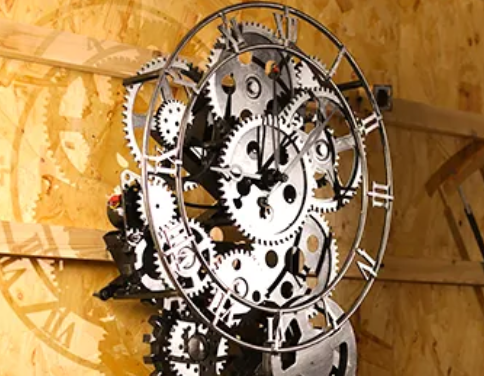
Wood, acrylic, leather, coated metals, anodized aluminum, and selected metal-marking applications can all be handled with the right machine configuration and settings. A collector building a mixed-material display — a wooden backing with an acrylic logo insert and metal hardware — can often process all of those elements on the same machine.
The Prop and Replica Application
Action film props have a particular visual language: weathered surfaces, precise markings, worn finishes that suggest use and history. Recreating that language at home has traditionally required either significant fabrication skill or access to expensive custom services.
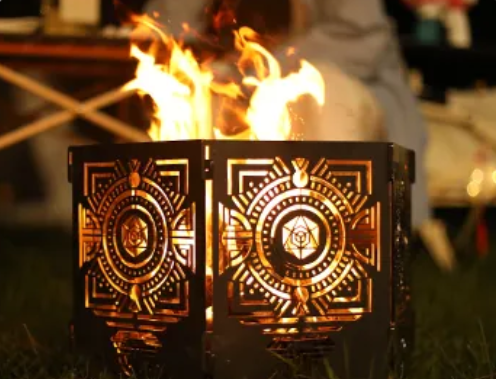
Laser engraving changes part of that equation. Surface detail — the serial numbers, insignia, warning labels, and texture marks that make a prop read as authentic — can be engraved directly into material rather than painted, applied as a decal, or hand-scratched. Engraved detail holds up to handling in a way that painted or applied detail does not, and it catches light differently, giving surfaces a depth and dimensionality that flat paint cannot replicate.
For most hobbyists, the goal is decorative display work, non-functional replicas, and personalized collector pieces rather than anything intended for public use or unsafe handling. Within that space, laser engraving gives fans a practical tool for adding the kind of surface authenticity that separates a display piece from a generic reproduction.
For fans building replica props or modifying commercial replicas to be more screen-accurate, this kind of surface work can be the difference between something that looks like a toy and something that reads as a genuine artifact. The precision of laser engraving means small text stays legible, patterns stay consistent, and repeated elements — like rivets, grid lines, or panel markings — are evenly spaced across the whole surface.
Custom Gifts and Personalized Collectibles
Beyond prop work, the personalization applications for action video fans are wide. A custom gift for a fellow collector does not need to be elaborate to be meaningful — a laser-engraved wooden plaque with a quote, a title, and a date carries far more weight than anything off a shelf. An engraved metal keychain referencing a shared franchise. A custom display tag for a signed poster. A personalized storage box for a prop collection.
These are projects that require very little material investment and almost no fabrication experience. The design work happens on screen, and the machine handles the physical execution. Beginners can often achieve cleaner results on simple projects such as plaques, labels, tags, and display plates than they would expect — because the variables that cause hand work to go wrong are handled by the machine rather than the operator.
For collectors who give a lot of themed gifts or want to add personal touches to display pieces without commissioning custom work, owning a laser engraver can reduce reliance on commissioned work and give collectors more control over small custom projects.
Display Builds and Exhibition Components
Serious collectors tend to think carefully about how their pieces are presented. A prop sitting on a generic shelf reads differently than one mounted on a custom display base with appropriate labeling and materials. Laser engraving and cutting give collectors the tools to build display components that actually fit the pieces they are showcasing.
Custom acrylic stands cut to the exact profile of a prop. Wooden plinths with engraved title plates. Shadow box inserts sized precisely for the item being displayed. Wall-mounted panel displays for flat memorabilia. All of these are within reach for someone with a desktop laser engraver and a few hours of design work.
The ability to iterate is part of what makes this useful. If a display base is slightly the wrong height, or a nameplate needs a different font, the fix is a file change and another pass — not starting over from scratch. Collectors who build their own display components often describe this iteration capability as one of the most practically useful aspects of owning the machine.
Choosing the Right Machine for Creative Work
Desktop laser engravers vary considerably in work area, power, material compatibility, and software support. For fans and collectors doing prop detail work, personalized gifts, and display builds, the relevant factors are different from what a professional production environment would prioritize.
Work area determines what size pieces can be processed in a single pass — important for display backs, larger prop surfaces, and poster-format work. Power affects how cleanly the machine cuts through different material thicknesses. Software compatibility matters for anyone working from vector design files, photo engravings, or text layouts.
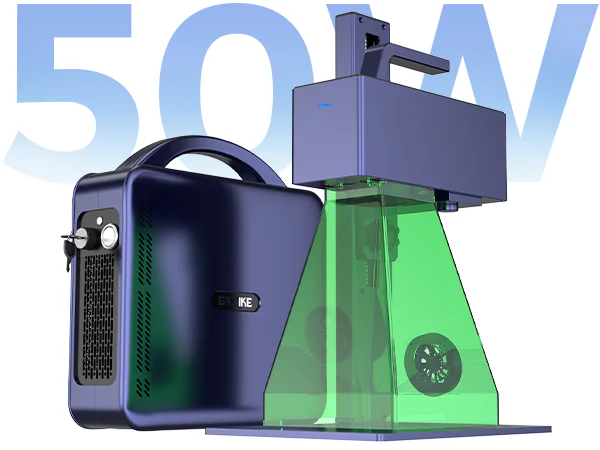
For creative users who want a machine that handles the range of materials relevant to prop and display work across different project types, the GWEIKE M-Series is worth considering for its versatility across wood, acrylic, coated metals, and leather — covering most of what collector and display builds actually involve.
For those just starting out with prop detailing, display nameplates, and personalized gifts, the M Core offers a capable entry point without the overhead of a larger or more complex setup.
What Fans Can Now Make That They Couldn’t Before
The availability of capable desktop laser engravers has changed what independent collectors and fans can produce without professional fabrication support. Work that previously required commissioning a custom fabricator — or simply going without — is now within reach for anyone willing to invest time in learning the software and understanding the materials.
For action video fans whose connection to the genre goes beyond watching and into collecting, building, and creating, that shift in capability is a meaningful one. The gap between what you can imagine and what you can physically produce has narrowed — and the results show in collections and displays that carry a level of personal craft and detail that no off-the-shelf product can replicate.