



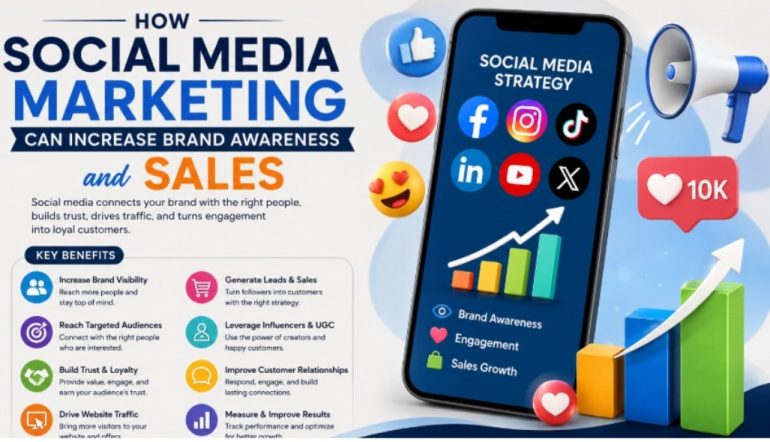
n today’s digital world, social media has become one of the most powerful tools for businesses that want to reach new customers, build brand awareness, and increase sales. Platforms such as Facebook, Instagram, TikTok, LinkedIn, YouTube, and X allow businesses to communicate directly with their target audience and create meaningful relationships.
Whether you run a small local business, an online store, or a growing company, an effective social media marketing strategy can help you reach more people without relying entirely on traditional advertising. However, success requires more than simply posting content. Businesses need to understand their audience, create valuable content, remain consistent, and use the right marketing techniques.
What Is Social Media Marketing?
Social media marketing is the use of social networking platforms to promote a business, product, service, or brand. It involves creating and sharing content, engaging with followers, running paid advertisements, building communities, and analyzing performance.
The main goals of social media marketing are to increase brand visibility, attract potential customers, develop relationships with audiences, generate website traffic, and ultimately increase sales.
Unlike traditional marketing, social media gives businesses the opportunity to communicate with customers directly. People can comment on posts, ask questions, share content, leave reviews, and interact with brands in real time.
1. Increase Your Brand Visibility
One of the biggest advantages of social media marketing is its ability to increase brand visibility. Millions of people use social media every day, giving businesses an opportunity to introduce their brand to a much larger audience.
Regularly publishing useful and engaging content keeps your business in front of potential customers. Even when people are not ready to purchase immediately, repeated exposure can help them remember your brand when they eventually need your product or service.
For example, a skincare business can share skincare tips, educational posts, product demonstrations, customer experiences, and short videos. This type of content can introduce the brand to people who may later become customers.
2. Reach Your Target Audience
Social media marketing allows businesses to target specific groups of people based on factors such as interests, age, location, behavior, and online activity.
This is particularly useful for paid social media advertising. Instead of showing an advertisement to everyone, businesses can focus their marketing budget on audiences who are more likely to be interested in their products.
For example, a clothing brand targeting young adults can create campaigns designed specifically for that audience. More relevant advertising can improve engagement and increase the chances of generating sales.
3. Build Trust With Your Audience
Consumers are more likely to buy from brands they trust. Social media provides businesses with an opportunity to show the people and values behind the brand.
Sharing educational content, customer reviews, behind-the-scenes videos, frequently asked questions, and real product demonstrations can make a business appear more authentic.
Businesses should avoid making every social media post a direct sales pitch. Instead, they should provide useful information and engage with their audience. Building trust takes time, but it can lead to stronger customer relationships and greater loyalty.
4. Create Engaging Content
Content is at the heart of successful social media marketing. Different types of content can help businesses attract and retain their audience.
Some effective content formats include:
- Short-form videos
- Product demonstrations
- Educational posts
- Customer testimonials
- Infographics
- Behind-the-scenes content
- Polls and questions
- User-generated content
- Tutorials and how-to videos
The best content is usually relevant to the audience and provides some form of value. It may educate, entertain, inspire, or solve a problem.
Businesses should also experiment with different formats to discover what their audience responds to most effectively.
5. Drive More Website Traffic
Social media can be an important source of website traffic. Businesses can include links to their websites in profiles, posts, advertisements, and other appropriate locations.
For example, a company publishing a blog article can share a short introduction on social media and encourage followers to read the complete article on its website.
More qualified traffic can create additional opportunities for leads, subscriptions, inquiries, and purchases.
However, businesses should make sure their landing pages are fast, mobile-friendly, easy to navigate, and relevant to the social media content that brought visitors there.
6. Generate Leads and Sales
Social media marketing can directly support sales by helping businesses move potential customers through the buying journey.
A person may first discover a brand through a social media post. Later, they may watch a product video, read customer reviews, visit the website, and eventually make a purchase.
Businesses can support this process by using clear calls to action such as:
Learn More, Shop Now, Contact Us, Get a Quote, Sign Up, or Download Now.
Social media advertising can also be used to promote specific products, services, offers, or campaigns to relevant audiences.
7. Use Influencer and User-Generated Marketing
Influencer marketing can help brands reach established communities. Working with creators who have an audience relevant to the business can provide additional exposure and social proof.
User-generated content is another valuable strategy. When customers voluntarily share photos, videos, reviews, or experiences with a brand, businesses can use this content—with appropriate permission—to demonstrate how real customers interact with their products.
People often find authentic customer experiences more relatable than traditional promotional messages.
8. Improve Customer Relationships
Social media is not only a marketing channel; it can also be an important customer service tool.
Customers may use social platforms to ask questions, report problems, provide feedback, or learn more about products. Responding professionally and promptly can improve the customer experience.
Businesses should monitor comments and messages and treat customer interactions as opportunities to build stronger relationships.
A brand that listens to its customers can also discover valuable information about their needs, preferences, and concerns.
9. Measure Your Marketing Results
One of the most useful features of digital marketing is the ability to measure performance.
Businesses can monitor metrics such as:
- Reach and impressions
- Engagement
- Video views
- Website clicks
- Leads
- Conversion rates
- Follower growth
- Advertising costs
- Sales generated
These metrics can help businesses understand which content and campaigns are working.
For example, if educational videos consistently receive higher engagement than promotional posts, a business may decide to create more educational video content.
The goal should not simply be to collect likes and followers. Businesses should focus on metrics that support their actual objectives, such as qualified traffic, leads, conversions, and revenue.
10. Stay Consistent
Consistency is one of the most important elements of social media marketing. Posting occasionally and disappearing for weeks can make it difficult to build an active audience.
Businesses should create a realistic content schedule that they can maintain. This could include several posts per week combined with regular stories, videos, or other content formats.
Consistency does not mean posting the same message repeatedly. Instead, businesses should maintain a recognizable brand voice while providing different types of valuable content.
Conclusion
Social media marketing can play a major role in increasing brand awareness and sales. It gives businesses the opportunity to reach targeted audiences, build trust, share valuable content, generate website traffic, attract leads, and develop long-term customer relationships.
However, successful social media marketing requires a clear strategy. Businesses should understand their target audience, choose appropriate platforms, create useful and engaging content, interact with followers, test different campaigns, and regularly measure their results.
The most successful brands do not use social media simply to promote products. They use it to educate, communicate, entertain, and build relationships. When these efforts are combined with a strong product or service and a clear sales strategy, social media can become a powerful driver of sustainable business growth.