



Picture this: it’s Friday night, the popcorn is freshly popped, and your family gathers to watch the latest blockbuster together. But within minutes, someone’s fighting over armrest space, the kids are squirming on cushions that offer no support, and you’re shifting constantly trying to find a comfortable position. What should be a memorable family experience turns into a frustrating ordeal—all because of inadequate seating.
Choosing home theater seating for a family isn’t as simple as picking what looks good in a showroom. You need to balance limited room dimensions with enough seats for everyone, find materials that withstand sticky fingers and spilled drinks, and ensure that both adults and children can sit comfortably for a full two-hour movie. The challenge multiplies when you’re shopping for a 4-seat configuration that must serve diverse needs without overwhelming your space. This guide walks you through every consideration—from assessing your room layout and understanding key features like zero-gravity reclining, to comparing seating types and following a clear buying process—so your family can finally enjoy movie night the way it was meant to be.
Understanding Your Family’s Needs for Home Theater Seating
Before browsing any catalog, start by measuring your dedicated theater space. Note the room’s length, width, ceiling height, and the location of doors, outlets, and screen placement. These dimensions directly determine whether a straight-row configuration or a curved arrangement works best, and they prevent the costly mistake of ordering seating that physically doesn’t fit. Next, think about who will actually use the seats. A family of four with two young children has very different requirements than a household with teenagers or grandparents—smaller bodies need adequate lateral support so they aren’t swallowed by oversized cushions, while older family members benefit from seats that are easy to enter and exit. Consider how often and for what purpose the seating will be used. Nightly movie marathons, weekend gaming sessions, and occasional sports-viewing parties each place unique demands on cushion resilience and reclining functionality. If your kids treat the theater room as a daily hangout, prioritize child-safe mechanisms and stain-resistant surfaces from the outset rather than treating them as afterthoughts.
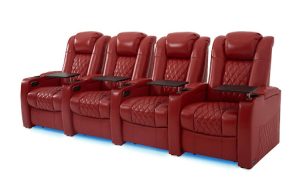
Key Features to Look for in 4-Seat Home Theater Seating
When shopping for 4-seat theater seating that serves an entire family, certain features separate a wise investment from a regrettable purchase. The right combination of durability, comfort technology, and thoughtful extras transforms your viewing room into a space everyone actually wants to spend time in.
Durability and Material Choices for Longevity
Families need materials that forgive daily abuse. Top-grain leather and high-quality synthetic leather resist spills and wipe clean in seconds—a critical advantage when juice boxes and snack bowls are part of every screening. Microfiber fabric offers a softer, warmer feel and hides minor stains well, though it requires more frequent deep cleaning. Beyond the surface, examine the frame construction. Hardwood or steel frames withstand years of kids climbing in and out, while cheaper particleboard tends to creak and loosen at joints within months. High-density foam cushions rated above 2.0 pounds per cubic foot maintain their shape through thousands of hours of use, preventing the dreaded mid-seat sag that makes long movies unbearable.
Reclining Options and Ergonomic Support
Manual reclining mechanisms cost less and have fewer components that can fail, but they require physical effort that young children and elderly family members may struggle with. Power recliners let each person dial in their exact angle with a button press, and many models include memory settings so everyone recalls their preferred position instantly. Zero-gravity reclining elevates the knees slightly above the heart, distributing body weight evenly across the seat and reducing pressure on the lower spine—a genuine difference-maker during back-to-back movie marathons. Look also for adjustable headrests and lumbar support that accommodate varying heights within the same household. Additional conveniences like built-in USB charging ports, LED cup holders, and hidden storage compartments in shared armrests keep devices powered and snacks within reach without cluttering your theater space.

Exploring Seating Types: 4-Seat Theater Seating vs. Dual Loveseat Recliners
A unified 4-seat theater seating row delivers a streamlined, cinema-authentic look. All four seats share a common base and armrest structure, creating visual cohesion that makes your room feel purposefully designed rather than pieced together. This configuration works particularly well in dedicated theater rooms where the seating faces a single screen wall, and installation is straightforward since you’re positioning one large unit rather than coordinating multiple pieces. However, the fixed arrangement limits flexibility—once placed, you can’t easily reconfigure for different activities or room changes.
Dual loveseat recliners offer a fundamentally different approach. Each loveseat seats two people and operates as an independent unit, meaning you can angle them slightly toward the screen, separate them with a side table, or push them together for a unified row. This adaptability proves invaluable in irregularly shaped rooms or multipurpose spaces where the theater doubles as a family room. Families with young children often prefer loveseats because a parent can sit directly beside a child without a shared armrest creating separation. The tradeoff is that two separate pieces may cost slightly more than a single 4-seat row, and achieving a perfectly aligned appearance requires careful placement. For families prioritizing versatility and closeness during viewing, dual loveseat recliners often edge ahead, while those wanting a permanent, polished theater aesthetic tend to favor the integrated 4-seat design.
Ensuring Comfort for All Ages: Focus on Zero-Gravity Reclining and Safety
Zero-gravity reclining mimics the posture astronauts assume during liftoff, positioning the body so that legs are elevated slightly above heart level while the torso reclines at roughly 120 degrees. This angle distributes weight across the entire seat surface rather than concentrating it on the lower back and tailbone, which dramatically reduces pressure points during extended viewing sessions. For adults dealing with back pain or circulation issues, this position offers genuine therapeutic relief that standard reclining simply cannot match.
Children, however, require additional safety considerations beyond ergonomic positioning. Look for seats with smooth, pinch-free reclining mechanisms that won’t catch small fingers during operation. Padded armrest edges prevent bruises when kids inevitably bump against them, and secure locking positions ensure a reclined seat won’t snap forward unexpectedly if a child leans on the footrest. Many family-oriented models now include adjustable settings that let you limit the recline range for younger users while giving adults full motion. When every family member—from a five-year-old to a grandparent—can settle into a position that feels custom-fitted, movie night stops being an endurance test and becomes the immersive home entertainment experience you invested in.
Step-by-Step Guide to Buying the Right 4-Seat Home Theater Seating
Navigating the purchase process becomes far less overwhelming when you break it into manageable stages. This step-by-step approach ensures your family ends up with seating that fits your room, your lifestyle, and your budget without second-guessing.
Step 1: Set a Budget and Define Priorities
Start by establishing a realistic spending range before you fall in love with features you can’t afford. Decide which elements are non-negotiable for your family—perhaps power reclining and stain-resistant upholstery top the list because you have young children, while LED lighting and built-in speakers fall into the “nice but optional” category. Writing down your must-haves versus your wish-list items prevents impulse decisions and keeps your search focused on 4-seat theater seating that genuinely serves your household.
Step 2: Research and Compare Products
Spend time exploring manufacturer websites, specialty home theater retailers, and furniture marketplaces like Comfiroom using specific search terms like “4-seat home theater seating” or “dual loveseat recliner.” Create a shortlist of three to five models that offer zero-gravity reclining or other priority features you identified earlier. Compare their construction materials, reclining mechanisms, and included accessories side by side in a simple spreadsheet so differences become immediately clear rather than blurring together after dozens of product pages.
Step 3: Check Reviews and Warranty Details
Customer reviews from other families reveal real-world performance that product descriptions rarely capture. Pay close attention to feedback about cushion durability after one or two years of use, how well reclining mechanisms hold up with daily operation, and whether the upholstery truly resists stains as advertised. Equally important is the warranty—look for coverage that protects the frame, motor components, and foam padding separately, since these wear at different rates. A strong warranty signals manufacturer confidence and shields your investment over the long term.
Step 4: Measure Your Space and Plan Layout
Return to your room measurements and map out exactly where the seating will go. Account for full recline depth—most power recliners extend an additional 15 to 20 inches behind the upright position, so you need clearance between the back wall and the seat frame. Sketch the layout on graph paper or use a free room-planning app to visualize traffic paths around the seating, ensuring no one blocks the screen when walking to the kitchen. If you’re considering dual loveseat recliners, experiment with angled placements that might improve sightlines in wider rooms.
Step 5: Make the Purchase and Arrange Delivery
Buy from a retailer that offers white-glove delivery and in-home assembly, especially for heavy 4-seat configurations that can be difficult to maneuver through hallways and doorways. Confirm the return policy before completing your order—some sellers allow a trial period during which you can return seating that doesn’t meet expectations, which is invaluable when you can’t test the seats in person. On delivery day, inspect every mechanism, check the upholstery for defects, and test each reclining position before signing off. Taking these final precautions ensures your family’s new theater seating is ready for movie night from the moment it’s in place.
Practical Tips for Installation and Maintenance
Once your 4-seat theater seating arrives, follow the manufacturer’s assembly instructions precisely—tightening bolts in the recommended sequence prevents frame misalignment that can affect reclining performance. Secure the unit to the floor or wall if anti-tip brackets are included, especially in homes with young children who might climb on the seats. For ongoing care, vacuum crevices weekly to remove crumbs and debris that accelerate fabric wear, and wipe leather or synthetic surfaces with a damp microfiber cloth after each use. Treat spills immediately rather than letting them set. Every three months, inspect reclining mechanisms for smooth operation, listen for unusual grinding sounds, and lubricate moving parts according to the manual. Tighten any loosened hardware and check that power cords remain undamaged. These simple routines keep your seating looking and functioning like new for years.
Creating the Perfect Family Movie Night With the Right Seating
Finding the right home theater seating for your family comes down to thoughtful preparation rather than impulse shopping. By honestly assessing your room dimensions, family dynamics, and usage habits first, you eliminate options that would never work and focus your energy on seating that truly fits your life. Key features like durable upholstery that handles daily spills, zero-gravity reclining that relieves pressure during long viewing sessions, and child-safe mechanisms that protect small fingers make the difference between seating you tolerate and seating you genuinely love.
Whether you choose a unified 4-seat home theater seating row for its polished cinema aesthetic or dual loveseat recliners for their flexible arrangement, the step-by-step buying process outlined here—from setting a budget through inspecting delivery—keeps you in control at every stage. The goal isn’t just furniture; it’s creating a space where every family member, regardless of age or size, feels comfortable enough to stay immersed in the story unfolding on screen. Apply this guide with confidence, take your time through each step, and invest in seating that turns ordinary evenings into the family movie nights you’ve always envisioned.