



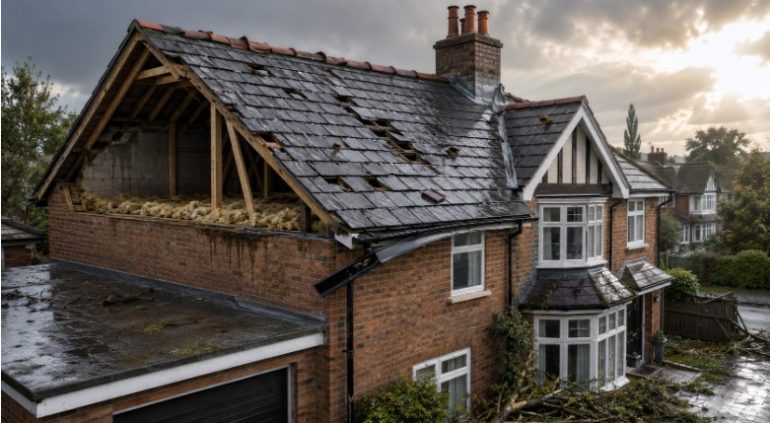
A bad storm has passed, but you cannot tell whether your roof came through it without damage. How to Check for Roof Damage After a Storm? starts with knowing which signs you can safely inspect yourself and which problems need a closer professional assessment.
Missing slate, cracked concrete tiles, fresh ceiling stains or displaced flashing can allow water into areas that looked sound before the storm. The mistake is either ignoring early damage or climbing onto a wet roof to investigate it yourself. Start from a safe position, work from visible evidence, and only move to closer inspection when it can be done safely.
How to Check for Roof Damage After a Storm? Outside
A roof damage after a storm inspection should begin from ground level, not from the roof itself. Strong winds, heavy rain, and flying debris can loosen tiles, damage roof edges, and disturb flashing while also making the roof surface unsafe to walk on.
Roof Damage After a Storm: Ground Checklist
| What You Can See | What It May Indicate | Practical Next Step |
| Missing slate or concrete tiles | Wind displacement or broken fixings | Photograph the area and arrange closer assessment |
| Cracked or broken tiles | Impact or weather damage | Check whether underlay or roof structure is exposed |
| Tiles sitting out of line | Movement or loosened fixings | Avoid pushing them back from a ladder |
| Loose ridge or hip tiles | Wind or bedding failure | Keep clear of the area below |
| Damaged flashing | Potential water-entry point | Check ceilings and roof space for moisture |
| Hanging guttering | Storm movement or failed brackets | Avoid standing underneath it |
| Debris on the roof | Possible impact damage | Inspect surrounding roof materials from a distance |
| Sagging roofline | Possible structural movement | Treat as urgent and do not access the roof |
| Broken branches against roofing | Direct impact risk | Keep clear until the roof is assessed |
| Water overflowing from gutters | Blockage, displacement or drainage problem | Check gutters safely from ground level where possible |
This first inspection is about finding changes that were not present before the storm. A roof does not have to be missing a large section before it needs attention, because one displaced tile or damaged flashing detail can create a route for rainwater.
Walk around the property and view the roof from several angles. Binoculars or a camera with optical zoom can reveal slipped tiles, broken slate edges, displaced ridge pieces or metal flashing that has lifted away from a wall or chimney.
Roof Damage After a Storm: Missing Tiles
Missing roof tiles are one of the most obvious signs of roof damage after a storm, but the visible gap may not show the full problem. Wind can loosen neighbouring tiles and fixings even when those tiles remain in place after the weather settles.
Check the area immediately around the missing material from a safe distance. Look for tiles that appear raised, twisted, unusually spaced or no longer aligned with surrounding rows.
One isolated damaged area does not automatically mean the complete roof needs replacement. The condition of nearby tiles, fixings, battens, underlay and the remaining roof covering has to be assessed before deciding whether a local repair is suitable.
If storm damage exposes ageing or widespread deterioration across a tiled roof, concrete tile roof replacement in London may become relevant after the roof has been properly assessed. Replacement should be based on the actual condition and extent of failure, not simply on the fact that a storm occurred.
Roof Damage After a Storm: Slate Movement
Slate roofs often show storm damage differently from interlocking concrete tiles. A slate can crack around its fixing, slide downward, break into sections or disappear completely while surrounding slates still appear reasonably straight.
Look at the roof plane for small gaps, slipped slates and fresh-looking broken edges. A few scattered defects can be difficult to notice from directly below, which is why viewing the roof from different safe positions helps.
Do not try to push a loose slate back into position from a ladder. A slipped slate needs a secure repair method, and surrounding slates can also be fragile if they have been disturbed by wind or impact.
Where an older slate roof has repeated movement, widespread fixing problems or extensive storm-related damage, slate roof restoration in London may be more appropriate than repeatedly replacing individual pieces. The decision still depends on how much of the existing roof remains sound.
Roof Damage After a Storm: Flashing
Flashing is easy to overlook because homeowners naturally focus on missing tiles first. After a storm, check visible flashing around chimneys, abutments, roof valleys, vents and other penetrations for lifting, gaps or obvious displacement.
A small opening in flashing can be enough to allow water underneath the main roof covering. That means a roof can begin leaking even though the field of concrete tiles or slates looks largely intact.
Look for changes in shape rather than trying to diagnose the flashing material itself. Metal that has lifted from the adjoining surface, joints that have opened or pieces hanging loose are good reasons to arrange a closer inspection.
Roof Damage After a Storm: Gutters and Edges
Storm inspection should also include the roof edges. Gutters, fascia boards, soffits and downpipes can be damaged by wind, debris, heavy water flow or falling branches.
A gutter hanging away from the fascia or a downpipe that has become disconnected can direct large amounts of rainwater onto walls and roof-edge timbers. This can turn a relatively local storm defect into a wider moisture problem.
Check the ground below the roof edge as well. Pieces of slate, concrete tile, ridge material, metal or gutter fittings found around the property can show that roofing materials moved during the storm even when the damaged section is difficult to see from below.
How to Check for Roof Damage After a Storm? Inside
The next stage of checking roof damage after a storm happens inside the property. External damage may be difficult to see from the ground, but water marks, damp insulation and moisture tracks can expose problems that have already allowed rain beneath the roof covering.
Start with rooms directly below the roof. Look at ceilings, the tops of walls, areas around chimney breasts and corners where roof slopes meet external walls.
Roof Damage After a Storm: Indoor Warning Signs
Fresh brown or yellow staining is one of the most useful warning signs to record. Compare it with older marks where possible, because storm damage is easier to diagnose when you can show that moisture appeared immediately after a specific weather event.
Paint that begins bubbling, peeling or changing colour can also point to water behind the finished surface. A ceiling may feel dry by the time you inspect it even though water passed through during the storm.
Do not simply repaint a new stain and assume the problem has ended. If water entered once because a tile, slate or flashing detail moved, another period of heavy rain may send water through the same opening.
Roof Damage After a Storm: Loft Inspection
An accessible loft can reveal roof damage after a storm that is invisible from the room below. Use a good torch and inspect from safe boarded areas or established access points rather than stepping between joists.
Look for damp insulation, darkened timber, water tracks and fresh moisture on the underside of the roof covering or membrane. Water does not always drip directly beneath the external defect because it can travel along timber, felt or another surface before becoming visible.
Daylight entering through an unexpected opening can also deserve attention, although not every visible point of light proves a serious roof failure. Ventilation details and normal construction gaps need to be distinguished from newly exposed areas.
Roof Damage After a Storm: Leak Clues
| Indoor Sign | What to Check Next | Why It Matters |
| New ceiling stain | Roof area directly above and nearby | Water may have travelled before appearing |
| Damp insulation | Underlay, tiles and roof penetrations | Insulation can retain hidden moisture |
| Water track on timber | Follow the direction upward | The leak source may be away from the stain |
| Drip near chimney | Flashing and chimney junction | Junction details are common water-entry points |
| Dampness near external wall | Roof edge, gutter and flashing | Overflow or displaced edge materials may be involved |
| Bubbling ceiling paint | Space above the damaged finish | Moisture may still be trapped |
| Noticeable roof sag | Keep clear and obtain assessment | Possible structural damage needs priority |
A leak that appears after a storm should be documented while the evidence is fresh. Note exactly where the stain or drip appears and whether it becomes worse during continuing rainfall.
Buckets or waterproof containers can protect floors from active dripping, and possessions should be moved away from the affected area. These are damage-control steps only and do not repair the roof opening itself.
Roof Damage After a Storm: Sagging
A roofline that has visibly changed shape needs to be treated differently from a single missing tile. Sagging can indicate movement in the deck, rafters, battens or another supporting component, particularly where the roof has also suffered impact from a branch or other debris.
Do not climb into or onto a roof section that looks structurally compromised. Keep people away from the suspect area and arrange a professional assessment before further investigation.
The same caution applies when ceilings are noticeably bulging with water. A water-loaded ceiling lining can fail without much warning, so avoid standing underneath it while deciding what to do next.
Roof Damage After a Storm: No Visible Leak
A roof can suffer storm damage without producing an immediate internal leak. Water may not enter until the next period of heavy rain, or the underlay beneath the roof covering may temporarily prevent water from reaching the rooms below.
That is why an interior check should support the exterior inspection rather than replace it. If the storm involved unusually strong wind, hail or falling debris, visible external changes still deserve attention even when every ceiling is dry.
It is equally important not to assume that every old roof mark came from the latest storm. Good diagnosis separates newly created damage from ordinary ageing, previous leaks and defects that existed before the weather event.
How to Check for Roof Damage After a Storm? Next Steps
Once visible roof damage after a storm has been found, the next job is to document it and decide whether professional inspection is needed. Clear evidence is more useful than assumptions about whether the damage is minor, structural or likely to require replacement.
Take photographs from safe positions before temporary repairs or cleanup alter the scene. Capture both close detail where possible and wider views showing where the damaged section sits on the building.
Roof Damage After a Storm: Photo Evidence
Photograph missing or broken roof materials, debris on the ground, displaced gutters, damaged flashing and visible water stains indoors. Record the same defect from more than one angle if this can be done without climbing or entering a dangerous area.
Keep a simple note of when the storm occurred and when each problem was first noticed. If an internal stain develops over the following hours or days, photograph the change rather than relying on memory later.
Do not create damage to make it easier to photograph. Loose roof materials should be left for safe professional handling unless they present an immediate risk at ground level.
Roof Damage After a Storm: Avoid Unsafe Access
Homeowners often assume they need to climb onto the roof to perform a proper storm inspection. In practice, a wet, wind-damaged or potentially weakened roof is precisely where unnecessary roof access should be avoided.
Use ground-level observations, windows, safe viewpoints and accessible loft spaces first. A professional roofer has the equipment and experience to inspect areas that cannot be assessed safely from those positions.
Ladders also create risk after storms because the ground may be wet, gutters may be damaged and wind conditions can remain unstable. Do not lean a ladder against guttering that has already moved or separated from the roof edge.
Roof Damage After a Storm: Get Another Opinion
A professional recommendation should be tied to visible or demonstrable defects. If someone tells you that the complete roof needs replacement but cannot clearly explain what has failed, ask them to show the damaged areas and explain why local repair is not suitable.
This is particularly useful after widespread storms, when property owners may receive unsolicited calls or doorstep offers. Do not sign for major roofing work simply because someone says your roof must have suffered damage.
For significant work, compare written assessments where practical. Differences between two roofers can help identify where one contractor is treating a local defect as repairable while another believes deterioration extends much further.
Roof Damage After a Storm: Repair or Replace?
Storm damage alone does not determine whether a roof needs repair or full replacement. The decision depends on the extent of damage, condition of the remaining roof, number of affected areas and whether the underlying structure or weatherproofing has also failed.
A small number of displaced tiles on an otherwise sound roof may allow a local repair. Widespread broken coverings, repeated storm failures, failing fixings or extensive substrate damage can point towards a larger scope.
Do not use roof age as the only decision. An older roof can sometimes remain repairable, while a newer roof can have serious damage if materials, fixings or the structure have been badly affected.
Roof Damage After a Storm: Insurance Records
If you may need to contact an insurer, first establish what is actually damaged and preserve the evidence. Policy terms, excesses and claim requirements differ, so avoid assuming that visible storm damage automatically means a complete roof will be paid for.
Keep copies of photographs, inspection findings and repair quotations. If emergency temporary work is needed to prevent further water entry, record the condition before and after that work where safely possible.
A roofing contractor can explain the physical condition of the roof, but the insurance policy belongs to the homeowner. Coverage decisions should be confirmed through the relevant insurer rather than based on promises made during a sales visit.
Roof Damage After a Storm: Final Safety Check
How to Check for Roof Damage After a Storm? Can be reduced to a practical order: inspect safely from outside, check ceilings and the loft, record changes, then arrange professional assessment where the damage cannot be safely or confidently judged.
Prioritise sagging areas, active leaks, loose materials above entrances and obvious structural movement. These problems have more immediate consequences than purely cosmetic marks.
For less urgent defects, avoid ignoring them simply because the weather has cleared. A displaced slate, cracked tile or opened flashing joint may not cause visible trouble until the next period of heavy rain.
Roof Damage After a Storm FAQs
Can Roof Damage After a Storm Exist Without a Leak?
Yes. Roof damage after a storm can exist without an immediate leak because underlay and other roof components may temporarily stop water from reaching the rooms below. Lifted tiles, cracked slate, weakened fixings or damaged flashing can remain unnoticed until another period of wind-driven rain. A dry ceiling is reassuring, but it should not override obvious external storm damage.
Do Gutter Granules Prove Roof Damage After a Storm?
Granules mainly apply to asphalt-based roofing rather than traditional slate or concrete tile roofs commonly seen in London. Where that type of covering is present, loose granules after a storm can justify investigation, but roof damage after a storm cannot be confirmed from gutter granules alone. Normal weathering and age can also release material, so the pattern and condition of the covering need assessment.
Do Dented Roof Vents Prove Roof Damage After a Storm?
Dented vents or other soft metal components can support evidence that hail or flying debris struck the property, but they do not automatically prove functional roof damage after a storm. Check the surrounding roof covering, seals and flashing as well. A dent may be cosmetic, while a split seal or displaced penetration detail can create a genuine route for water entry.
Why Does Roof Damage After a Storm Keep Returning?
Repeated roof damage after a storm can indicate a wider condition problem rather than a series of unrelated incidents. If different tiles or slates continue moving in moderate winds, the roof may have ageing fixings, weak attachment points or widespread deterioration. Replacing one visible piece each time may not solve the underlying issue, so the wider roof covering and fixing condition should be assessed.
Does Roof Damage After a Storm Mean Replacement?
No. Roof damage after a storm does not automatically mean the whole roof requires replacement. A localised problem may be repairable when surrounding materials, fixings, underlay and supporting components remain sound. Replacement becomes more relevant when damage is widespread, underlying materials are failing or repeated defects show that the remaining roof covering can no longer provide reliable weather protection.
Is Sagging Roof Damage After a Storm an Emergency?
Visible sagging should be treated as an urgent form of roof damage after a storm because it may involve more than the surface covering. Keep people away from the affected area and do not climb onto the roof to investigate it. If the internal ceiling is also bulging, avoid standing underneath it and arrange prompt professional assessment before the area is disturbed.
How Do I Avoid False Roof Damage After a Storm Claims?
Ask anyone identifying roof damage after a storm to show you the specific defects and explain why they require the recommended work. Be cautious with unsolicited contractors who immediately promise a complete replacement or guaranteed insurance result. Photographs, written findings and an independent second opinion can help you distinguish a documented roofing problem from a sales claim that lacks clear supporting evidence.
Image Prompts and Alt Tags
Image 1: Ground-Level Storm Roof Inspection
Prompt: Photorealistic London house with pitched tiled roof after a severe storm, several displaced concrete roof tiles, small broken tile pieces on driveway, overcast post-storm sky, viewed safely from ground level, no people, no text, no logos.
Alt Tag: Ground-level check for roof damage after a storm
Guest Post Link Placement
| Anchor Text | Destination URL | Section It Appears In |
| concrete tile roof replacement in London | https://aaroofinglondon.co.uk/tile-roofing/ | Roof Damage After a Storm: Missing Tiles |
| slate roof restoration in London | https://aaroofinglondon.co.uk/slate-roofing/ | Roof Damage After a Storm: Slate Movement |