


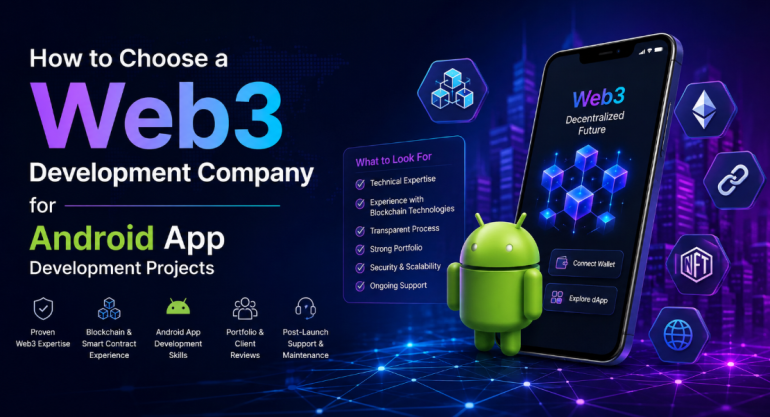
Android apps have been playing an increasingly significant role as businesses look to reach their target audiences. At the same time, we’re seeing a shift in how apps deal with digital ownership, payments, identities, and more due to the rise of Web3 technologies.
The convergence of these two trends presents exciting opportunities for businesses wanting to develop decentralized, blockchain-based Android applications.
But there’s much to learn about the technology itself, everything from understanding blockchain networks, working with smart contracts and crypto wallets, ensuring security protocols, integrating with various APIs, and having solid expertise in Android development skills. And then there’s choosing who will help bring this vision to life.
With that said, if you’re interested in building a Web3-powered Android app, it’s important to understand some key criteria for choosing your ideal development partner so as to increase the chances of being successful at what could potentially be one of those once-in-a-lifetime projects!
Understand Your Web3 Android App Requirements
Before looking up development companies, specify what kind of functionality you’d like to include in the app. It might be a crypto wallet, NFT marketplace, DeFi (decentralized finance) app, blockchain gaming application, web 3 social platform, etc.
Also, determine what blockchain network you’d prefer to launch your product on—if the user would need to connect external wallets, how many different types of transactions they’ll be able to carry out, etc.
Defining your project’s scope makes it easier to compare different development companies’ offers and get realistic estimates of their development time and costs.
Look for Strong Web3 Expertise
Web3 development is more than just putting blockchain features into an Android app. The team should know how blockchain networks run and how decentralized apps connect to them.
Check whether the company has experience with technologies such as
- Smart contracts
- Ethereum and EVM-compatible networks
- Wallet integration
- Token development
- NFT standards
- Blockchain APIs
- Decentralized storage
- Web3 authentication
- Cryptocurrency transactions
A good Web3 development company should be able to talk about these ideas in plain language. They should also suggest a plan that fits what you need for your business.
Check Android Development Experience
Blockchain knowledge alone will not be enough. You will still want a strong track record in Android app building.
Talk with them about the team’s experience with current Android tools. Also ask about app structure, API use, speed work, and mobile security.
You should expect solid results on many Android devices. Apps must handle different screen sizes without issues. They also need to account for how blockchain actions can slow things down or change the user flow.
If you hire a firm that covers both Android and Web3, the process may move faster. It can also cut down on back and forth during development.
Review Their Previous Web3 Projects
A firm’s work list can tell you what they can actually deliver. Don’t just count how many pieces they put on a page. You need to look at the kind of apps they sent out and how smooth or painful the builds were.
When you review projects, try to focus on ones with blockchain parts. That might be wallets, smart contracts, tokens, NFTs, DeFi, or decentralized apps. Even a small app can still show the right kind of experience.
If you can, pick one or two older apps from them. Then check page speed. See if the menu works the way you expect. Test the flow from the first open to the last result, not just a quick click. Pay attention if there are extra steps, especially any transaction steps. Look at the visuals too, and think about whether the app feels simple to use.
If their portfolio looks strong, you can feel a bit more calm about the team that will handle the hard parts of an Android Web3 app.
Evaluate Security Practices
Security cannot be an afterthought. A Web3 app may handle private data, digital assets, and actions tied to money. For that reason, security work should be a high priority from the beginning.
Ask how they manage private keys. Also ask how they guard user data and how they handle wallet links. Then ask what they do for smart contracts, from how they are built to how they are checked.
Make sure they follow safe coding habits. They should test things before they ship. Smart contracts may need a review and audits, especially when the risk is higher.
Finally, ask what happens after launch. Fixing issues does not end at release. A good partner keeps at it and improves the app over time. They should not treat security like a one-time task.
Consider UI and User Experience
Starting with Web3 apps can be tough. New users often get stuck on wallets, gas costs, chain choices, and the wait for confirmations.
Your Android app should remove as much friction as you can. Make the steps feel ordinary, not technical.
When you pick a custom Android app team, look at how they handle screens and flow. Do they build screens that feel easy? Can they take hard blockchain steps and turn them into a path people can follow?
For instance, signing in with a wallet should not be a long checklist. Transaction details should be shown in plain language. Also, notifications should be easy to read when a transfer works or does not.
Ask About the Development Process
Ask about how they work. A custom Android app development company should explain their process in a clear order. Find out how they handle the plan, the UI and UX work, the build, QA testing, release, and ongoing upkeep.
A typical process may include:
- Requirement analysis
- Technical planning
- UI/UX design
- Android and blockchain development
- Smart contract integration
- Testing and security checks
- App deployment
- Post-launch maintenance
Clear updates matter across each step. It lowers the chance of delays. It also reduces surprise changes.
Compare Communication and Collaboration
Technical work is a key part, but so is communication. Your dev partner should share progress often. They should also answer questions fast.
Before you sign anything, talk about update timing. Also ask what tools you will use to stay in touch.
Find out if you will get one main contact. Some teams assign a project lead. That can make feedback easier. It can also help you fix problems sooner.
When communication is open, your business targets stay in step with the build.
Check Pricing and Project Transparency
Cost is important too. Still, the lowest price is not always the right fit.
Ask each company for a clear proposal. It should spell out the costs. It should list the timeline. It should name the tech stack. It should cover integrations. It should also mention support after launch.
Be careful with vague pricing. Also avoid firms that promise quick delivery for a hard Web3 product.
Compare options in a fair way. Look at technical skill, real work samples, security steps, and how they communicate. Also check what they offer after delivery, not only the price.
Ask About Post-Launch Support
After you release your Android app, the work is not done. Things like blockchain networks can shift. New Android versions arrive. Third-party APIs change. Wallets evolve. Security rules get updated too.
So your development partner should keep helping after launch. You want them to stay involved when issues come up and when updates are needed.
After release, you may see bug fixes. You may also get better speed and smoother performance. Security patches are common. Blockchain-related upgrades can be required. Android compatibility work may be needed as well. Sometimes you also plan new features.
When the same team remains available, future changes can feel simpler. They already know your app’s setup. This can cut down the time spent relearning the codebase.
Check Client Reviews and Reputation
Take time to review what past clients mention before you sign anything. These comments often cover how the company communicates, how strong their technical work is, whether they meet delivery dates, and how they handle support requests.
Try reading feedback on more than one site. Do not rely only on quotes shown on the company’s own page.
You can also request references or past project write-ups. Ask for examples that are close to your type of work. This can show how the team handles similar technical needs.
Final Words
Don’t pick a Web3 team just because their rates look low or because their roster is big. Ask them plainly if they have built with blockchain before. Also ask if they have done real Android work, not side tasks.
Begin with proof. Look for what they actually shipped in Web3, not only what they say in a pitch. Then review their Android history. Ask what they do to reduce risk while building and how they handle security. See what they delivered on past jobs. Ask how they communicate progress with clients. Also confirm they will help after release, not only while they are coding.
A good partner can help your idea become an Android app that runs with fewer hiccups. It can also mean more stable behavior across different devices. A solid Android team should be able to address slow parts and adjust the app for phones and tablets.
Before you sign anything, take your time. Compare the options and talk through your needs. Focus on what matters most to you. Look at their earlier apps and ask for the full build flow from the first step to the final handoff. If you choose well, you can keep the same team for the long haul as your Web3 Android app grows.