



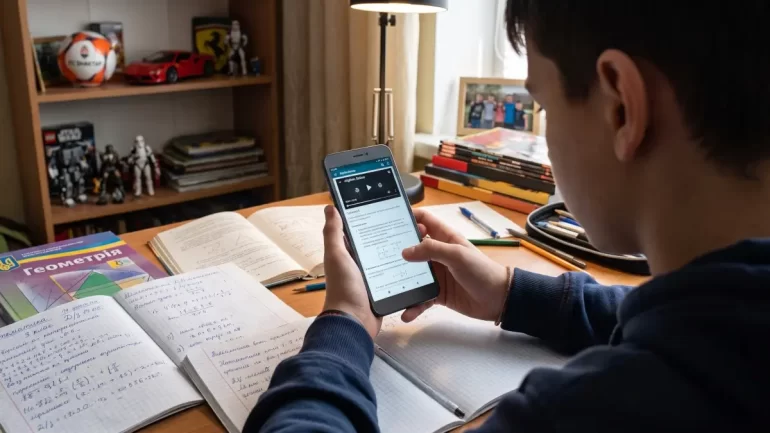
Buying a smartphone for a student is different from choosing a premium flagship. Students usually need a reliable device for communication, online classes, research, social media, photography, navigation, and entertainment, but spending a large amount of money on the most powerful model is rarely necessary.
The good news is that the affordable smartphone market has become much more competitive. Mid range and budget models now offer high refresh rate displays, capable processors, large batteries, decent cameras, fast charging, and useful durability features.
The key is knowing which specifications actually matter for everyday student life.
1. Start With the Student’s Actual Needs
Before comparing specifications, think about how the phone will be used.
A student who mainly needs WhatsApp, email, Google Classroom, web browsing, and video calls does not need the same hardware as someone who regularly plays demanding games or edits videos.
For general school and university use, a balanced phone with good battery life and enough storage is usually a better investment than a device focused entirely on performance.
The best affordable smartphones are those that avoid major weaknesses rather than trying to compete with flagship models in every category.
2. Look for a Good Display
Students can spend several hours looking at their phones every day, so the display deserves serious attention.
A 120 Hz refresh rate has become increasingly common in affordable devices. It makes scrolling through websites, documents, social media feeds, and menus feel smoother than a traditional 60 Hz panel.
AMOLED displays are another advantage because they generally provide deeper blacks, stronger contrast, and more vibrant colors.
However, an IPS display can still be perfectly suitable when the phone offers good brightness and a sensible resolution.
For outdoor use, brightness is especially important. A display that looks excellent indoors may become difficult to read in direct sunlight.
3. Battery Life Should Be a Priority
For students, battery endurance can be more important than benchmark scores.
A phone may need to survive a full day of classes, messaging, navigation, video calls, music, and occasional entertainment without searching for a charger.
This is why many affordable smartphones now use batteries between 5,000 and 7,000 mAh.
Some current models go even further. The OPPO A6s, for example, features a 7,000 mAh battery, while the Redmi 17 reaches 7,500 mAh. The realme P4 4G also uses a 7,000 mAh battery.
Large capacity is useful, but charging speed matters too.
Fast charging can be particularly convenient for students because even a short break between classes can provide enough time to add a meaningful amount of battery.
4. Don’t Ignore Charging Speed
Battery capacity tells only part of the story.
A 5,000 mAh phone with fast charging may be more convenient than a larger battery that takes a long time to recharge.
Affordable models now support charging speeds that were once associated mainly with premium smartphones.
For example, the Motorola Moto G17 Power supports 30 W charging, while the POCO M8 5G and realme P4 4G support 45 W charging.
For a student, that can make a noticeable difference during busy days.
5. Choose Enough Storage
Storage requirements have changed significantly.
Students increasingly keep photos, videos, PDFs, lecture recordings, applications, games, and downloaded content on their phones.
For that reason, 128 GB should generally be considered a sensible starting point, while 256 GB provides considerably more breathing room.
Expandable storage is another advantage.
Some affordable smartphones still include microSD support, allowing users to increase storage later instead of paying for a more expensive configuration at the beginning.
This can be particularly useful for students working with large files.
6. Performance Matters, But Don’t Overpay
A student does not necessarily need a flagship processor.
Modern mid range chips can handle everyday applications, multitasking, video calls, browsing, streaming, and most educational software without difficulty.
The Snapdragon 6 Gen 3, Snapdragon 685, MediaTek Helio G series, and similar processors are examples of platforms used in affordable devices that focus on everyday performance rather than extreme gaming power.
The better question is not whether a phone has the fastest processor.
Ask whether it can comfortably handle the applications the student actually uses.
7. Consider 5G If It Fits the Budget
5G is becoming increasingly common in affordable smartphones.
If a student plans to keep the phone for several years, choosing a 5G model can provide better long term connectivity options.
The Samsung Galaxy A27 5G and POCO M8 5G, for example, combine affordable positioning with 5G support.
However, 5G should not automatically take priority over battery life, storage, display quality, or software support.
If choosing a 5G model requires sacrificing several other important features, a well equipped 4G phone can still be the smarter purchase.
8. Check Software Support
Software support is one of the easiest specifications to overlook.
A phone that receives regular security updates for several years can remain useful much longer than a device with slightly better hardware but poor software support.
Samsung is particularly competitive in this area. The Galaxy A27 5G, for example, is listed with six years of software support.
For parents buying a phone for a younger student, long term support can be especially valuable because it reduces the pressure to replace the device quickly.
9. Durability Is Worth Paying Attention To
Students carry smartphones everywhere.
They can be exposed to rain, dust, accidental drops, crowded backpacks, and rough everyday handling.
Water and dust resistance can therefore be more useful than an impressive benchmark score.
Some affordable models now offer IP ratings and even military standard durability certifications.
The Motorola Moto G77, for example, combines IP64 protection with MIL STD 810 certification, while the Tecno Camon 50 offers IP68/IP69K protection and MIL STD 810 certification.
That does not make a phone indestructible, but additional protection can provide useful peace of mind.
10. Cameras Should Be Good Enough, Not Just High Resolution
Camera specifications can be misleading.
A 108 MP or 200 MP label does not automatically mean a phone will take better photos than a device with a lower resolution sensor.
Image processing, sensor quality, stabilization, lens selection, and software all matter.
For students, a reliable main camera is usually more important than having a large number of secondary lenses.
A decent front camera is also useful for video calls, online classes, and casual communication.
11. Think About Audio and Headphone Options
Audio features are easy to overlook when comparing smartphones.
Stereo speakers are useful for online lectures, videos, music, and calls when headphones are not available.
A 3.5 mm headphone jack can also be valuable for students who already own wired headphones.
The Motorola Moto G17 Power and Redmi 17 are examples of affordable phones that retain a traditional headphone jack.
For some buyers, this small feature can eliminate the need for adapters or wireless headphones.
12. Don’t Buy a Gaming Phone by Accident
Gaming performance can be attractive, but it should not automatically determine the purchase.
If a student mainly uses productivity applications, social media, educational platforms, and video services, paying extra for a gaming focused device may not provide much practical benefit.
A balanced smartphone with a good screen, strong battery, dependable software, and enough storage can offer a better overall experience.
Students who do play demanding games should naturally prioritize the processor and graphics performance, but even then, battery efficiency and thermal management remain important.
Best Value Often Comes From the Mid Range
The current affordable smartphone market demonstrates how much technology has moved down into cheaper devices.
A student can now find phones with AMOLED displays, 120 Hz refresh rates, large batteries, fast charging, stereo speakers, 5G, modern Android versions, and useful durability features without paying flagship prices.
Recent affordable models covered by Root Nation range from around $150 to the mid $300 range, showing how broad the market has become.
That gives buyers plenty of room to prioritize what matters most.
What Should Students Prioritize?
If the budget is limited, a sensible priority list looks like this:
- Battery life
- Reliable software support
- Good display
- Adequate processor
- At least 128 GB of storage
- Fast charging
- Camera quality
- Durability
- 5G connectivity
- Extra features
The exact order can change depending on the student.
Someone studying photography may prioritize cameras, while a gamer may want a stronger chipset. A student who spends most of the day away from home may value battery capacity above everything else.
Final Thoughts
Choosing an affordable smartphone for a student does not require chasing the biggest specifications.
The best value usually comes from finding a device that balances battery life, display quality, performance, storage, software support, durability, and price.
Modern budget and mid range phones are already capable of handling the majority of tasks students perform every day. Spending more can provide better cameras or gaming performance, but it does not necessarily make the phone better for studying.
For readers who want detailed smartphone reviews, buying guides, technology news, and comparisons before choosing a device, Root-nation.com is a useful resource for exploring the latest options.
The right smartphone is ultimately the one that matches the student’s routine. A reliable and well balanced phone that lasts throughout the school day can be far more valuable than an expensive flagship whose advanced features are rarely used.