



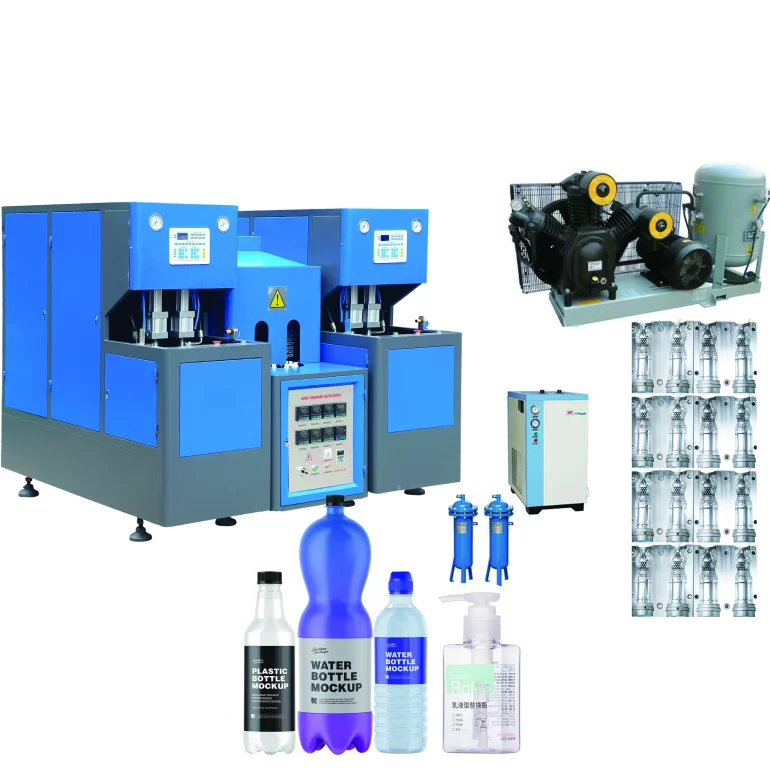
Plastic bottles are widely used in the beverage, food, pharmaceutical, cosmetic, and chemical industries. As demand for packaged products continues to grow, manufacturers need reliable equipment that can produce high-quality bottles efficiently. Choosing the right bottle blowing machine manufacturer is therefore an important decision for businesses planning to improve or expand their production facilities.
What Is a Bottle Blowing Machine?
A bottle blowing machine is used to manufacture hollow plastic containers from preforms. During the process, plastic preforms are heated and then stretched and blown inside molds to create bottles with specific shapes and sizes.
Modern machines can automate much of this process, helping manufacturers achieve consistent bottle quality while reducing manual work. Depending on the machine and production requirements, they can be used for different types of bottles and packaging applications.
How Does the Bottle-Making Process Work?
The production process generally starts with loading plastic preforms into the machine. The preforms are then heated to the required temperature so they become suitable for stretching.
After heating, each preform is placed into a mold. Stretching rods and compressed air expand the heated plastic against the mold walls, creating the final bottle shape. Once the bottle has cooled sufficiently, it is removed and transferred to the next stage of production.
Accurate temperature control, air pressure, and mold design are important for maintaining consistent bottle quality.
Factors to Consider When Choosing a Machine
Manufacturers should consider several factors before purchasing bottle production equipment.
Production Capacity
The required production output should be determined before selecting a machine. Businesses with high-volume requirements may need high-speed equipment, while smaller operations may benefit from a machine designed for moderate production.
Bottle Size and Design
Different products require different bottle sizes and shapes. Buyers should check whether the equipment can support their desired bottle volume, neck size, shape, and material thickness.
Material Compatibility
PET is commonly used for water and beverage bottles, while PP and HDPE can be suitable for other packaging applications. Selecting equipment that matches the intended plastic material is essential for efficient production.
Energy Efficiency
Energy consumption can significantly affect manufacturing costs. Modern equipment with efficient heating systems, servo technology, and optimized compressed-air usage can help businesses control operating expenses over time.
Choosing a Reliable Manufacturer
Selecting the right supplier is just as important as selecting the machine itself. When comparing a bottle blowing machine manufacturer, businesses should look at manufacturing experience, machine quality, customization options, technical support, spare-parts availability, installation services, and after-sales assistance.
An experienced supplier should be able to understand a customer’s production requirements and recommend equipment based on bottle specifications, capacity, material, and factory conditions.
Vfine Machine provides bottle production solutions for different applications and materials, including PET, PP, and HDPE. The company also offers equipment and solutions designed for complete bottle production and related packaging operations.
Applications of Plastic Bottle Making Machines
A modern plastic bottle making machine can serve many industries. Beverage companies use such equipment for water, soft drinks, and other drinks. Food manufacturers can use plastic containers for cooking oils and other products, while cosmetic companies may require bottles for shampoos, skincare products, and personal-care items.
Plastic bottles are also widely used for household chemicals, cleaning products, pharmaceutical packaging, and various industrial applications.
Conclusion
Choosing suitable bottle production equipment requires careful consideration of capacity, bottle design, material compatibility, energy efficiency, automation, and technical support. Businesses should evaluate both the machine and the supplier before making a long-term investment.
With the right equipment and a reliable manufacturing partner, companies can improve production consistency, reduce operational challenges, and build a more efficient plastic bottle production process.