



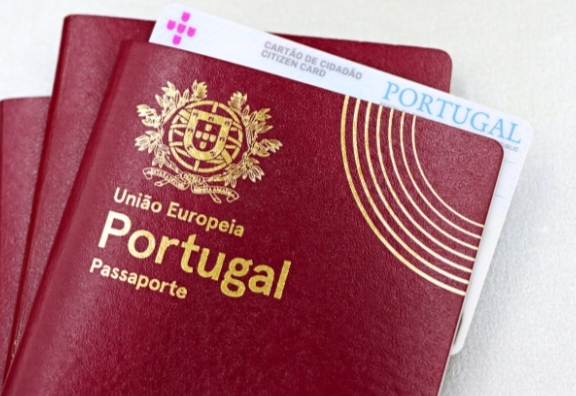
A Portuguese passport is one of the most attractive European passports for people looking to build a long-term future in Portugal and the European Union. But obtaining one involves an important distinction: you do not apply directly for a Portuguese passport as a foreign national. You must first become a Portuguese citizen.
Once you are granted and registered as Portuguese you can get the Portuguese Citizen Card and then apply for your passport.
There are several ways to acquire Portuguese citizenship, including residency, Portuguese ancestry and marriage to a Portuguese citizen. But the Nationality Law has been heavily amended with the amendments coming into effect in May 2026 so it’s especially important to know the current rules before you plan your route.
Portuguese Citizenship Through Legal Residence
For many foreign nationals, the route to a Portuguese passport begins by becoming legally resident in Portugal.
The Portuguese Nationality Law amendments in 2026 have shortened the residence period for naturalization to 10 years for most foreign nationals.
The minimum period of time is seven years (less for citizens of the EU Member States and nationals of Portuguese-speaking countries).
This is a significant change from the previous five year residency rule and applies to applications made under the new legislation. Citizenship procedures that were already pending when the new law entered into force on May 19, 2026, remain subject to the previous rules.
The law also changed how qualifying residence periods are calculated. Applicants should therefore review their individual immigration history carefully rather than relying on older information about Portuguese citizenship.
Choosing a Route to Portuguese Residency
Before qualifying for citizenship through residence, most non-EU nationals first need an appropriate Portuguese residence status.
Portugal offers several immigration routes depending on an applicant’s circumstances. Retirees and people with a stable passive income might want to consider the D7 Visa. Remote employees could qualify for the D8 Digital Nomad Visa. Entrepreneurs can explore the D2 Visa, and highly qualified professionals may have other residence options.
Investors who want to maintain their main residence outside Portugal may consider the Portugal Golden Visa program. The Golden Visa has relatively low physical-presence requirements compared with conventional residency routes, although applicants still need to comply with the applicable nationality requirements if their ultimate objective is Portuguese citizenship.
Choosing the right residence route at the beginning can therefore have a major impact on the long-term immigration strategy.
Requirements for Portuguese Citizenship in 2026
Completing the required period of legal residence does not automatically result in citizenship.
Under the current rules, applicants for naturalization must satisfy several additional requirements. These include providing evidence of adequate knowledge of Portuguese language and culture, Portuguese history and national symbols as well as knowledge of fundamental rights and duties and the political organization of the country.
Applicants must also make a solemn declaration of adherence to the fundamental principles of Portugal’s democratic rule of law.
There are also requirements concerning criminal history, national security and the applicant’s ability to support themselves.
Because the requirements changed substantially in 2026, anyone approaching eligibility should review the documentation and applicable rules well before submitting an application.
For a more detailed explanation of the process and the different eligibility routes, see this guide to applying for Portuguese citizenship.
Citizenship Through Portuguese Parents or Grandparents
Residence is not the only path to a Portuguese passport.
People with Portuguese ancestry may have a considerably more direct route. Someone born abroad to a Portuguese mother or father may qualify for Portuguese nationality, provided the relevant legal and registration requirements are satisfied.
In some cases grandchildren of Portuguese citizens may also be eligible. The Portuguese grandparent must generally have been an original Portuguese citizen who did not lose Portuguese nationality, and the applicant must satisfy the conditions established by the Nationality Law.
This can be especially relevant for families in countries with historically large Portuguese populations, such as the United States, Canada, South Africa, Australia and the United Kingdom.
Portuguese Citizenship by Marriage
Marriage can provide another route to Portuguese citizenship.
A foreign national who has been married to a Portuguese citizen for more than three years may apply for Portuguese nationality. A person in a legally recognized de facto union with a Portuguese citizen may also have a route to citizenship.
In some cases you may be asked to prove that you have effective links with the Portuguese community. The exact documentation will depend on factors such as the duration of the relationship, residence in Portugal, knowledge of Portuguese and whether the couple has Portuguese children.
Foreign marriages may also need to be registered in Portugal before the citizenship application can proceed.
Applying for the Portuguese Passport
Receiving Portuguese citizenship and receiving a Portuguese passport are separate stages.
Once nationality has been approved and properly registered, the new Portuguese citizen can obtain a Cartão de Cidadão, or Citizen Card. This becomes the person’s principal Portuguese identification document.
With a valid Citizen Card, the person can then apply for the Portuguese Electronic Passport, known as the Passaporte Eletrónico Português (PEP).
Applications can be made through the appropriate Portuguese authorities, including designated registration offices in Portugal and Portuguese consulates abroad. The standard adult passport application in mainland Portugal currently costs €65, although prices and processing options can vary depending on where and how the application is made.
Does Portugal Allow Dual Citizenship?
Portugal generally allows dual and multiple citizenship.
This means that Portugal itself does not normally require a new Portuguese citizen to renounce an existing nationality. However, applicants should always check the nationality laws of their current country because some jurisdictions restrict or do not recognize dual citizenship.
For Americans, Canadians and British citizens, for example, acquiring Portuguese nationality does not generally require giving up their existing citizenship.
From Portuguese Residency to a Portuguese Passport
Getting a Portuguese passport is usually the final stage of a much longer process.
For some applicants, Portuguese ancestry or marriage may provide the relevant route. For many others, the journey begins with obtaining legal residence in Portugal, maintaining the required status, satisfying the applicable residence period and eventually applying for citizenship.
The 2026 Nationality Law altered the timeline dramatically. Most third-country nationals now face a 10-year residence requirement, while EU and Portuguese-speaking-country nationals generally have a seven-year requirement.
For anyone considering Portugal as a long-term home, the most important step is therefore to plan the route from the beginning: residency first, citizenship when eligible, and the Portuguese passport after nationality has been granted.