



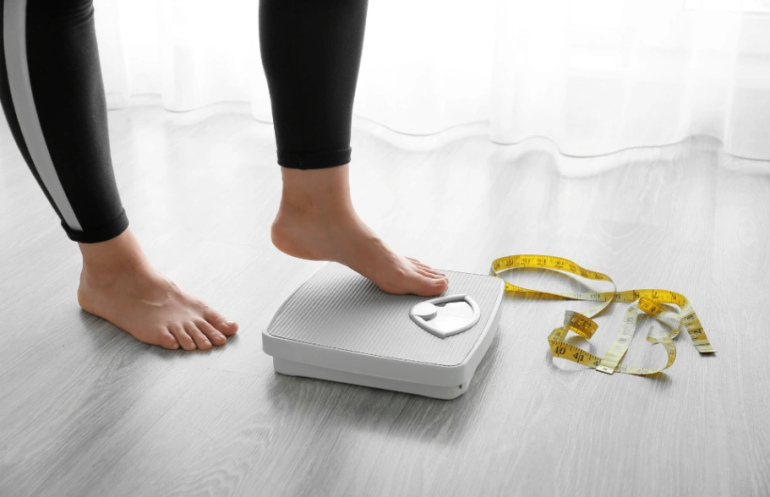
When people start working on their fitness, one of the first things they usually track is their weight.
It makes sense. The number on the scale is easy to measure, easy to remember, and seemingly easy to compare from week to week. But weight alone doesn’t tell the complete story of what is happening inside your body.
You can lose fat while maintaining or gaining muscle. You can become stronger without seeing a major change on the scale. Your measurements can improve even when your body weight stays relatively stable.
That’s why measuring fitness progress requires a broader perspective.
Instead of asking only, “How much do I weigh?” it can be more useful to ask, “How is my body changing, and am I becoming healthier, stronger, and fitter?”
Why Body Weight Doesn’t Tell the Whole Story
Your body weight is made up of several components, including muscle, fat, water, bones, organs, and other tissues.
Two people can weigh exactly the same but have very different body compositions.
For example, someone who regularly strength trains may weigh more because they have developed more lean muscle, while another person with the same body weight may have a higher proportion of body fat.
This becomes particularly important when your goal is to build muscle and reduce fat at the same time.
Imagine someone begins resistance training and improves their diet. Over several months, they lose some body fat while gaining muscle. Their scale weight might barely change.
If they judged their progress only by weight, they might conclude that nothing happened.
In reality, their body composition could have changed significantly.
Track Body Measurements
One of the simplest ways to look beyond the scale is to measure different parts of your body.
Common measurements include:
- Waist circumference
- Hip circumference
- Chest circumference
- Arm circumference
- Thigh circumference
You don’t need to measure everything every day. Taking measurements every few weeks under similar conditions can provide useful information about long-term changes.
For example, a reduction in waist circumference may indicate that you’re losing body fat even if your overall weight has remained relatively stable.
Consistency matters more than frequency. Try to measure at approximately the same time of day and under similar conditions each time.
Pay Attention to Body Fat
Body-fat percentage can provide additional context that body weight cannot.
Rather than simply asking how heavy you are, body-fat measurements attempt to estimate how much of your total weight comes from fat.
There are several ways to estimate body fat, including skinfold measurements, bioelectrical impedance devices, and other assessment methods.
However, these methods don’t all have the same level of accuracy. Hydration, food intake, exercise, and measurement technique can influence some estimates.
For that reason, it is often more useful to focus on the trend over time rather than treating one measurement as an absolute value.
If your estimated body-fat percentage is gradually moving in the direction that matches your goal, while your other fitness indicators are also improving, that’s more meaningful than a single reading.
Understand Lean Mass and Muscle Development
Muscle development is another reason the scale can be misleading.
If you’re following a resistance-training program, you may gradually increase your lean mass while reducing body fat.
Your body weight might remain similar, but your physique can change considerably.
Progress photographs and body measurements can help reveal these changes.
Strength performance can also provide an important clue. If you are consistently becoming stronger, improving your technique, and handling more training volume, those are meaningful indicators of progress.
Of course, getting stronger doesn’t automatically mean you’ve gained a specific amount of muscle. Strength can improve for several reasons, including better technique and nervous-system adaptations.
Still, performance is a valuable part of the bigger picture.
Consider FFMI Alongside Other Measurements
For people particularly interested in muscle mass and body composition, the Fat-Free Mass Index (FFMI) can provide another useful metric.
FFMI relates fat-free mass to height, giving you a way to look at lean mass while accounting for differences in body size.
It’s not a perfect measurement of muscularity, and it shouldn’t be treated as a diagnosis or a definitive assessment of health. But it can be useful as one piece of a broader fitness-tracking system.
For those who want to explore the calculation, a free FFMI calculator can make the process easier by calculating the metric from the relevant measurements.
The important point is not to let one number become the sole definition of your fitness.
Track Your Strength
Performance is one of the most practical ways to measure fitness progress.
Depending on your training program, you might track exercises such as:
- Squats
- Deadlifts
- Bench presses
- Rows
- Pull-ups
- Overhead presses
- Lunges
You don’t necessarily need to test your maximum strength regularly.
Instead, look at whether you can gradually perform more repetitions, use more resistance, improve your technique, or complete your workouts with better control.
For example, if you could previously perform eight controlled repetitions with a particular weight and can now perform twelve with good form, that’s measurable progress.
Fitness isn’t just about appearance. Your physical capabilities matter too.
Monitor Your Cardiovascular Fitness
Strength isn’t the only component of fitness.
Cardiovascular endurance is also important, whether you’re training for a sport or simply trying to become healthier.
You can monitor things such as:
- Walking or running distance
- Running pace
- Cycling performance
- Workout duration
- Resting heart rate
- Recovery between intervals
Suppose you used to become exhausted after walking for 20 minutes but can now comfortably walk for 45 minutes.
The scale might not reflect that improvement, but your fitness has clearly changed.
Similarly, being able to maintain a faster pace at the same perceived effort can indicate improved cardiovascular capacity.
Use Progress Photos Carefully
Progress photos can be surprisingly useful because changes in body composition often happen gradually.
Take photographs under consistent conditions:
- Similar lighting
- Similar distance from the camera
- Similar clothing
- Similar posture
- Similar time of day
Avoid judging yourself from one photograph to the next.
Instead, compare images over several weeks or months.
Daily changes can be difficult to notice because you’re looking at yourself all the time. Longer-term comparisons can make gradual changes easier to recognize.
Pay Attention to How You Feel
Not every useful fitness metric comes from a measuring device.
How you feel during everyday life can also tell you something about your progress.
Consider whether you have:
- More energy throughout the day
- Better exercise tolerance
- Improved mobility
- Better workout recovery
- Greater confidence with physical activities
- Improved sleep habits
- Less difficulty performing everyday tasks
These factors shouldn’t replace objective measurements, but they can complement them.
A fitness program should ideally improve more than your appearance.
Look at Multiple Metrics Together
The biggest mistake is replacing one number with another.
If you stop using body weight and become obsessed with body-fat percentage, you’ve essentially created the same problem with a different metric.
Instead, use several indicators.
For example, someone focused on improving body composition might monitor:
Body weight + waist measurement + estimated body fat + strength + progress photos
Someone training primarily for endurance might prioritize:
Running pace + distance + heart rate + recovery + workout consistency
Someone focused on strength might emphasize:
Training volume + repetitions + resistance + technique + recovery
The right metrics depend on the goal.
Different Goals Require Different Measurements
There isn’t one universal definition of fitness progress.
If Your Goal Is Fat Loss
Useful indicators can include:
- Long-term weight trend
- Waist circumference
- Body-fat estimates
- Progress photos
- Energy levels
- Workout performance
A gradual change is usually more informative than day-to-day fluctuations.
If Your Goal Is Muscle Gain
Consider:
- Strength progression
- Training volume
- Body measurements
- Progress photos
- Body weight trends
- Lean-mass estimates
Muscle growth takes time, so judging results from only a few days or weeks can be misleading.
If Your Goal Is Better General Fitness
You might track:
- Cardiovascular endurance
- Strength
- Mobility
- Daily activity
- Recovery
- Sleep
- Workout consistency
This gives you a much broader picture than body weight alone.
Don’t Let Daily Fluctuations Discourage You
Body weight naturally changes from day to day.
Water retention, food intake, sodium consumption, carbohydrate intake, exercise, and other factors can all influence the number you see on the scale.
That’s why comparing individual readings can create unnecessary frustration.
A better approach is to look at trends.
If you weigh yourself regularly, consider examining the average or general direction over several weeks rather than reacting to every individual change.
The same principle applies to other measurements.
Fitness is a long-term process, so your tracking system should reflect that.
Build a Simple Fitness Dashboard
You don’t need expensive equipment or complicated software to monitor progress.
A basic spreadsheet or notes app can be enough.
For example, once a week you could record:
Body weight: Current trend
Waist: Current measurement
Strength: Key exercise performance
Cardio: Distance, pace, or duration
Training: Sessions completed
Sleep: Average duration
Energy: Personal rating
Then review the information every few weeks.
The purpose isn’t to collect as much data as possible. It’s to identify meaningful trends.
The Goal Isn’t to Chase a Perfect Number
Fitness metrics are tools, not judgments.
BMI, body-fat percentage, FFMI, body weight, strength numbers, and other measurements can all provide useful information, but none of them can completely describe a person’s health or fitness.
A healthier approach is to combine objective data with how you perform and feel.
Final Thoughts
Measuring fitness progress goes far beyond stepping onto a scale.
Body weight can be useful, but it becomes much more meaningful when combined with other indicators such as waist measurements, body-fat estimates, strength, cardiovascular performance, progress photos, recovery, and lifestyle habits.
The best tracking system is the one that matches your goals and that you can maintain consistently.
If you’re interested in understanding body composition in more detail, tools such as an FFMI calculator can provide another perspective on your progress. Just remember that no single calculation should define your health or fitness journey.
Source: ffmicalculator.net