



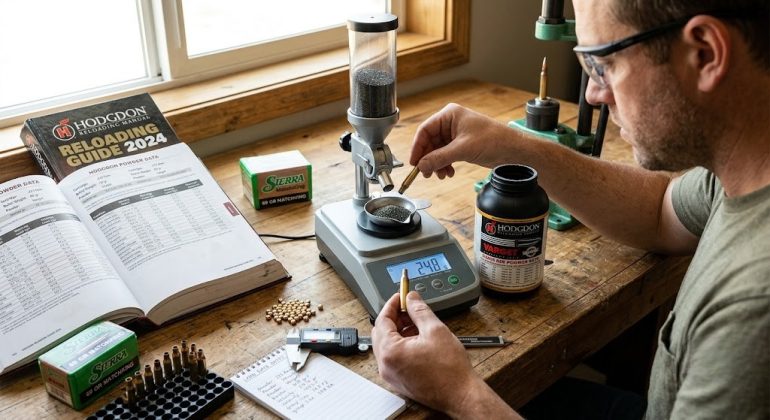
Your reloads might turn out inaccurate or inconsistent if you rely on wrong powder data, incorrect measuring, or the wrong load combinations. Right information makes for safer and more reliable ammunition. Building accurate Hodgdon powder loads starts with verified information and careful component selection. Using correct Hodgdon reloading data will depend not only on understanding the powder characteristics, the details of your cartridge, and recommended specifications, but also on how it has been done so far.
According to the Sporting Arms and Ammunition Manufacturers’ Institute (SAAMI), reloaders should rely on tested load data and follow published standards to help ensure safe, reliable ammunition performance.
Objective of This Guide
This guide explains how to review powder information, select compatible combinations, and improve consistency during handloading. You will also learn how factors like powder charge, pressure, velocity, and component selection influence the final results.
Key Takeaways
- Select powder after you have identified the whole cartridge combination.
- Browse powder data carefully before experimenting with a new bullet-powder combination.
- Make adjustments slowly and record every result.
- Consistent preparation improves ammunition performance.
- Digital tools simplify load comparison and planning.
Table of Contents
- Understanding Hodgdon Powder Loads Selection
- Use Hodgdon Load Data Center for Better Load Development
- How Hodgdon Powder Data Helps Improve Accuracy
- Steps to Create More Consistent Reloads
- Common Mistakes That Affect Reloading Accuracy
- How Digital Reloading Tools Support Better Decisions
- Improve Your Reloading Process With Better Information
- Frequently Asked Questions
Understanding Hodgdon Powder Loads Selection
Choosing the correct powder is one of the most important steps in reloading. Different cartridges, bullet weights, and firearm types require specific powder characteristics. A powder that performs well in one combination may not provide the same results in another set-up.
Hodgdon powder loads have to align perfectly with the cartridge used, bullet weight, and other items. Don’t copy a load unless you’ve checked whether the components are the same. The slightest differences can alter pressure level, velocity, and overall performance.
When designing a load, keep the following points in mind:
- Cartridge type and caliber
- Bullet weight and design
- Powder characteristics
- Case condition
- Primer selection
- Recommended pressure limits
Each of the listed factors determines a certain way in which the ammunition will work. With such an approach, you will get the same result every time, which in turn will reduce the number of test shots.
Use Hodgdon Load Data Center for Better Load Development
Reliable information can reduce errors during the reloading process. The Hodgdon load data center allows reloaders to explore available load details by selecting cartridge types, powders, and other specifications. This makes it easier to identify suitable combinations before beginning the loading process.
To be sure the information presented is adequate, do not restrict yourself to just velocity data. An even load is one that also takes pressure limits, powder performance, and consistency into account. More quickly fired ammunition does not necessarily equate to greater effectiveness.
A proper load development process includes:
- Checking component compatibility
- Starting with recommended load ranges
- Testing performance carefully
- Recording results for future reference
Through note keeping, one can discover effective combinations. A reloading record can save one from having to guess in the case of future changes because one can compare the past results.
How Hodgdon Powder Data Helps Improve Accuracy
Correct reloading relies on grasping how different parts interact. One good way to figure out the various types of powders and their relationship to individual cartridges is through Hodgdon powder data.
Reloaders can compare information such as:
- Powder charge ranges
- Expected velocity
- Maximum pressure limits
- Powder suitability
- Performance differences
These details help you make informed decisions during load development. Instead of changing several factors at the same time, adjust one element and evaluate the results.
For example, if you change the powder charge, bullet seating depth, and components all at the same time, you may find it difficult to figure out what brought the performance change. A method where you change factors in a controlled manner will result in a more clear picture and an improved understanding.
Steps to Create More Consistent Reloads
Stability is just a consequence of doing the same procedure each time. Minor variations in the loading procedure can affect the end-result performance of the ammunition.
1. Prepare Components Carefully
Start by checking brass, bullets, primers, and powder before loading. Cases should be inspected for damage and prepared according to proper procedures.
Consistency in the components will help maintain the results at a minimum deviation. It is important that measuring tools also be used frequently so that accurate measurements can be ensured.
2. Follow Reliable Reloading Information
Getting safe and dependable results largely depends on having accurate information at hand. A Hodgdon reloading guide is essential for knowing the right powders to use, as well as for developing an ammunition load.
When comparing different sources, make sure the components match. Differences in bullet design, case capacity, or equipment can change the outcome.
3. Record Every Test Load
Documentation plays an important role in improving accuracy. Record powder type, charge amount, bullet details, and performance observations after testing.
Keeping an in-depth record gives you the opportunity to figure out the successful combinations; besides, it can also stop you from going in circles while working on the development of a load the next time.
Common Mistakes That Affect Reloading Accuracy
There are some errors made during the preparation or testing stages that will significantly affect reloading accuracy. Prevention of these errors can lead to better reloading results and higher reloading consistency.
Common mistakes include:
- Using incorrect component combinations
- Skipping load records
- Making large changes too quickly
- Ignoring case differences
- Relying on unverified information
A careful approach saves time and improves results. Good preparation habits are just as important as selecting the right powder.
How Digital Reloading Tools Support Better Decisions
Modern digital reloading platforms are very helpful in managing technical data and allowing its comparison in the same platform. Instead of flipping through various references, reloaders can now look at things like the powder specs and info on the ammo types, along with other important details, all at a glance right there and now.
Digital reloading databases provides an extensive digital database designed for ammunition reloaders, shooters, and hunters. Their platform helps users compare powder characteristics, load specifications, and performance details across different applications.
They apply sophisticated ballistic calculations to consider powder charges, load densities, pressure levels, and velocity differentials related to barrel length. Such data may be useful for the shooter who wishes to increase accuracy for target shooting or who would like to develop a special hunting load.
Improve Your Reloading Process With Better Information
Proper reloading depends on good information, careful calculation, and good equipment. Understanding how to build the right Hodgdon powder loads and using proper load references can help shooters create dependable ammunition.
By looking at detailed powder information and comparing a few compatible options, you will be able to make more informed decisions in your process of developing. xxlreloading.com is your resource for compiles loads information, detailed technical comparisons, and better reloading advice.
Explore their platform to find the information needed for a more precise and controlled reloading process.
Frequently Asked Questions
1. What is a Hodgdon powder load used for?
It helps match powder choice with cartridge needs for consistent performance and safer testing. It also supports better control during load development.
2. How can I find suitable load options?
The Hodgdon load data center provides organized details to compare cartridges, bullets, and powder selections before loading. It helps users review available combinations.
3. Why does powder information matter?
Reviewing Hodgdon powder data helps understand performance differences and make better choices for different applications, shooting goals, and component set-ups.
4. Where should beginners check loading instructions?
The Hodgdon reloading guide offers useful references for learning proper procedures, improving loading practices, and avoiding common preparation mistakes.
5. How do reloaders verify previous results?
They track test data and maintain clear notes to compare previous ranges, monitor changes, and move slowly toward improved consistency.